
Inflammation is the body’s natural defence, but in a dog’s stomach and intestines it shows up as diarrhoea, vomiting and weight loss. The most common causes are feeding mistakes, allergens, toxins and foreign bodies. Easily digestible meals with limited fat, elimination diets and well-chosen fibre work well in the diet.
Often it is only at the vet’s that we find out inflammation is developing in one of our dog’s organs. In this article we explain what inflammation is, why it matters so much to the body and how diet can help a dog with inflammation of the stomach or intestines.
What inflammation is and how it develops

Inflammation is a complex and tightly ordered process that defends the body against harmful factors - both external, such as viruses or bacteria, and internal ones. The whole cascade of events is fairly complicated, so we show it in a diagram.

Diagram 1. The course of the inflammatory process (Petil et al., 2019).
The immune response and the whole inflammatory process are governed by cytokines. These are protein messengers between cells that regulate cell growth, differentiation, migration and death. They also take part in tissue repair. Cytokines depend on one another: when some are produced, others are inhibited.
The classic signs of inflammation
Inflammation develops after tissue damage. Its signs are well described:
- a rise in temperature,
- redness caused by the widening of blood vessels,
- swelling caused by a build-up of exudate,
- pain, because the tissues are under tension and substances released during inflammation take effect,
- impaired function of the tissue where the inflammation is taking place.

Inflammatory exudate is a cloudy fluid, often visible in body cavities or on mucous membranes. Once the inflammation has subsided, a scar may remain. Inflammation spreads through blood and lymph vessels or by direct contact, e.g. through the urinary tract.
Types of inflammation
Inflammation is classified according to three main criteria.
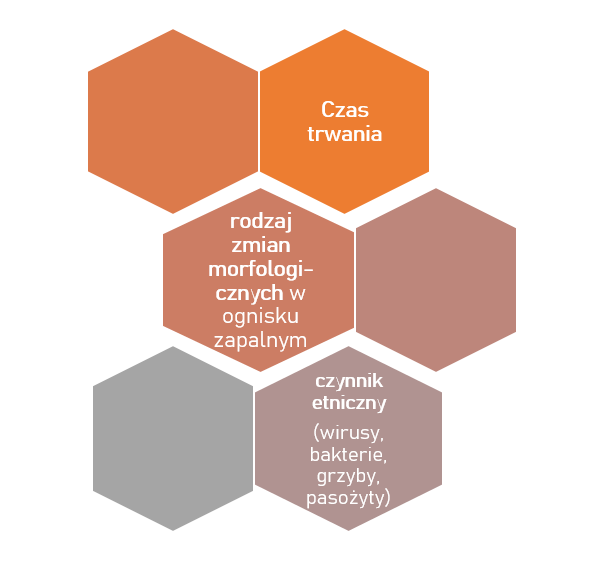
By duration, inflammation is divided as follows:

Gastroenteritis in dogs

Gastrointestinal diseases caused by inflammation are among those frequently diagnosed at veterinary practices (chart 1).

Source: own work based on Volkmann et al., 2017.
The main symptoms are diarrhoea or vomiting lasting from 1 to 2 weeks, tinged with bile, sometimes with blood clots. Vomiting can occur anywhere from a few times a week to several times a day. Predisposed breeds include the Miniature Poodle, the Shih Tzu and the Norwegian Lundehund.
The risk of gastritis rises with long-term exposure to medicines and chemicals (including those in food) and with excessive stomach acidity, e.g. due to poor feeding.
Symptoms that need a trip to the vet
You should be especially concerned about:
- weight loss,
- diarrhoea,
- vomiting,
- loss of appetite,
- constipation,
- changes in behaviour, e.g. growing frustration, aggression or low mood,
- loud gurgling and rumbling in the intestines.
With vomiting, aspiration pneumonia (an infection of the lungs) or changes in the intestines may occur. Weakened dogs and dogs with concurrent illnesses are more at risk of such complications.
Causes of gastritis and enteritis in dogs
The most common cause is feeding mistakes, but also toxins, parasites or long-term use of NSAIDs (non-steroidal anti-inflammatory drugs). Chronic gastritis and other changes in the digestive system can also be triggered by allergens, e.g. food allergens, and allergic reactions.
Eating rubbish (spoilt, mouldy products), stones, cat litter and other inedible things can lead to poisoning and inflammation of the digestive tract. Food poisoning most often shows as:
- bloating of the stomach,
- a short-lived halt in stomach activity.
A dangerous consequence can be acute pancreatitis. Such a dog has to be watched constantly for excessive appetite (polyphagia) and eating inedible things (pica).
Foreign bodies

Swallowed foreign bodies can damage the stomach walls and cause acute inflammation of the mucous membrane, vomiting, ulcers and changes linked to obstruction of the upper digestive tract. Prolonged vomiting can in turn lead to oesophagitis.
Diet for a dog with digestive tract inflammation
Digestive disorders often affect growing dogs, older dogs and breeds with a sensitive digestive tract. With gastroenteritis, food moves through too quickly or too slowly, resulting in diarrhoea.
The diet, home-made or ready-made, is based on easily digestible foods with a limited amount of fat. Poorly absorbed fatty acids increase water secretion in the intestines, which makes diarrhoea worse.
With inflammation of the small and large intestine, elimination diets with a single protein source or foods with hydrolysed protein work well. Hydrolysed protein is enzymatically cut into shorter fragments, i.e. polypeptides. Such food is, however, less palatable and more expensive than others.
Diarrhoea or skin changes can signal a food hypersensitivity or allergy. To find its source, in addition to a detailed dietary history, it is worth using an elimination diet with an alternative or hydrolysed protein.
How to feed your dog during recovery
- Give frequent but small portions.
- Assess the effect of the new diet after 2-3 weeks of using it.
- Remember that water loss can lead to deficiencies of B vitamins and minerals (magnesium, potassium, sodium, phosphorus), which slows the return to form.
- Limit stress - any discomfort affects your dog’s wellbeing.
Fibre in the diet of a dog with a sensitive gut

Fibre is very important for the digestive system to work properly. Dietary fibre is divided into soluble (viscous, fermentable) and insoluble (non-viscous, non-fermentable). The right ratio of the two fractions regulates gut function and stool consistency.
- Cellulose ferments slowly and increases stool bulk.
- Pectins ferment quickly and have a loosening effect.
- Too much soluble fibre gives loose stools, and too much insoluble fibre gives a larger volume of stools.
Fibre content affects the amount and structure of stools, probably because it reduces the digestibility of nutrients and binds water.
With gastroenteritis, it is worth considering adding psyllium, linseed or oat bran, which can have a beneficial effect on diarrhoea. Fermentable fibre is recommended rather than non-fermentable, because:
- it has gelling properties and binds fatty acids,
- it feeds bacteria that produce butyric acid (a source of energy for colon cells) as well as acetic and propionic acids, which lower the pH and limit the growth of pathogens in the colon.
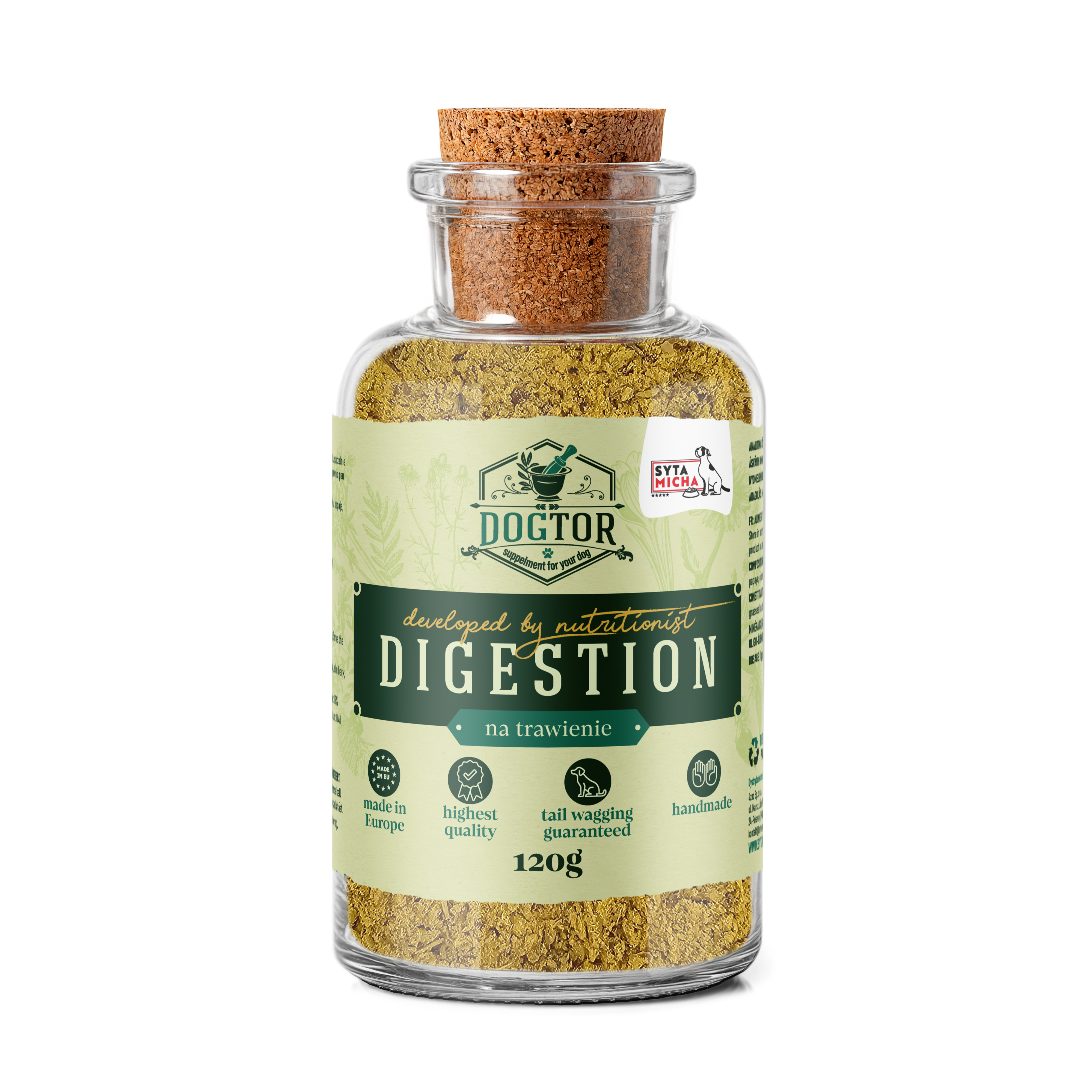
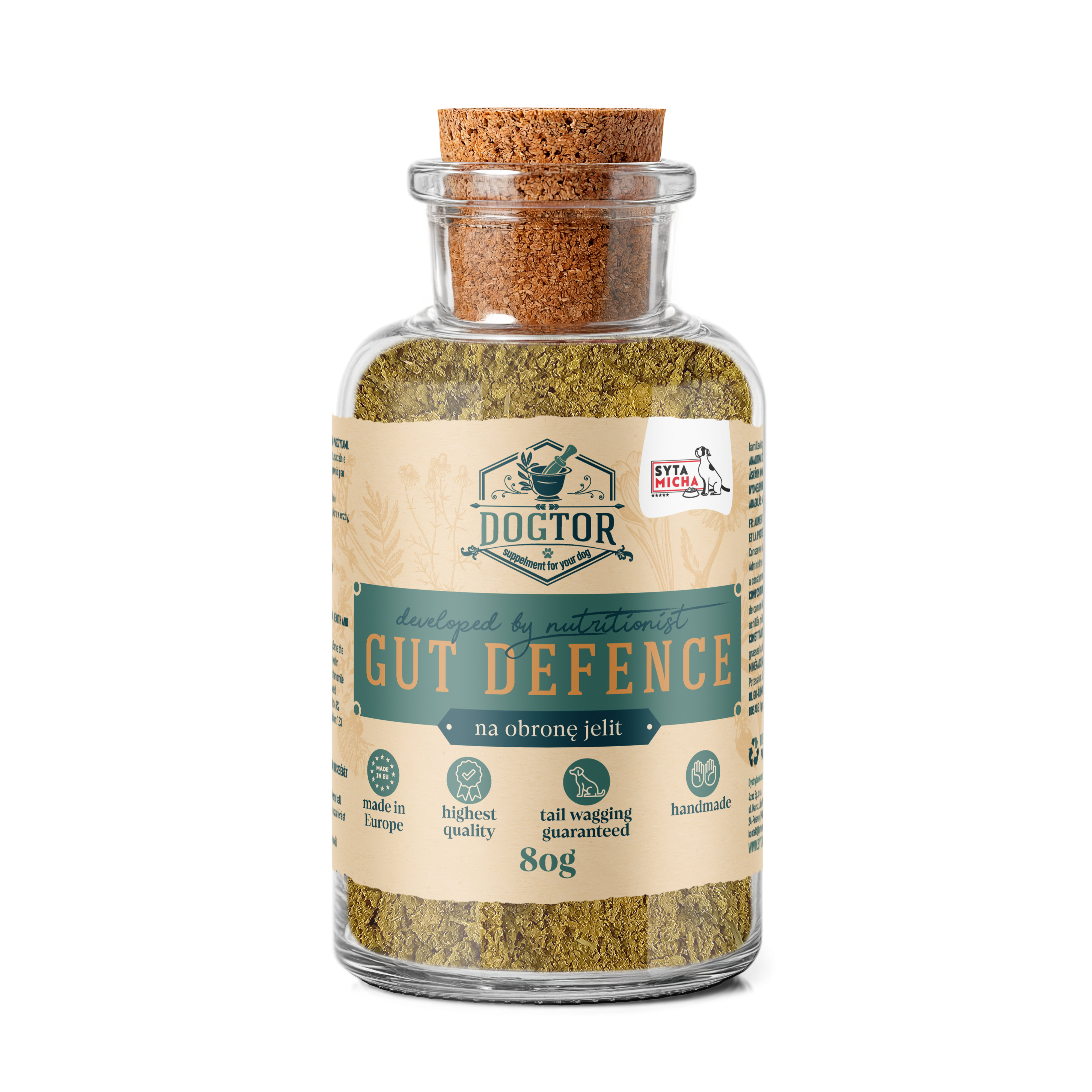 Syta Micha DOGTOR for gut protection 80g · 69,90 złSyta Micha DOGTOR for digestion 120g · 69,90 zł
 Syta Micha Digestion oil for dogs 250ml · 49,90 zł
Sources
- Chechlińska M., 2003. Rola cytokin w procesie nowotworzenia. NOWOTWORY Journal of Oncology, 53(6): 648-659.
- Marks S.L., Laflamme D.P., McAloose D., 2002. Dietary trial using a commercial hypoallergenic diet containing hydrolyzed protein for dogs with inflammatory bowel disease. Vet Ther. 23: 109-118.
- Lasek O. 2019. Rola włókna w żywieniu psów. Weterynaria w praktyce, wydanie specjalne 12/2019, 14-21.
- Petil KR., Mahajan UB., Unger BS., Goyal SN., Belemkar S., Suraja SJ., Ojha S., Patil ChR. 2019. Animal Models of Inflammation for Screening of Anti-inflammatory Drugs: Implications for the Discovery and Development of Phytopharmaceuticals. International Journal of Molecular Science, 20, 4367.
- Patofizjologia, Maśliński S., Ryżewski J., PZWL, 2010; 5 minut konsultacji weterynaryjnej, Tilley J., Smith F., Edra 2020.
- Qvigstak G., Kolbjørnsen Ø., Skancke E., Waldum HL. 2008. Gastric neuroendocrine carcinoma associated with atrophic gastritis in the norwegian lundehund. J Comp Pathol. 139(4): 194-201.
- Vebb C., Twedt DC. 2003. Canine gastritis. Vet Clin North Am Small Anim Pract. 33(5): 969-985.
- Marks SL. 2013. Diarrhea. Canine and Feline Gastroenterology. 99-108.
- Volkmann M., Steiner JM., Fosgate GT., Zentek J., Hartmann S., Kohn B. 2017. Chronic Diarrhea in Dogs - Retrospective Study in 136 Cases. J Vet Intern Med. 31(4): 1043-1055.
- Defarges A., Blois SL., Gibson TWG. 2018. Disorders of the Stomach and Intestines in Dogs. MSD Veterinary Manual (msdvetmanual.com).
- Patel PK., Patel SK., Dixit SK., Rathore SR. 2018. Gastritis and Peptic Ulcer Diseases in Dogs: A Review. Int. J. Curr. Microbiol. App. Sci. 7(3): 2475-2501.
Products mentioned
 You collect HAU DOLCE points for your purchases
Frequently asked questions
What are the symptoms of gastroenteritis in a dog?
Mainly diarrhoea or vomiting, sometimes tinged with bile or with blood, as well as weight loss, loss of appetite, constipation, gurgling in the intestines and changes in behaviour.
What most often causes inflammation of a dog’s digestive tract?
Most often feeding mistakes, but also toxins, parasites, long-term use of NSAIDs, food allergens, eating rubbish and swallowed foreign bodies.
How should I feed a dog with intestinal inflammation?
Give easily digestible meals with a limited amount of fat, often and in small portions. Elimination diets with a single protein source or foods with hydrolysed protein work well, and the effect of a new diet is assessed after 2-3 weeks.
Which fibre is better for gut problems?
Fermentable fibre is generally recommended, e.g. from psyllium, linseed or oat bran. It binds fatty acids and feeds the bacteria that produce butyric acid.