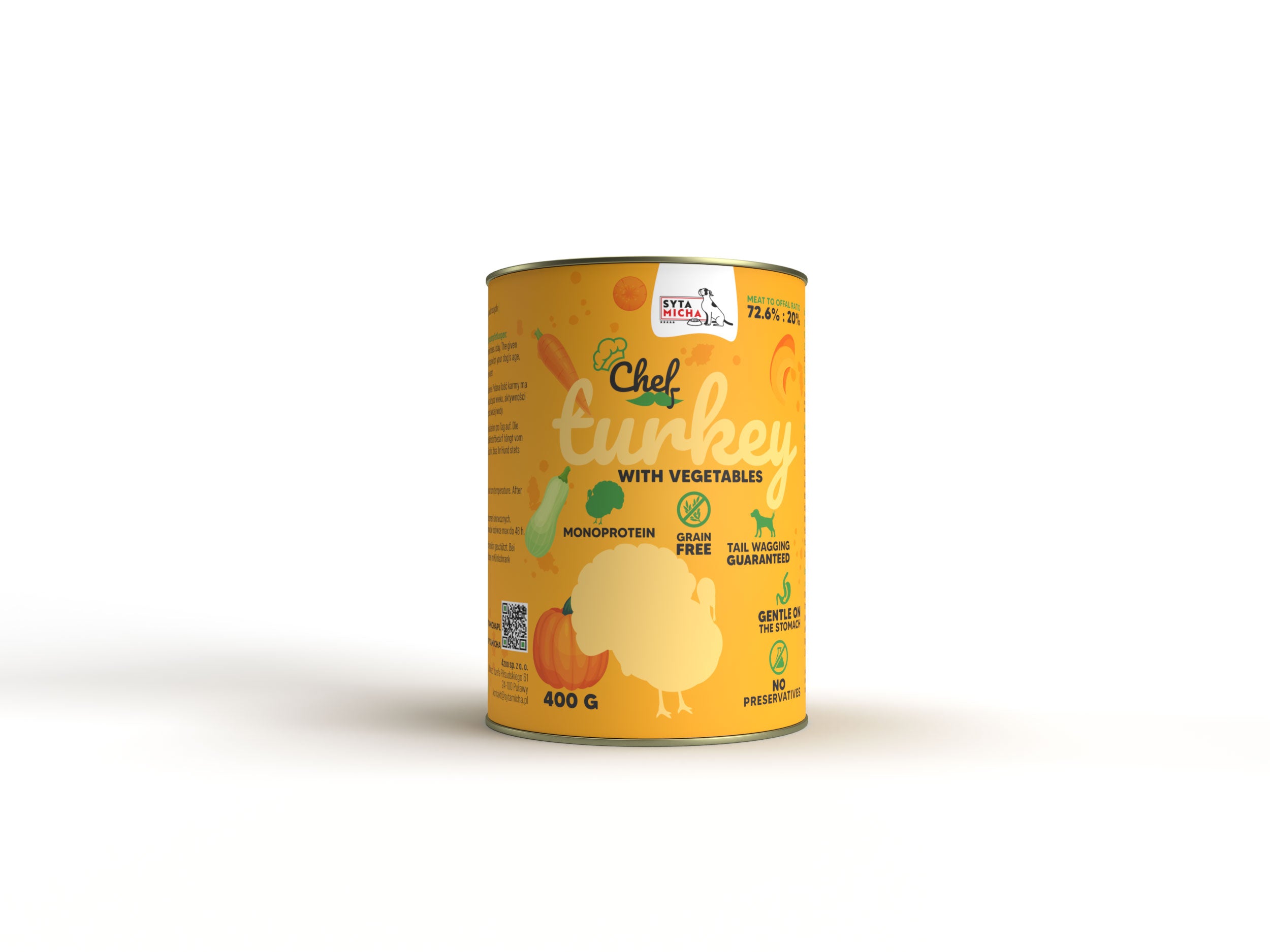
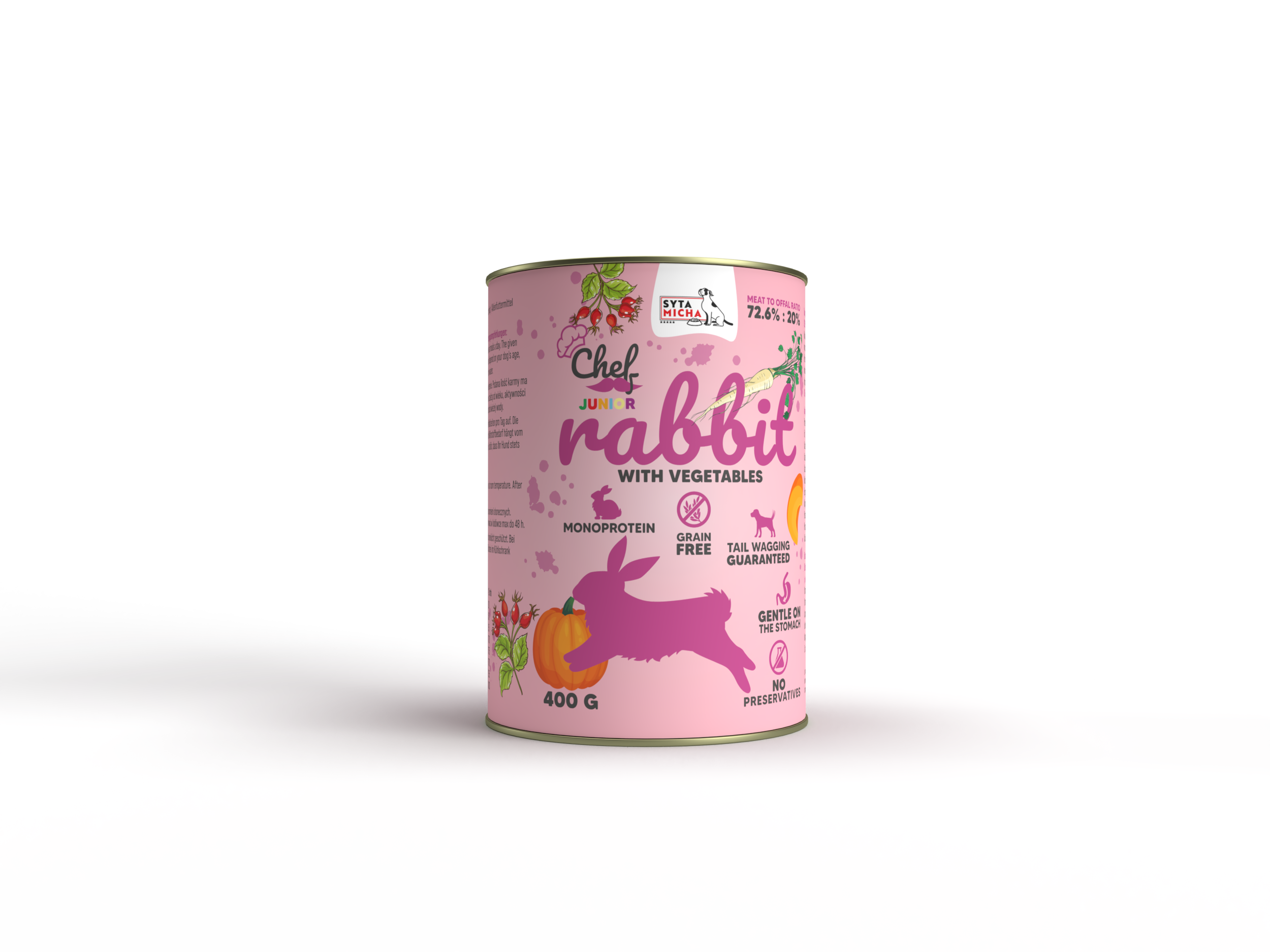
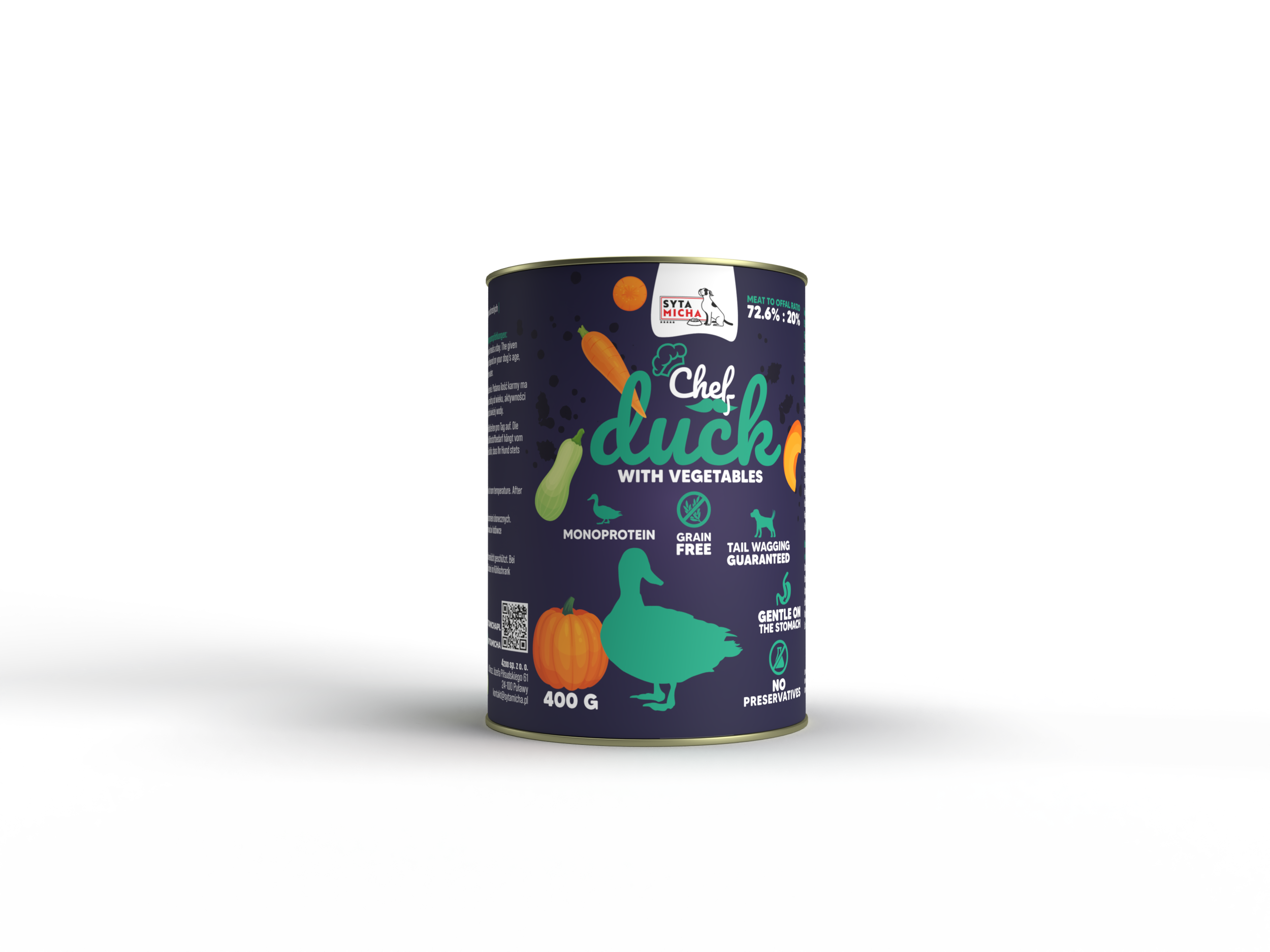
Before you change the food, change how you feed: smaller portions more often, slower eating and a diet change spread over a week. In the composition, look for a single protein source and moderate fat - counted on a dry matter basis, not from the label.
A sensitive stomach is not a diagnosis, it is an owner's observation. New food - loose stools. A piece of cheese from the table - vomiting. A trip away - two days of trouble.
Before you switch brands for the fifth time, it is worth checking things that can matter more than the food itself.
Three changes that are often enough
1. Smaller portions, more often
Two large portions a day mean more work for a sensitive stomach than three smaller ones. This change costs nothing and, for some dogs, sorts the problem out.
2. Slower eating
A dog that gulps without chewing swallows a lot of air along with its food. A slow-feeder bowl or spreading the portion over a snuffle mat changes more than you might think.
3. A food change spread over a week
Not over two days. The gut flora needs time, and most cases of ‘intolerance to the new food’ are in fact intolerance to the pace of the change.
What to look for in the composition
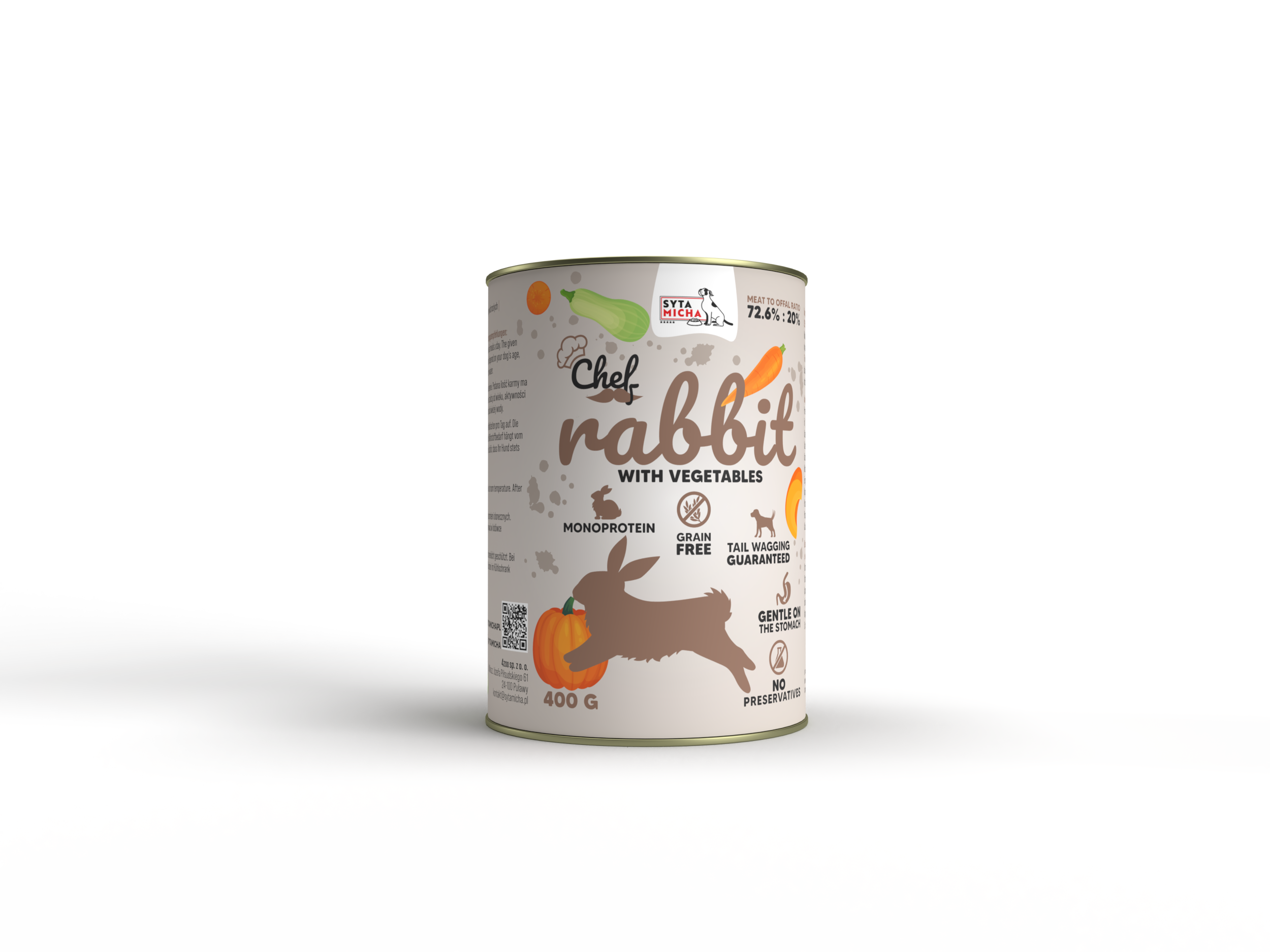
- A single protein source - single-protein food makes it easier to track down the culprit if the problem comes back.
- A short ingredient list - the fewer items, the fewer variables.
- Moderate fat - and here lies the most important catch, described below.
- Ingredients that firm up stools - pumpkin, psyllium, prebiotics.
- No unnecessary additives - colourings and flavourings add nothing but more variables.
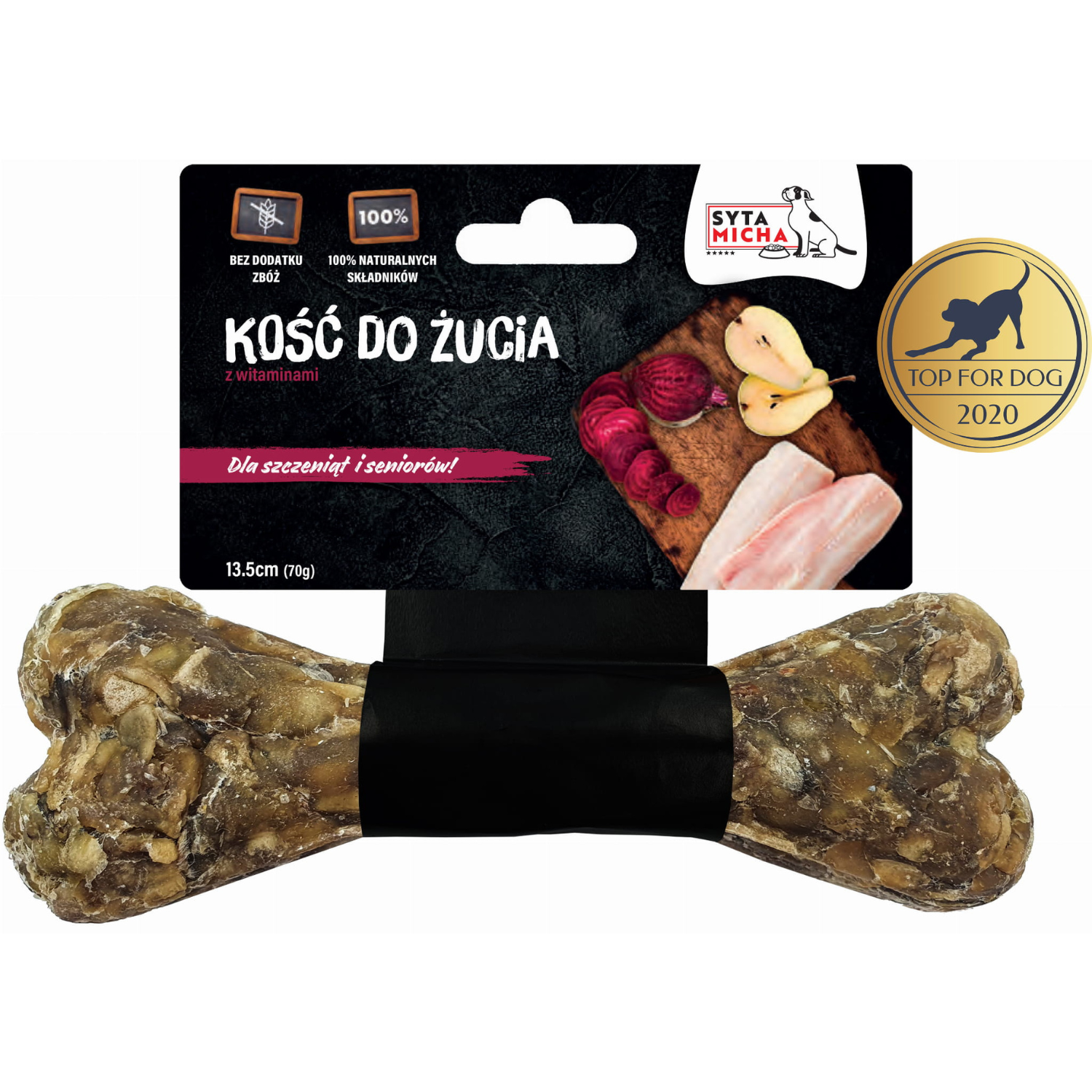
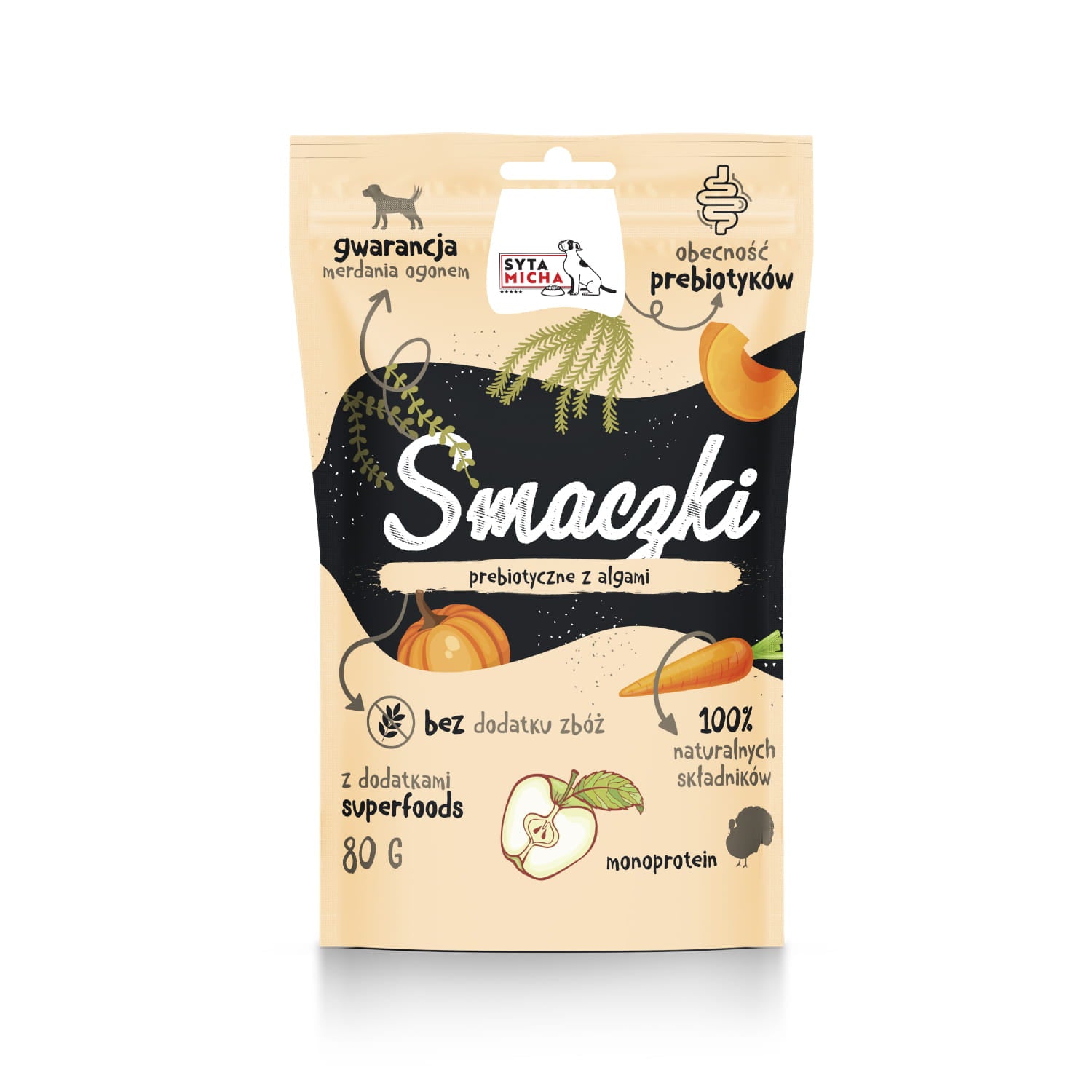 Prebiotic dog treats (GI²D Complex) with seaweed 80g · 19,90 zł
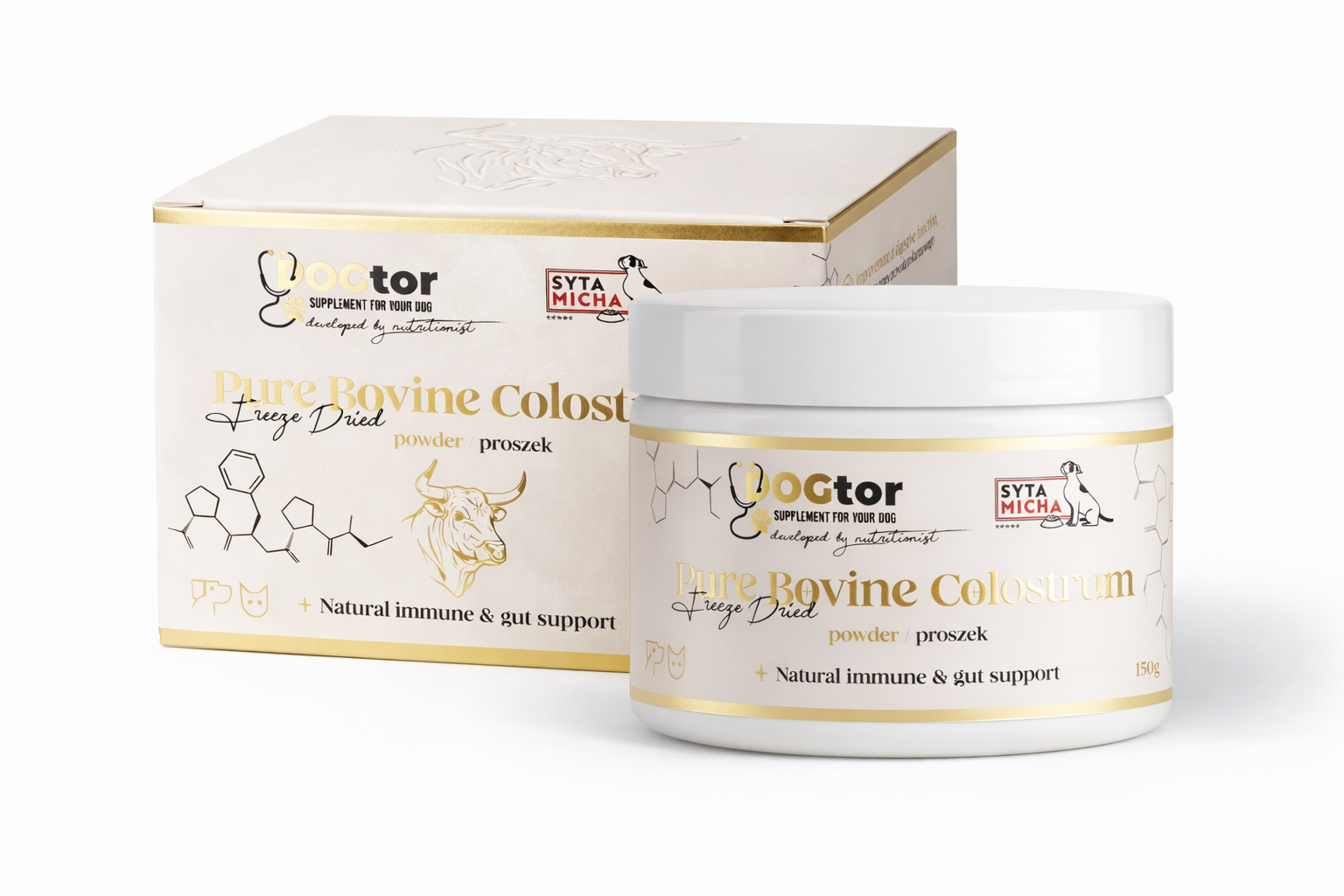
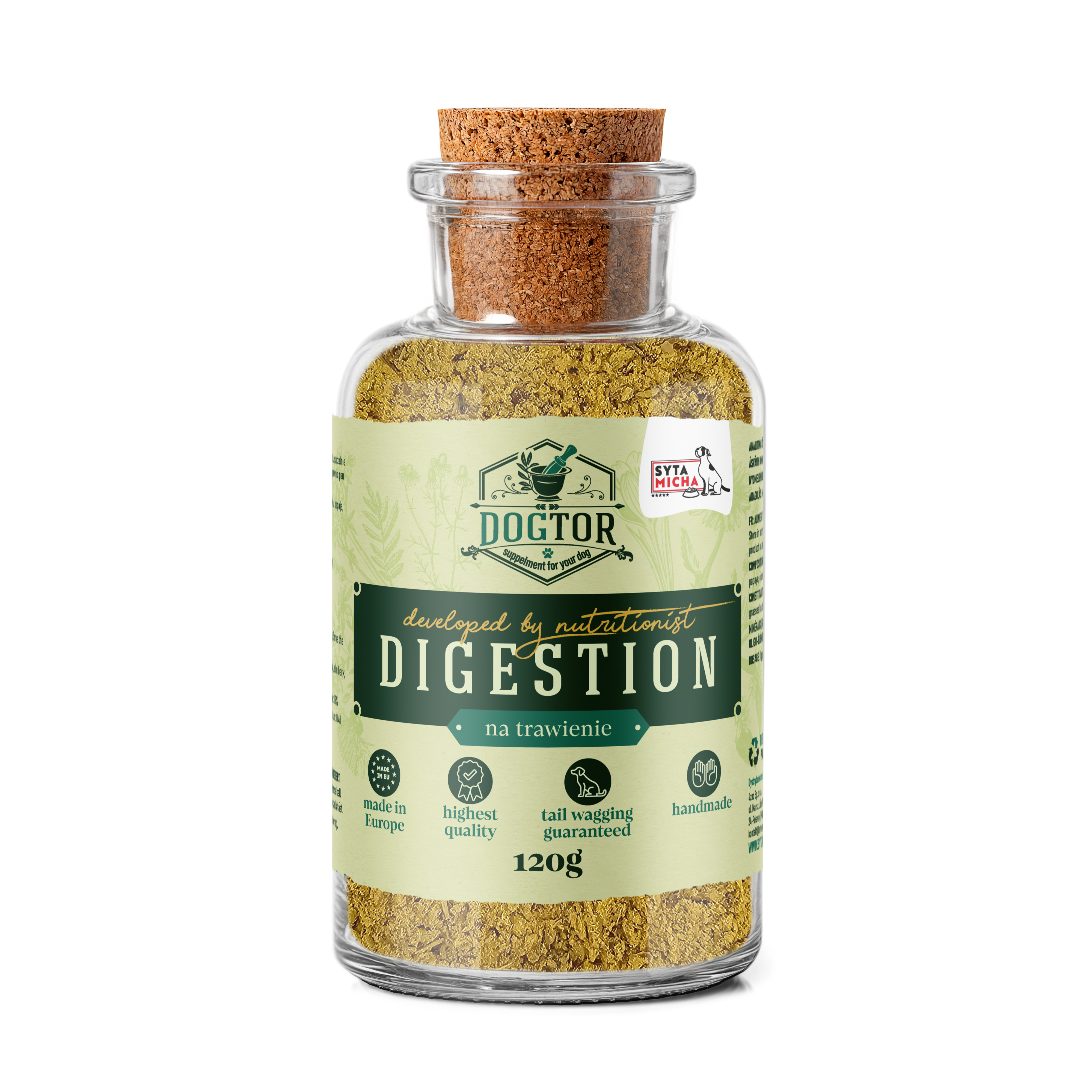 Syta Micha DOGTOR for digestion 120g · 69,90 zł
The fat catch that fools most owners
On a tin of wet food you see ‘fat 7.4%’. On a bag of dry food, ‘fat 16%’. It looks as if the wet food is much leaner. It is not.
Wet food is about 80% water. Once the water is taken out, that 7.4% becomes 37% on a dry matter basis - more than the dry food. I describe the formula and examples in the entry dry matter in dog food.
If your dog reacts badly to fat, this is the number you need to check. Not the one on the label.
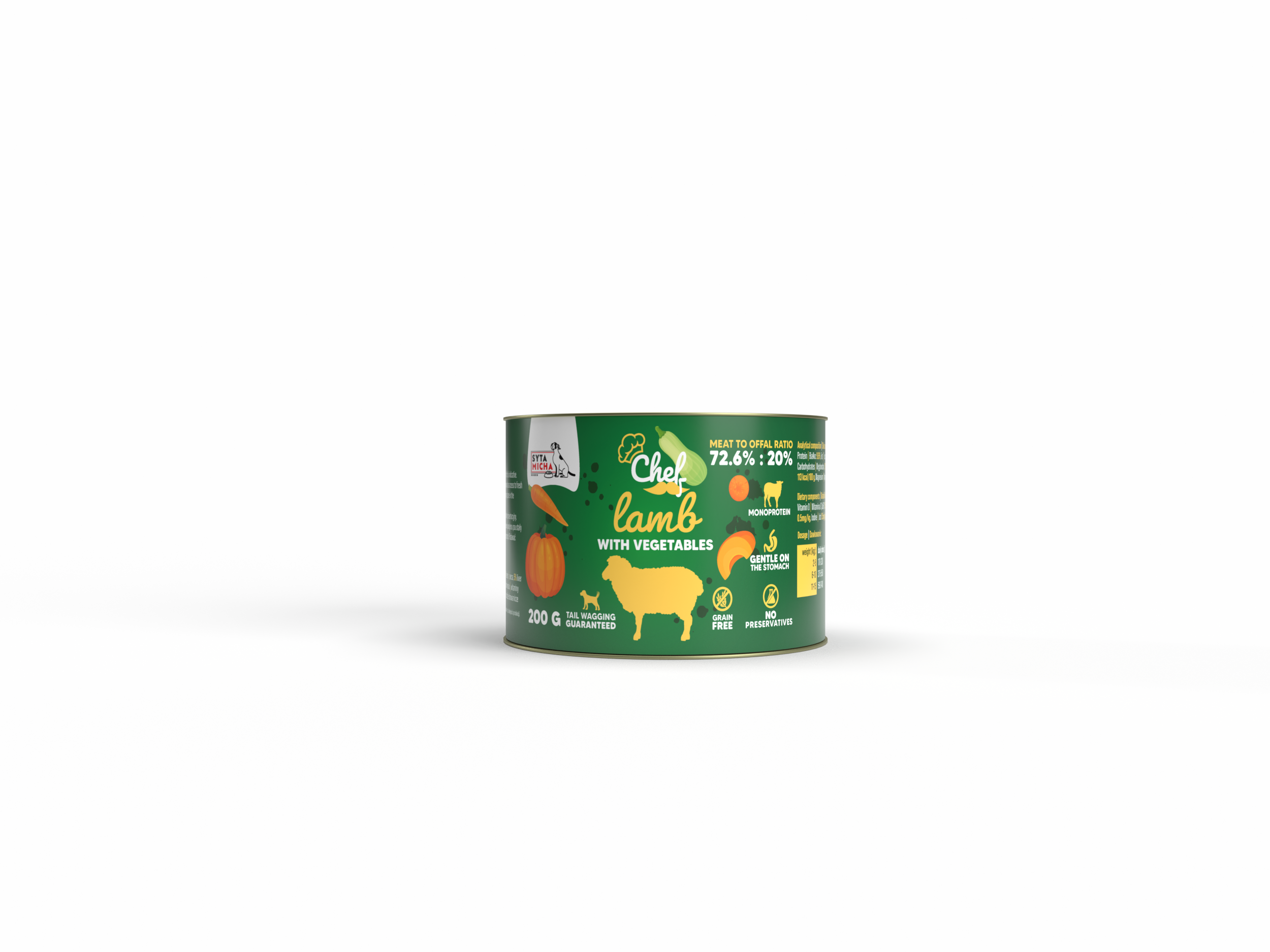
How much to feed
A portion measured ‘by eye’ is a common cause of problems, because wet and dry food differ several times over in calorie content. Work it out properly once: you will find the formula and multipliers in the entry a dog's calorie requirement, and you can calculate a ready result for your dog in the feeding calculator.
When it is no longer about the food
See the vet if there is vomiting with blood, sudden weight loss, lethargy or problems that persist despite a simple, stable diet. A sensitive stomach can also be a symptom of diseases that diet will not solve.
Products mentioned
 You collect HAU DOLCE points for your purchases

Frequently asked questions
Which food is best for a dog with a sensitive stomach?
Single-protein, with a short ingredient list and moderate fat counted on a dry matter basis. Pumpkin, psyllium and prebiotics help.
Why does my dog vomit after a change of food?
Most often because the change was too fast. Spread it over 5-7 days, and for a sensitive dog even over two weeks.
Wet or dry for a sensitive stomach?
There is no rule. What matters is the composition and the fat content on a dry matter basis, not the form of the food.
How many meals a day?
Usually two or three smaller meals instead of one large one.