
A senior dog has an energy requirement around 25% lower than an adult dog, so a lighter food works well, but with more easily digestible animal protein. It is worth looking after fat quality (omega-3), the right fibre, probiotics, 3-4 smaller meals a day and regular check-ups at the vet.
Ageing is a constant and irreversible process. It changes a dog’s health (the workings of the digestive, nervous, circulatory and immune systems), its physical condition, and its mind and behaviour. That is why a senior needs slightly different conditions, a different amount of exercise and tailored feeding.
By following a few simple rules, we can extend our dog’s life and give it comfort and joy every day. Below we have gathered what to look out for in the bowl and beyond it.

When a dog becomes a senior
The terms ‘senior’ and ‘geriatric’ are often used interchangeably, but they mean different things. Senior is a term linked to natural, biological ageing. Geriatric refers to changes in health: weakness, weight loss, slowing down and tiredness.
A senior dog is a dog that has reached 3/4 of its expected lifespan. A geriatric dog is one that has reached 80% of its expected lifespan. Average lifespan depends on the breed, or rather on the size of the dog (figure 1).

Older dogs fall ill more often and need more time, attention and care. Changes in feeding result from a slower metabolism and weaker digestion, and often also from illnesses that require a specialist diet.
What to watch for in an older dog
Every owner can observe their dog’s behaviour at the bowl, assess any changes and adjust care accordingly. It is worth looking at a few areas:
- Appetite - whether your dog picks up, chews and swallows food easily.
- Mouth - the condition of the gums, tonsils and any changes in the whole mouth.
- Senses - eyesight, sense of smell and how much it enjoys its meals.
- Mobility and access to water - whether your dog walks and gets to its food on its own, whether anything (other animals, objects) gets in its way, what its muscle condition (MCS) and body condition (BCS) are like, and whether lameness, joint degeneration or pain appear.
- Cognitive function, sleep and behaviour.
Exercise tailored to a senior

Alongside the diet, you also need to adjust the amount and frequency of physical activity. With progressive weakness and muscle wasting, exercise is a very important part of a senior’s life. A well-chosen amount and type of exercise supports mobility, helps limit the symptoms of sarcopenia and provides mental stimulation.
Less energy, fewer carbohydrates
As in people, energy requirements fall with age, mainly because of a slower metabolism. In a senior dog they are around 25% lower than in an adult dog. Less exercise, muscle loss and gaining body fat encourage obesity, so it is worth limiting the energy in the ration.
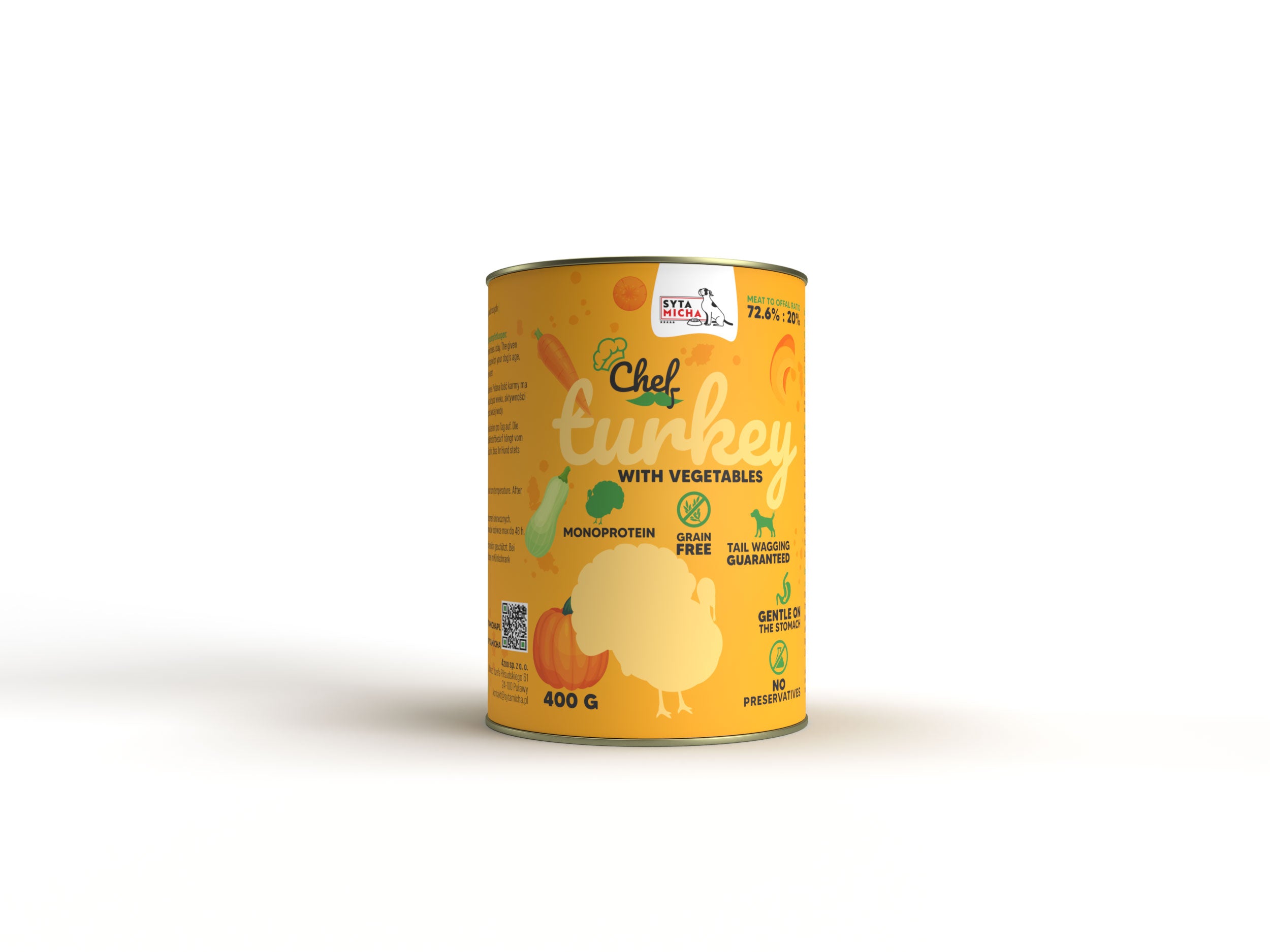
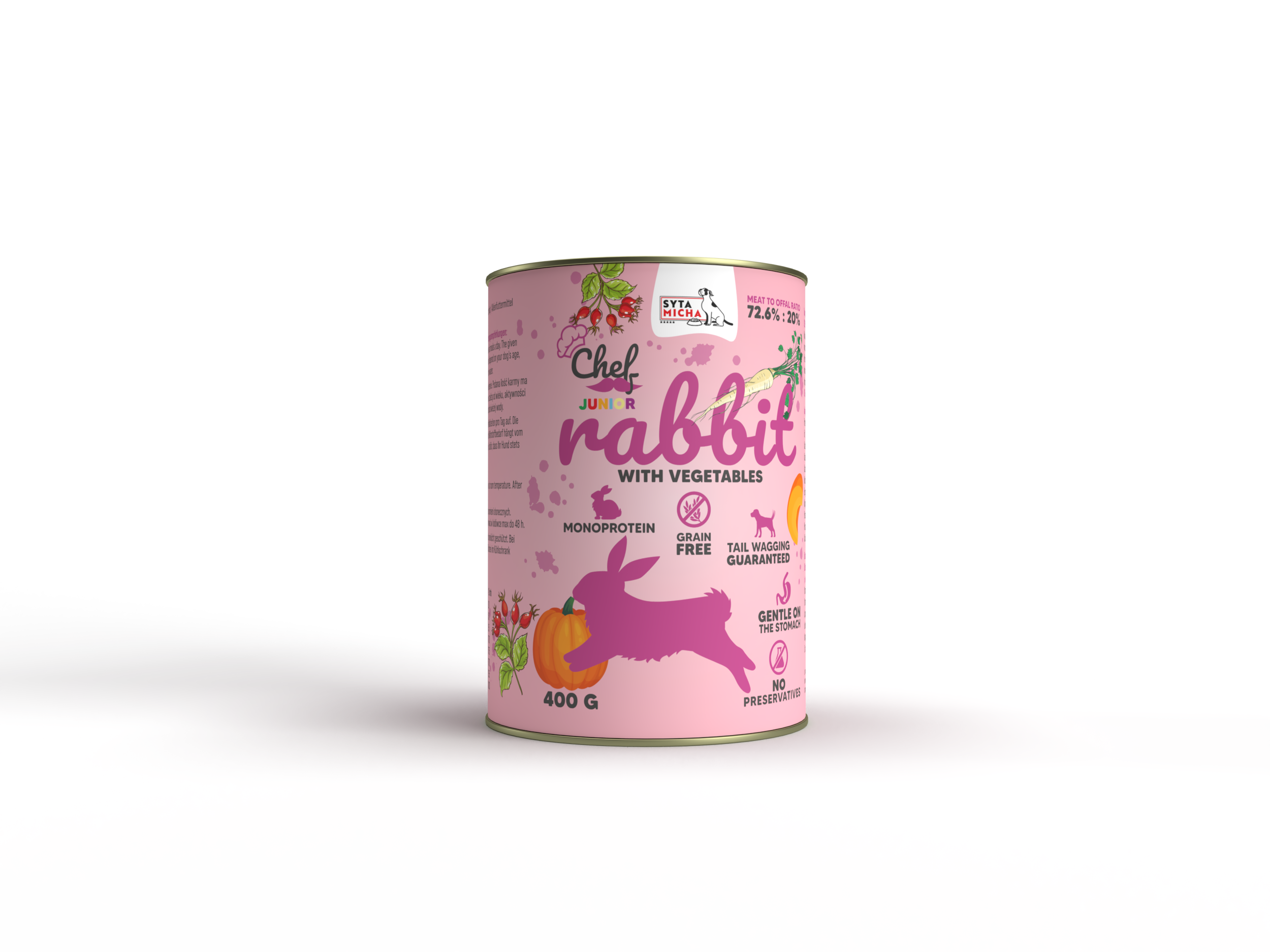
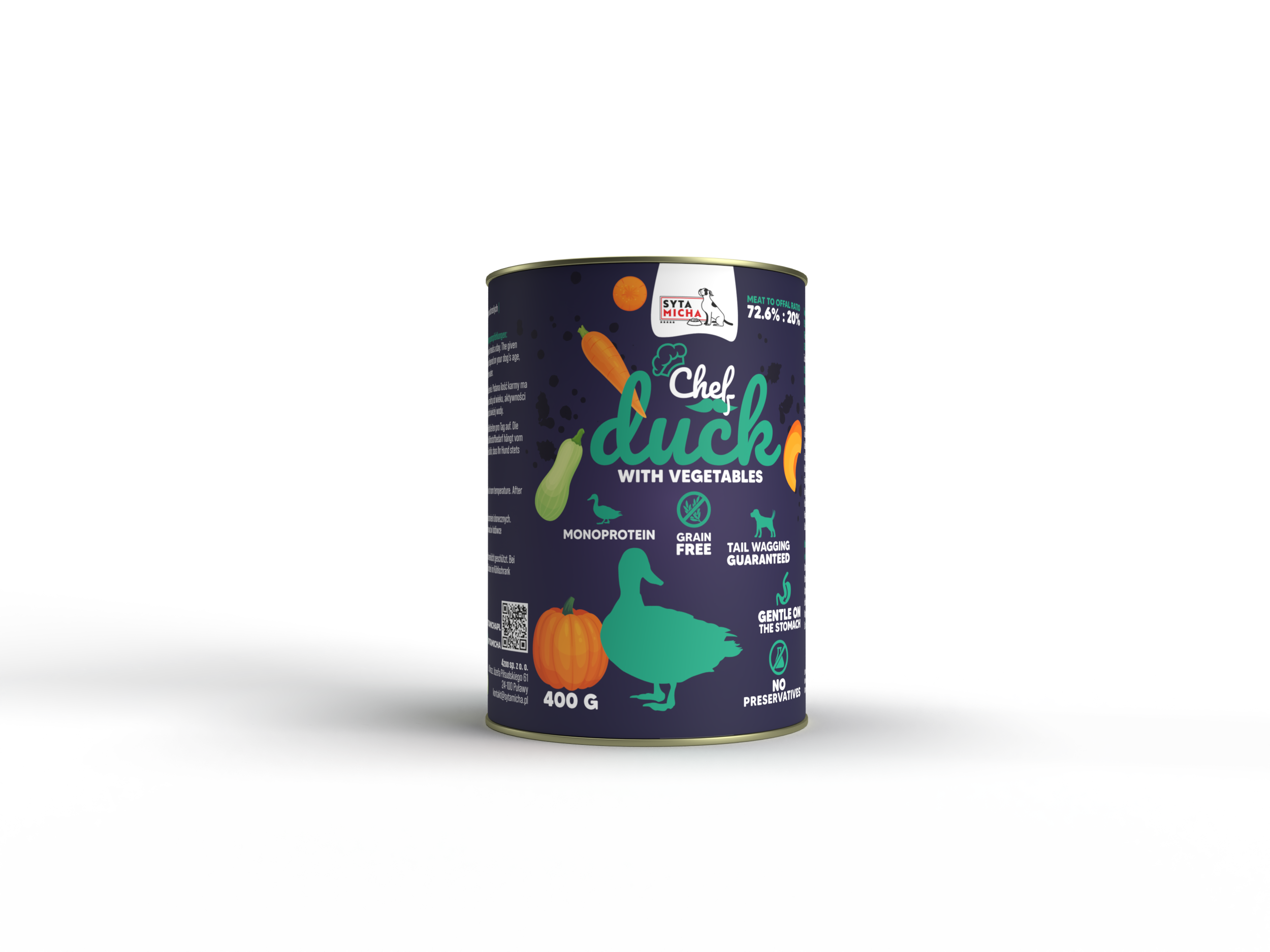
When choosing a commercial food, it is worth reaching for a reduced-calorie food, a ‘light’ type or one made for seniors. It provides less energy, with nutrients in amounts and proportions matched to the needs of an older dog.

Limiting carbohydrates helps maintain a healthy body weight and improve tissue sensitivity to insulin, which matters a great deal with diabetes. Grain-free foods contain less starch, and more protein takes its place.
Starch in grain-free foods
Starch is the storage carbohydrate of plants, making up 50% to 70% of them. Dogs digest it well, because during extrusion (the production of dry food) starch is gelatinised: the long chains break down into smaller, more easily digested molecules. The digestibility of starch in extruded foods exceeds 90%.
Foods without wheat, barley and maize are popular especially among owners of dogs with food intolerances or allergies. They contain similar or smaller amounts of starch than grain-based foods, but from a different source, most often tubers, e.g. sweet potatoes or potatoes. This starch is also well digested and is a good source of energy.
Protein in a senior’s diet
In foods for older dogs, it is worth using more easily digestible protein of high biological value. A higher amount of protein in the ration reduces the risk of sarcopenia and loss of lean body mass.
That is why animal protein matters so much. It is a complete protein that contains all the essential amino acids in the amounts the body needs. For comparison:
- incomplete proteins do not contain all the essential amino acids (e.g. cysteine, isoleucine or tyrosine),
- partially complete proteins contain some of the essential amino acids, but always lack one of them (e.g. lysine, threonine or tryptophan),
- indigestible protein (e.g. keratin) adds no nutritional value.

In ageing dogs catabolic processes predominate, and one of their effects is a negative nitrogen balance. It appears with too low a protein intake and can lead to, among other things, impaired kidney and liver function. Easily absorbed protein limits the formation of excess nitrogenous residues from protein breakdown.
Protein is limited in a senior only with illnesses that call for it, e.g. kidney failure or hepatitis. A low-protein diet then helps maintain nitrogen balance. The decision on such a diet is made by the vet.
Fat and fibre in an older dog’s bowl

Fat provides above all energy and fatty acids. In addition, it:
- forms an insulating barrier,
- carries fat-soluble vitamins,
- is needed for the nervous system to work properly,
- builds cell membranes.
Both too much and too little fat do harm. In seniors the amount of fat is usually limited, but its quality counts: the content of essential unsaturated fatty acids and the ratio of omega-6 to omega-3. The omega-3 fatty acids EPA and DHA can support an ageing dog’s nervous system and have anti-inflammatory and antioxidant effects. Fat must be limited with pancreatic disease and obesity.
Fat is also a carrier of flavour, so food with more of it is usually tastier. Too much, however, can cause digestive problems, faster transit and diarrhoea.
Dietary fibre
Dietary fibre is found in plant raw materials: grains, seeds, fruit, vegetables and by-products of the milling industry. In a senior’s diet, it:
- delays stomach emptying, so the dog feels full for longer,
- helps control body weight, because it lowers the digestibility and absorption of nutrients,
- influences bacterial growth and beneficially regulates the gut flora (an increase in lactic acid bacteria),
- improves the regularity and quality of bowel movements,
- binds heavy metal ions,
- can ease the symptoms of illnesses typical of old age, e.g. diabetes (it delays glucose absorption) or heart and vascular disease.
Fibre is divided into soluble and insoluble, and each fraction acts differently in the gut. The right ratio of the insoluble to the soluble fraction is 65:35.

Probiotics and meal routine

With age, gut dysbiosis can occur, i.e. an imbalance between beneficial and harmful bacteria. It is common in older dogs. The microbiota is also disrupted by stress, frequent changes of surroundings and antibiotic treatment.
That is why probiotics are worth considering in a senior’s diet. They can have a beneficial effect on:
- immunity (limiting the production of pro-inflammatory cytokines),
- the development of healthy gut flora and the limitation of pathogenic flora,
- stool quality.
They are also useful when changing food, during diarrhoea and after illnesses treated with antibiotics.
How often to feed a senior
Regularity is very important for an older dog. The same number of meals at fixed times aids digestion. Adult dogs are usually fed twice a day, while seniors do better with several smaller meals, even 3-4.
Introduce a new food gradually: mix it with the current food and increase the share of the new one each day.
Regular check-ups at the vet
An older dog needs more attention and more frequent veterinary check-ups. It is worth making sure of:
- a comprehensive physical examination (mouth, abdominal palpation, orthopaedic assessment),
- an assessment of adaptation to the surroundings in terms of eyesight, hearing and mobility,
- protection against parasites and the diseases they carry, rabies, Salmonella and Campylobacter, and prevention of dirofilariasis (heartworm),
- an assessment of behaviour and relationships with the household,
- nutritional status: body weight, condition (BCS), muscle mass (MCS) and concurrent illnesses,
- year-round protection against fleas and ticks,
- regular vaccinations,
- a check of the gums and teeth,
- screening for cancer and diseases that appear in later life.
Bibliography
- Beynen A.C. Zelfsamengesteld voer voor hond en kat - deel 2. Dier-en-Arts 2015, 6/7, 224-227.
- Wang M., Chou J., Chang Y., Lau WL., Reddy U., Rhee CM., Chen J., Hao C., Kalantar-Zadeh K., 2017. The role of low protein diet in ameliorating proteinuria and deferring dialysis initiation: what is old and what is new. Panminerva Medica, 59(2):157-65.
- The 2019 AAHA Canine Life Stage Guidelines.
- Platta A. Rola diety bogatoresztkowej w profilaktyce i leczeniu zaparć, otyłości, cukrzycy i chorób układu sercowo-naczyniowego. Zeszyty Naukowe Akademii Morskiej w Gdyni 2014, vol. 86:154-166.
- https://vetnutrition.tufts.edu/2018/03/the-skinny-on-fat-part-1/
- Hurnik-Bojarska S., Skorupińska A., 2018. Błonnik pokarmowy. Rola i znaczenie w diecie. Kosmetologia Estetyczna, 3, 7, 295-298.
- https://www.aaha.org/aaha-guidelines/life-stage-canine-2019/life-stage-checklist/
- https://www.aaha.org/aaha-guidelines/nutritional-assessment-configuration/bcs-and-mcs/
- Wilczak J., 2016. Ile białka w karmie. (https://zoobranza.com.pl/bialko-w-karmie-ale-ile/).
- Ostaszewski P., 2017. Białko w karmach ważny składnik diety psów i kotów. https://zoobranza.com.pl/bialko-w-karmach-wazny-skladnik-diety-psow-i-kotow/
- Beynen A.C., 2015. All-meat diets for dogs. Creature Companion, 52-53. DOI: 13140/RG.2.2.22137.47208.
- Churchill J.A., 2018. The Fountain of Age: Feeding Strategies for Senior Pets. Companion Animal Nutrition Summit, 57-63.
- Alegría-Morán A., Guzmán-Pino S.A., Egaña J.I., Muñoz C., Figueroa J., 2019. Food Preferences in Dogs: Effect of Dietary Composition and Intrinsic Variables on Diet Selection. Animals (Basel), 9(5): 219.
- Andre, Leriche L., Chaix G., Thorin X., Burger M., Nguyen P., 2017. Recovery of insulin sensitivity and optimal body composition after rapid weight loss in obese dogs fed a high-protein medium-carbohydrate diet. Journal of Animal Physiology and Animal Nutrition, 101 (1), 21-30.
- Beynen A.C., 2016. Starch in dog foods. Creature Companion, 52, 54. DOI: 13140/RG.2.2.22575.94886.
- Shmalberg J., 2015. The Protein Paradigm: Assessing Dietary Protein in Health & Disease. Today's Veterinary Practice (https://todaysveterinarypractice.com/wpcontent/uploads/sites/4/2016/05/T1511C06.pdf).
Products mentioned
 You collect HAU DOLCE points for your purchases
Frequently asked questions
From what age is a dog a senior?
A senior dog is a dog that has reached 3/4 of its expected lifespan, and a geriatric dog one that has reached 80%. When that happens depends mainly on the dog’s size.
Does an older dog need less protein?
No, it usually needs more, and it should be easily digestible protein of high biological value, because this helps limit muscle loss. Protein is limited only with illnesses that call for it, e.g. kidney failure.
How many times a day should I feed a senior dog?
Instead of two larger meals, it is better to give several smaller ones, even 3-4 a day, at fixed times.
Which food should I choose for an older dog?
It is worth considering a reduced-calorie food, a ‘light’ type or one made for seniors. A senior’s energy requirement is around 25% lower than an adult dog’s.
How do I change a senior dog’s food?
Gradually, mixing the new food with the current one and increasing the share of the new one each day.