 HAU DOLCE
Welcome back 🐾
Sign in to your Syta Micha account
Popular searches
Categories

Recommended products
DOGTOR dog oil
DOGTOR dog oils are carefully chosen products that let you enrich your dog's daily diet with valuable ingredients. The range includes four sardine-based fish oils, available in 250 ml bottles. Each of them has been developed to support a different area of your dog's body.
The line is complemented by MCT oil in a 200 ml bottle. It's a plant-derived product with completely different properties from the fish oils, so it's worth getting to know the differences before you choose.


Which dog oil for what
The dog oil in this line is chosen by issue, because the base in four of the bottles is the same, and they differ in the plant addition and proportions. All four fish oils are based on sardine.
- Joints oil 250 ml: sardine with added nettle oil and turmeric, aimed at mobility.
- Immunity oil 250 ml: sardine with purple coneflower oil and turmeric, with the highest added vitamin E in the line.
- Skin & Coat oil 250 ml: sardine plus linseed and hemp oil, the highest omega-3 share of all five.
- Digestion oil 250 ml: sardine with aniseed oil and lavender oil.
- MCT oil 200 ml: a separate, plant-based item, with no omega-3.
Sardine oil or salmon oil for dogs
We get asked about salmon oil more often than about anything else, so let me be clear: we don't stock it, and that's a decision, not an oversight. We chose sardine because it's a small, short-lived fish low in the food chain. It simply has less time and fewer opportunities to accumulate what's undesirable in the sea than a large, long-lived fish.
From the point of view of the bowl topper itself, what interests us are omega-3 fatty acids, i.e. EPA and DHA. They're the same acids whether they come from salmon or sardine. The difference is in the raw material, not the molecule.
How much omega-3 is in the bottle
This is the only figure really worth comparing between the fish oils, because the rest of the analysis looks almost identical. Skin & Coat oil has the most omega-3, and this follows directly from its recipe: sardine makes up just over half of the bottle, and the rest is linseed oil, which is itself a source of omega-3 fatty acids. The other three oils are based almost entirely on sardine, and the plant additions there amount to fractions of a per cent and determine the profile, not the amount of fat.
Three of the four fish oils also contain added vitamin D3, and all four vitamin E, which plays a double role in oil: it's an ingredient and it protects the fat from oxidation.
MCT oil isn't a fish oil
MCT oil is in this category because it's also an oil and you also dose it with a spoon, but that's where the similarities end. It's plant-derived medium-chain triglycerides, in which caprylic acid C8 and capric acid C10 make up the entire fat, in a ratio of six to four. It contains no omega-3 and doesn't replace fish oil. It's a source of energy that the body absorbs by a different route from long-chain fats, which is why some owners add it for older and working dogs.
When oil, and when herbs
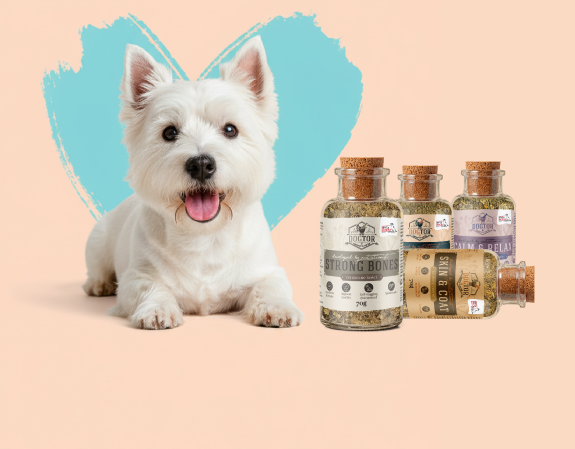
We cover the same issues in two forms. Oil wins where your dog is fussy, because the fish smell improves the whole bowl, and where you want to raise the share of omega-3 in the diet. Powdered herbs for dogs are usually chosen by owners of dogs who eat anything and need no encouragement. There's nothing to stop you using both at once, because the ingredients don't overlap. I've gathered the whole line in DOGTOR supplements.