 HAU DOLCE
Welcome back 🐾
Sign in to your Syta Micha account
Popular searches
Categories
Recommended products
Dog treats
We divide dog treats by what they're really for: rewarding during training, keeping your dog busy for longer, or hand-feeding as a small pleasure. On the shelves you'll find dried meats and offal, fish, sausages, biscuits, bars, meat pastes, freeze-dried treats and small Trenerki. Most of them are made from a single raw material, without preservatives, artificial colourings or sugar. Below I've set out how they differ and which type to choose for a specific situation.
Herbal supplements
Check it out


100% freeze-dried Tilsit cheese for dogs 150g FREEZY Pure in pieces


Syta Micha Fish & Seafood Treats 100% New Zealand mussels for dogs 70g


Which dog treats to choose for what?
Choosing dog treats starts with asking what you need them for. Training treats for dogs need to be small, soft and quickly eaten, while treats for keeping your dog busy at home are the opposite: hard and long-lasting, so they last longer.
- For rewarding during training: Trenerki training treats and small treats that disappear in a second.
- For hand-feeding: sausages, kabanos sticks, bars and biscuits.
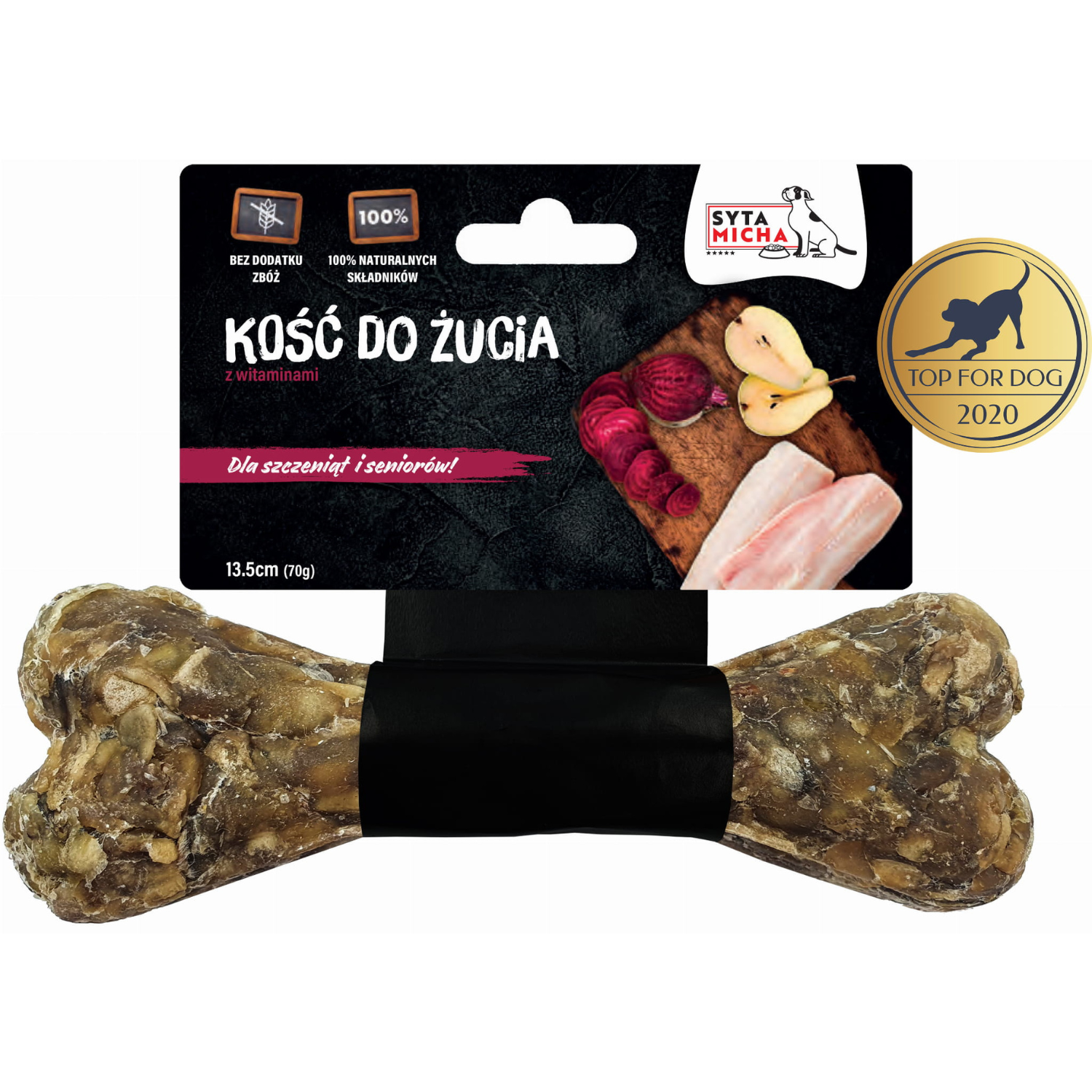
- For keeping your dog busy for longer: dried meats and offal that need chewing.
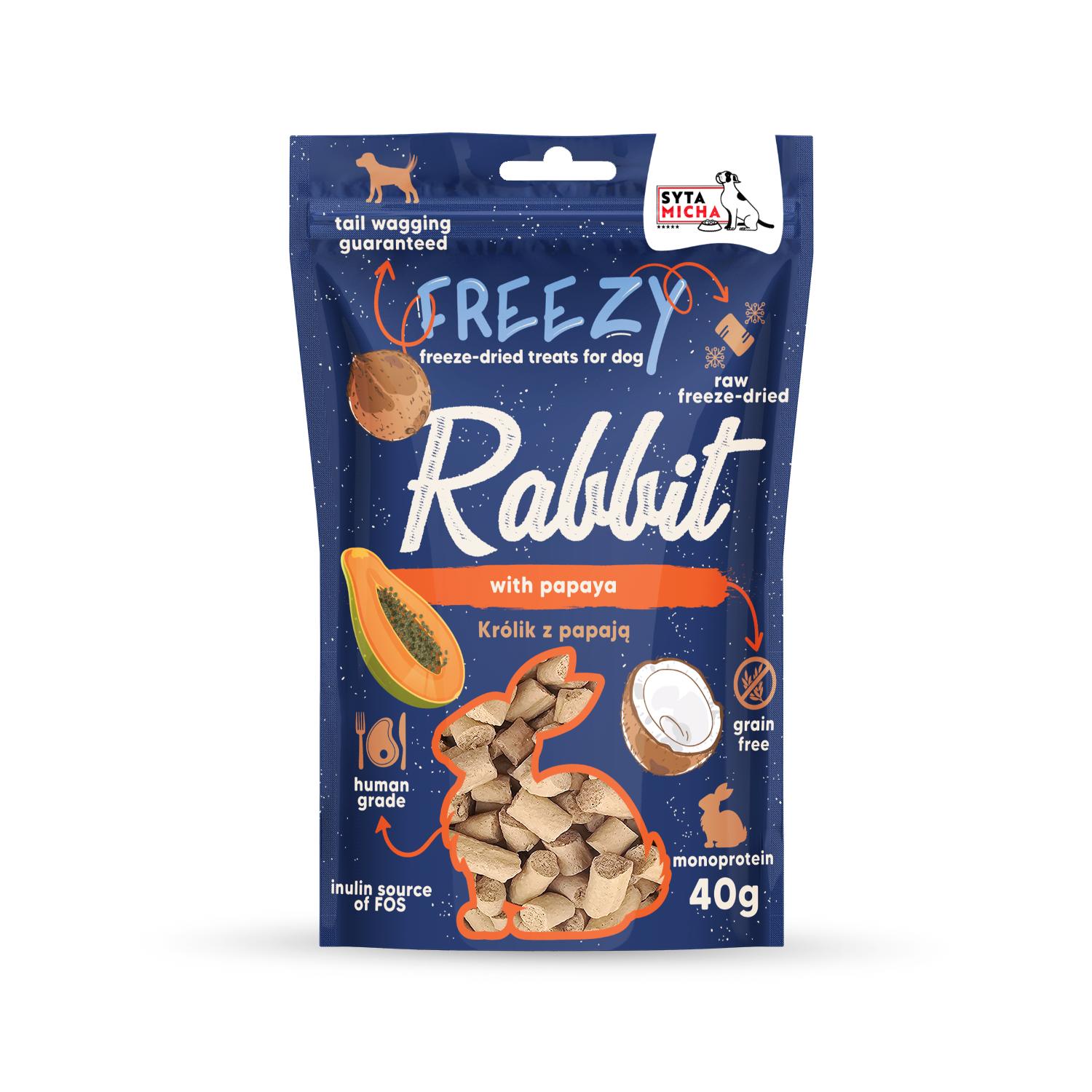
- As a bowl topper: meat pastes in a tube and freeze-dried treats you crumble over food.
Natural dog treats, or a single raw material
You'll recognise natural dog treats by the length of the label, not by the claim on the pack. The natural dog treats in our range are mainly dried meats, offal and fish, where the ingredient list comes down to a single item, because inside is only what the name promises.
Drying with warm air evaporates the water and concentrates the flavour, which is why these treats smell intense and win over even fussy dogs. They contain no preservatives, artificial colourings, sugar or salt. You'll find the biggest choice in dried meat for dogs, and among the sea options in fish for dogs.
Healthy dog treats and the need to chew
Healthy dog treats do more than just taste good. Healthy dog treats in hard form satisfy the natural need to chew, keep your dog busy for longer and, along the way, help remove plaque from the teeth while chewing.
In practice, this argument works best for dogs who get bored at home. If you're looking for something that really lasts, have a look at dog chews, because that's where the hardest items are. In the treats category, this role is filled by dried offal, for example lungs, and harder dried meats. Good practice is to give such an item when you want your dog to be occupied: after a walk, while you're working, or when something is going on at home that distracts them. It's worth having both forms in the cupboard at once, because a soft treat and a hard chew meet completely different needs and don't replace each other.
Puppy treats: what to give a young dog
Puppy treats are chosen mainly by piece size and hardness. Puppy treats should be small, so you can reward often without overfeeding, and soft, because young teeth work differently from those of an adult dog.
Trenerki and mini treats work well here, being the smallest formats in the whole category, as do meat pastes, which you can offer on a finger or mix into food. Save hard dried meat for later, when your dog is confidently handling larger pieces. In training, the pace of rewarding matters, not the size of the reward, so the smaller the piece, the more repetitions you can fit into one session. If your puppy is just discovering new flavours, start with one raw material at a time and watch what suits them best. It's then easier to find a favourite flavour that will later serve as a reward at harder moments in training, for example recall on a walk.