
Well-chosen herbs can support a dog’s digestion, calm, skin and joints, but they are not a medicine, only an addition to the diet and to treatment. The safest option is ready-made products with a transparent composition, starting with small doses. A consultation with the vet is essential when your dog is taking medication, for pregnant and nursing bitches and for puppies.
More and more owners are reaching for herbs for dogs as natural health support. Are they safe? When do they actually help, and when can using them be risky? In this guide we answer the most important questions and show you how to use herbs sensibly.
What herbs can and cannot do
Well-chosen and properly dosed herbs can be a valuable addition to the diet. They support the digestive, nervous and immune systems and the skin. They are not, however, a medicine. Their role is prevention and supporting treatment led by a vet.
When herbal support is worth reaching for
Digestion
If your dog has bloating or indigestion, herbs for digestion are worth considering. Our range includes blends that support gut function, e.g. Dogtor for gut protection, a blend that helps maintain the balance of the gut microflora.
Stress and anxiety
A storm, a visit to the vet or a journey are very stressful for many dogs. At such times, herbs with a calming effect can help. We have created Dogtor calming treats for dogs with rabbit and herbs and the Dogtor for calming and relaxation supplement, which help a dog relax.
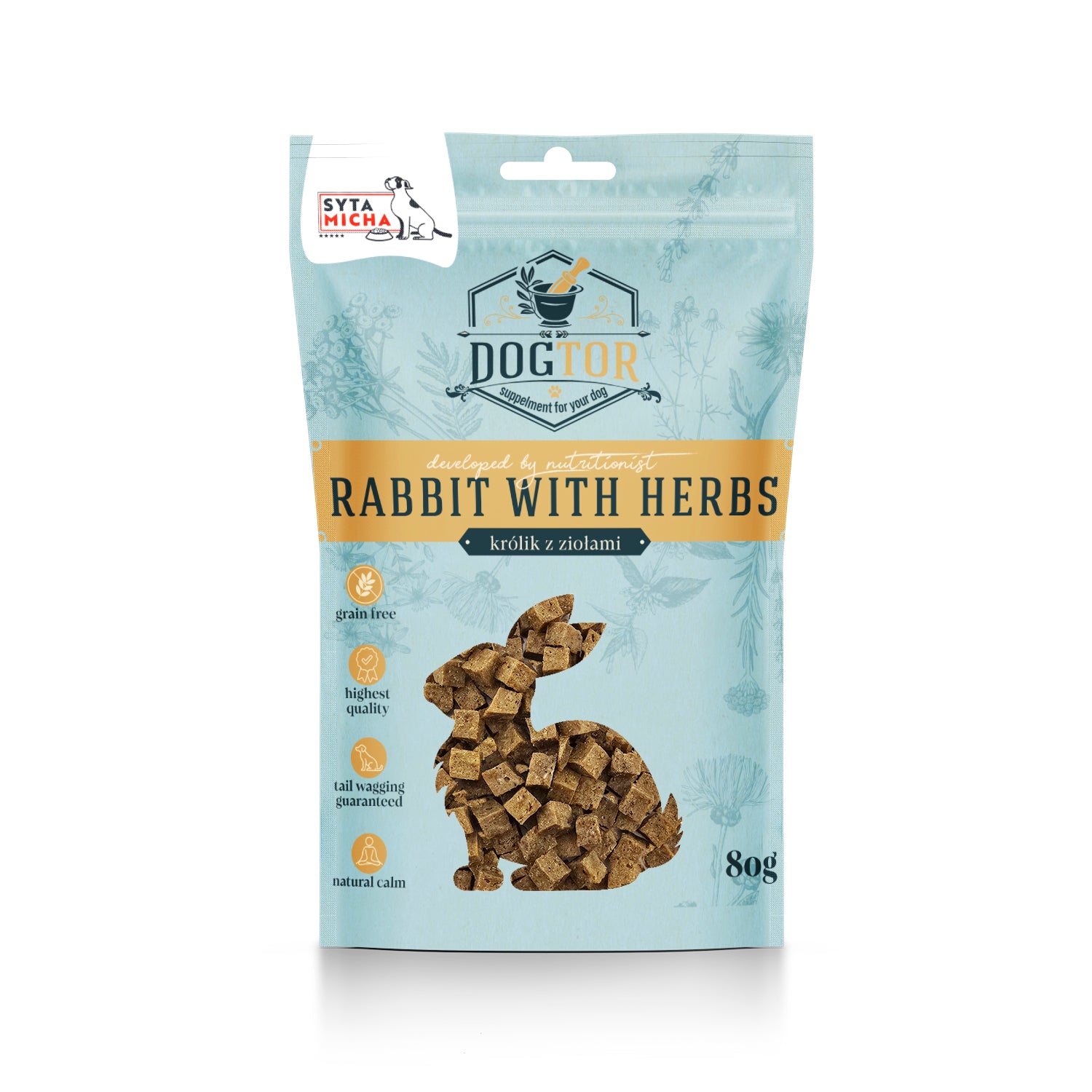 Dogtor Calming treats for dogs rabbit with herbs 80g · 14,99 zł
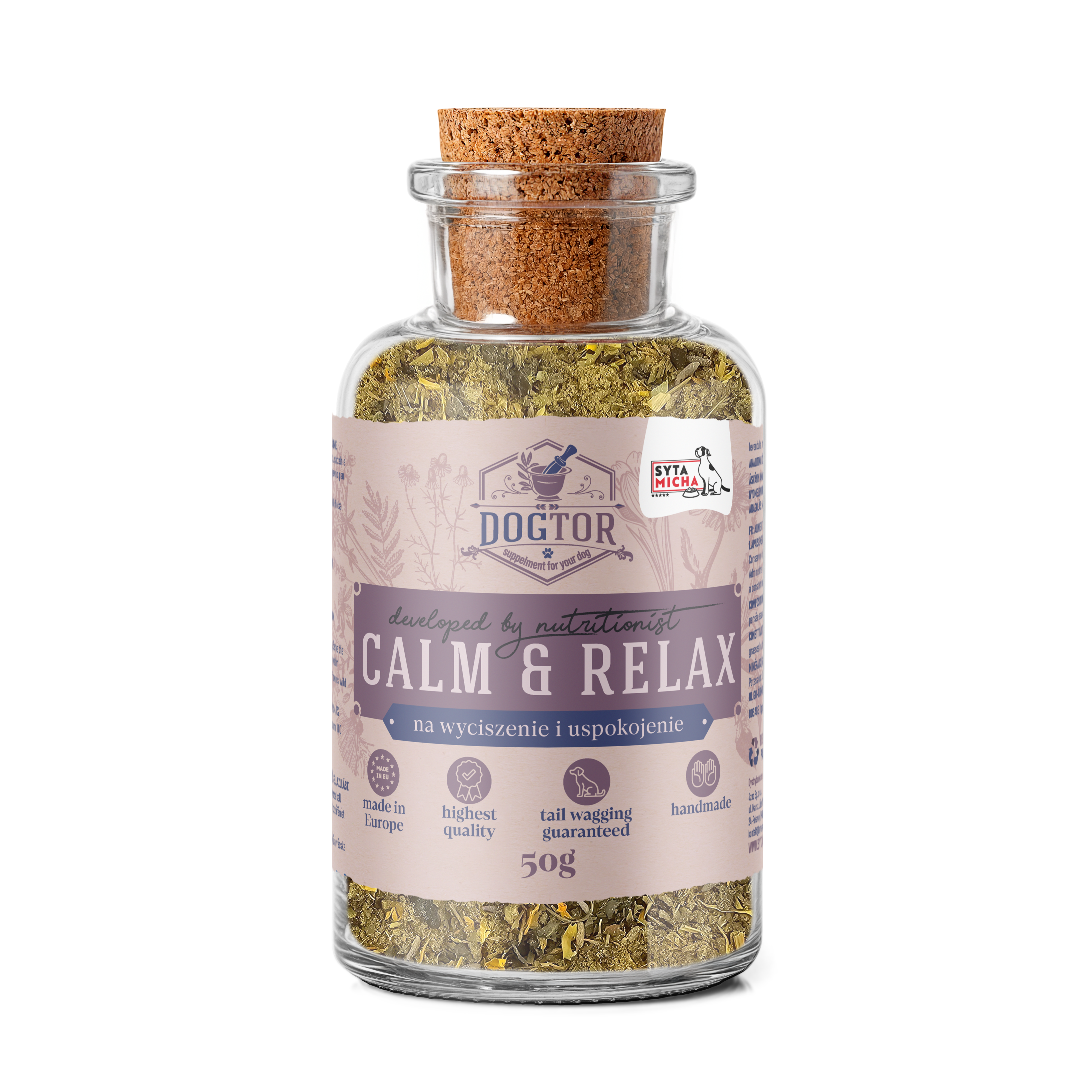 Syta Micha DOGTOR for calming and soothing 50g · 69,90 zł
Skin and coat
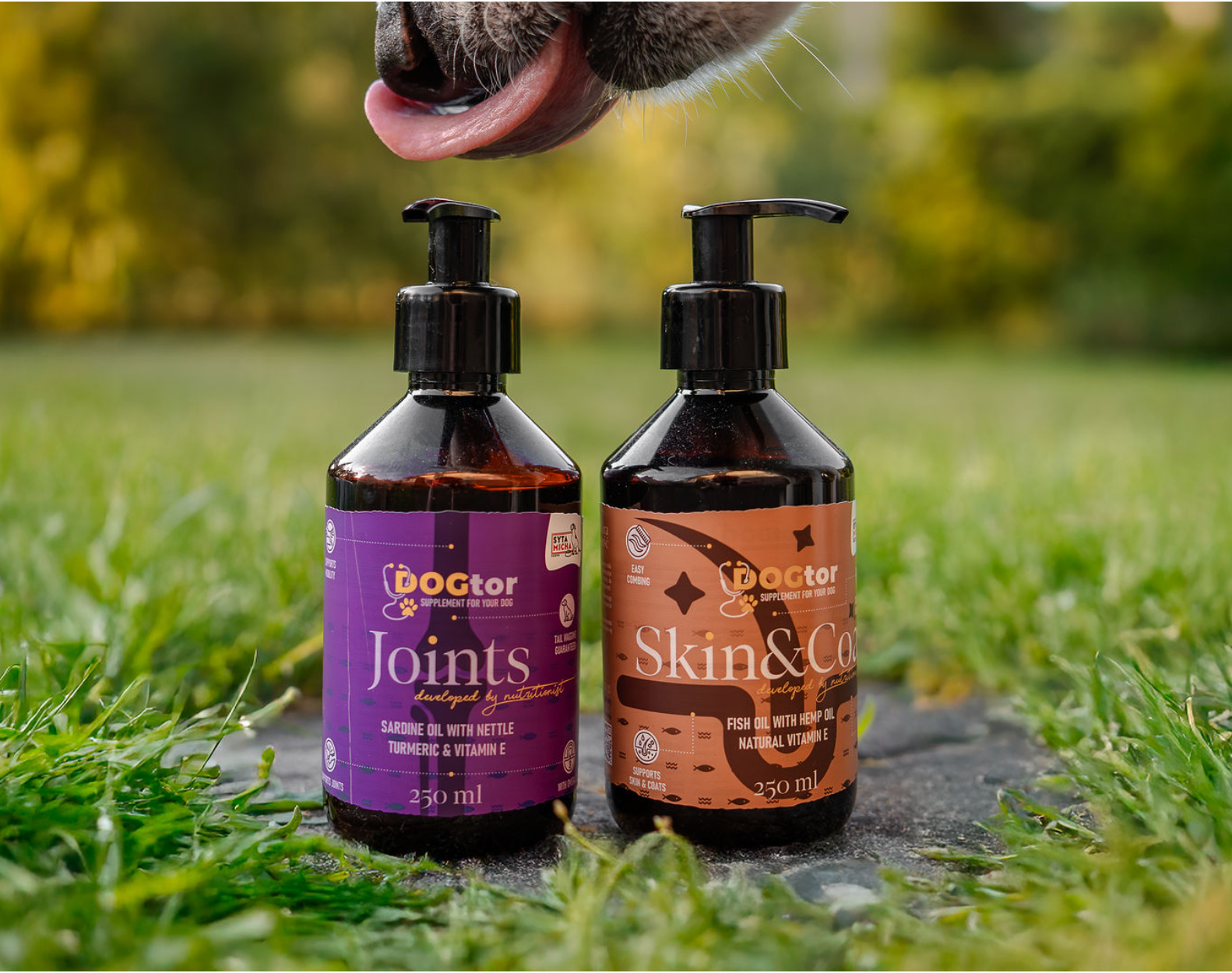
A dull coat or skin problems? Herbs for the skin can help improve its condition. It is worth looking for products with skin-supporting ingredients, which you will find in our functional treats and supplements.
Joints
Older dogs and large breeds can be especially prone to joint problems. Herbs for joints, as part of comprehensive care, can make moving about more comfortable.
How to give herbs safely
The foundation of safety is knowledge and moderation. The simplest and safest way is ready-made, proven products. Why?
- A reliable composition - putting blends together yourself is risky. It is easy to get the proportions wrong, and some popular plants are harmful to dogs.
- Quality control - choose products with a transparent composition and a manufacturer’s statement on quality control. Our Dogtor supplements are developed by animal nutrition specialists.
- Convenience - Dogtor herbal supplements come as dried herbs that are easy to mix with wet or dry food.
- Small doses to start with - always start with a small amount and watch your dog’s reaction carefully, especially if it has allergies.
When to talk to the vet first
Before you add herbs to the diet, consult your vet. This is especially important when:
- your dog is taking medication, as herbs can interact with it,
- your bitch is pregnant or nursing puppies,
- it is a puppy.
The Dogtor line - herbs as smart support
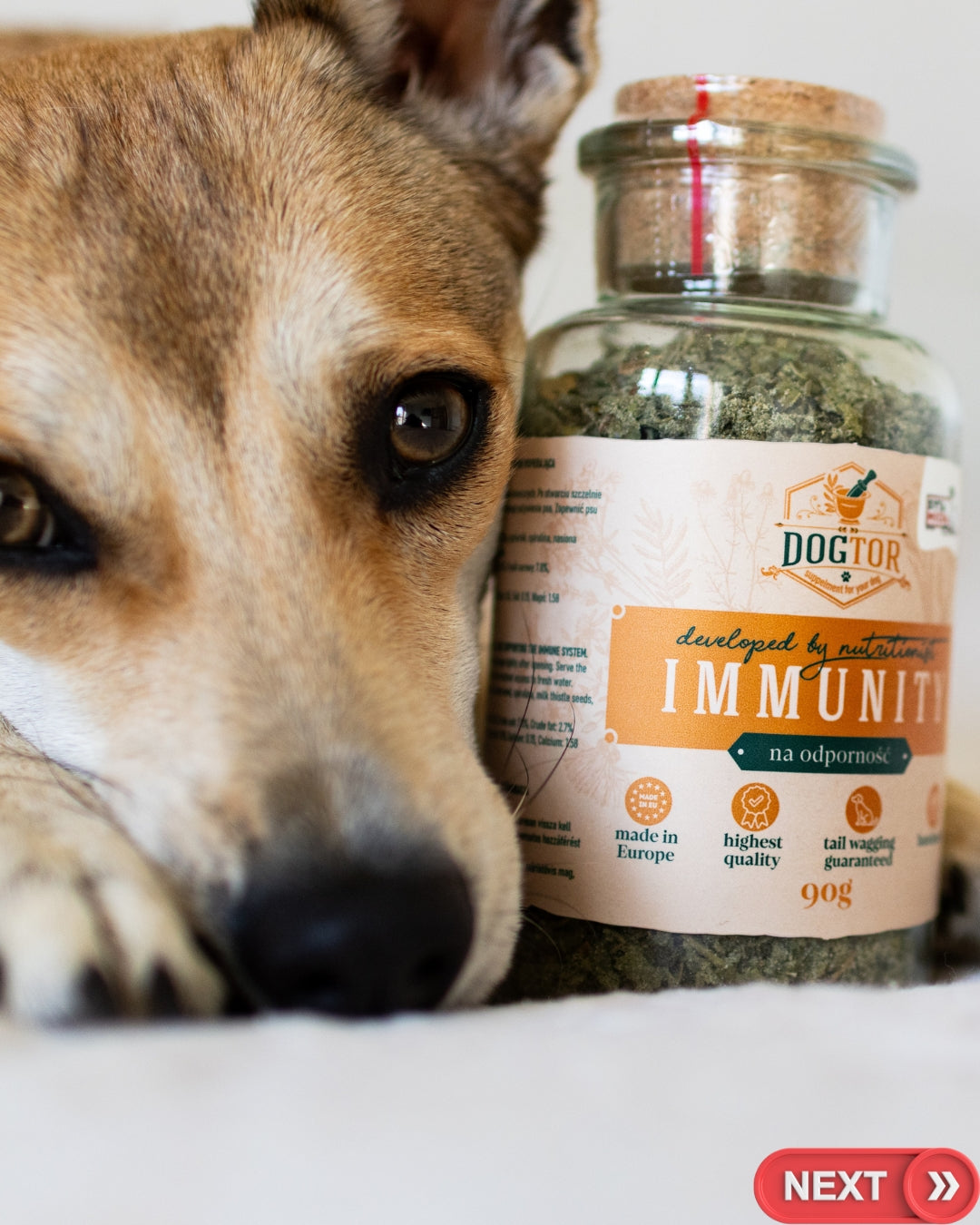
At Syta Micha we combine a love of animals with expert knowledge. We created the Dogtor line of herbal supplements to support dogs’ health naturally at every stage of life.
Remember that herbs are an addition to the diet, not a substitute for veterinary care. Treat herbal products as support that, together with attentive care, helps look after your dog’s health and wellbeing.
Products mentioned
 You collect HAU DOLCE points for your purchases
Frequently asked questions
Are herbs safe for dogs?
Well-chosen and properly dosed herbs can be a safe addition to the diet. Some popular plants are, however, harmful to dogs, so it is better to choose ready-made products than to put blends together yourself.
Can herbs replace treatment?
No. Herbs are not a medicine; their role is prevention and supporting treatment led by a vet.
When should herbs not be given without consulting a vet?
When your dog is taking medication, for pregnant and nursing bitches and for puppies. Herbs can interact with medicines.
How should I give my dog herbs?
The simplest way is to mix ready-made dried herbs with wet or dry food. Start with a small dose and watch your dog’s reaction, especially if it has allergies.