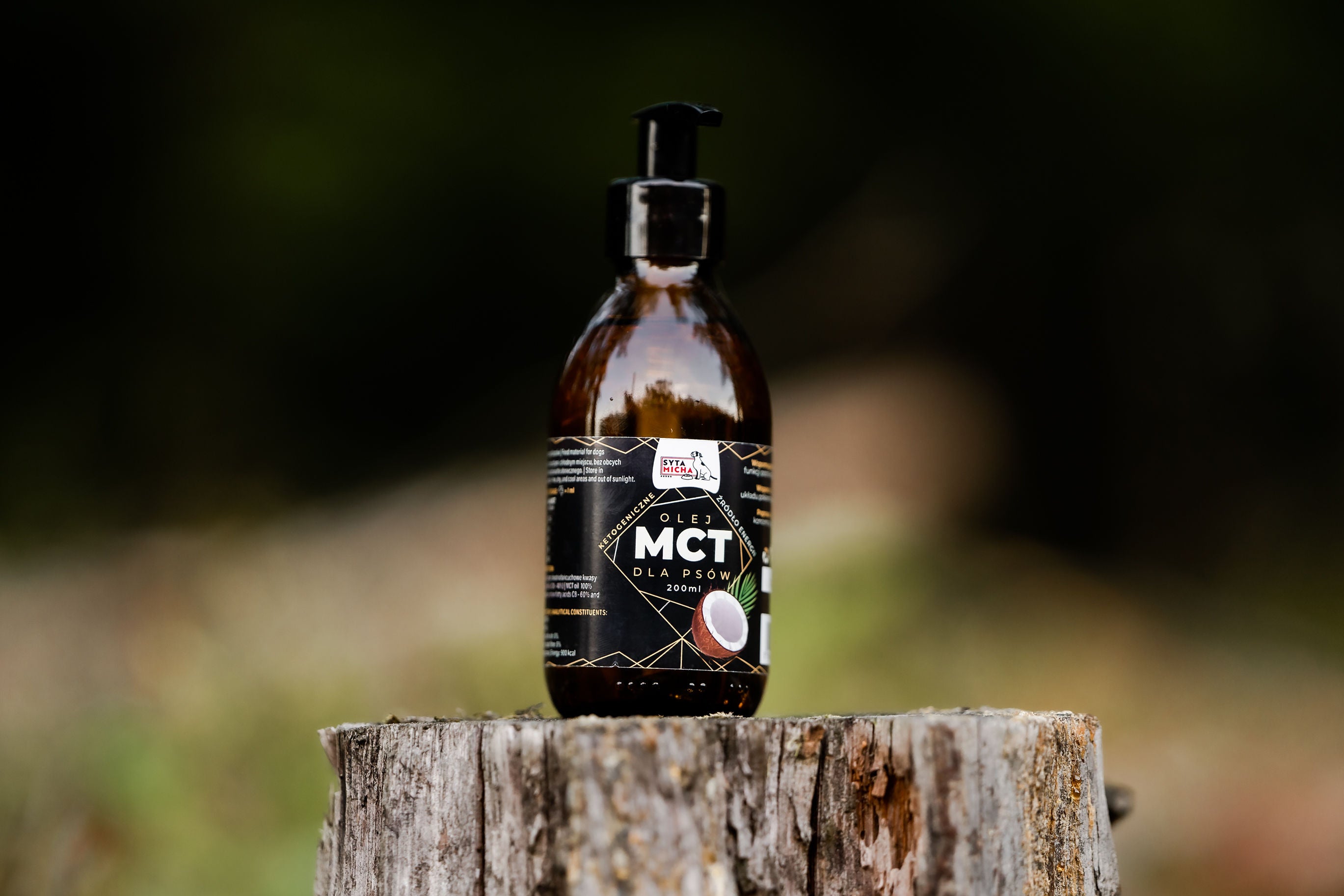

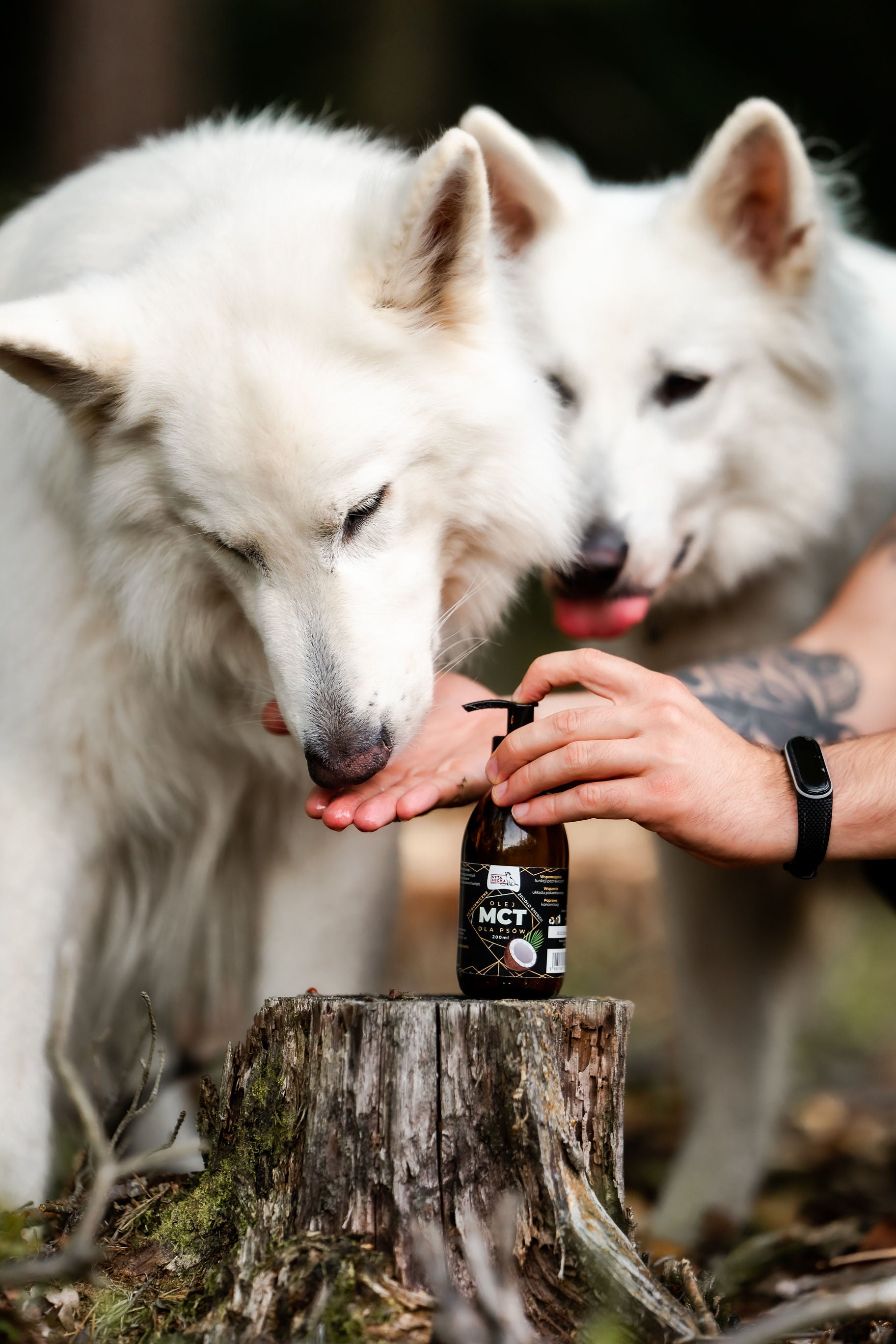
MCT oil is a fat that is quickly converted into energy and can support the vitality of older dogs, including cognitive function, as well as the fitness and recovery of active dogs. It is introduced gradually, from about ¼ teaspoon a day for a small dog to 1 teaspoon for a large one. With liver or pancreatic disease or chronic metabolic problems, supplementation must first be agreed with your vet.
Does your dog have less energy than it used to? Or does your athlete need fuel before training and support with recovery after exercise? With age, and with high activity, a dog’s body needs an easily absorbed source of energy. This is where MCT oil can help, a supplement that supports vitality and fitness in dogs of all ages.
MCT oil for senior dogs
In older dogs you often see a drop in energy, a smaller appetite or problems with focus. With age, digestion and the absorption of nutrients also decline. In such situations MCT oil can be a valuable addition to the diet.
- Fast, light energy - MCTs are fats that the body quickly converts into energy. They can therefore support the vitality and activity of a senior dog.
- Support for cognitive function - the ketone bodies produced from MCTs can be an alternative source of fuel for an older dog’s brain. Studies indicate that MCT supplementation can support focus, orientation and behaviour in dogs with cognitive dysfunction.
- Skin and coat - in older dogs the skin is often dry and the coat dull. MCTs do not replace omega-3 and omega-6 fatty acids, but they can indirectly support skin condition by providing energy and helping the body absorb nutrients from the diet.
MCT oil for active and working dogs
Sporting, working or exceptionally energetic dogs need a diet that keeps pace with them. Their need for energy, nutrients and recovery after exercise is much higher than in pet dogs.
- A fast source of energy - MCTs are converted into energy faster than other oils. They work well as fuel before training or competitions, without a feeling of heaviness.
- Recovery after exercise - MCTs do not rebuild glycogen directly (carbohydrates do that), but they can support the body during recovery by providing readily available energy.
- Fitness and vitality - regular use of MCTs can support overall performance, especially in a well-balanced diet with the right amount of protein and essential fatty acids.
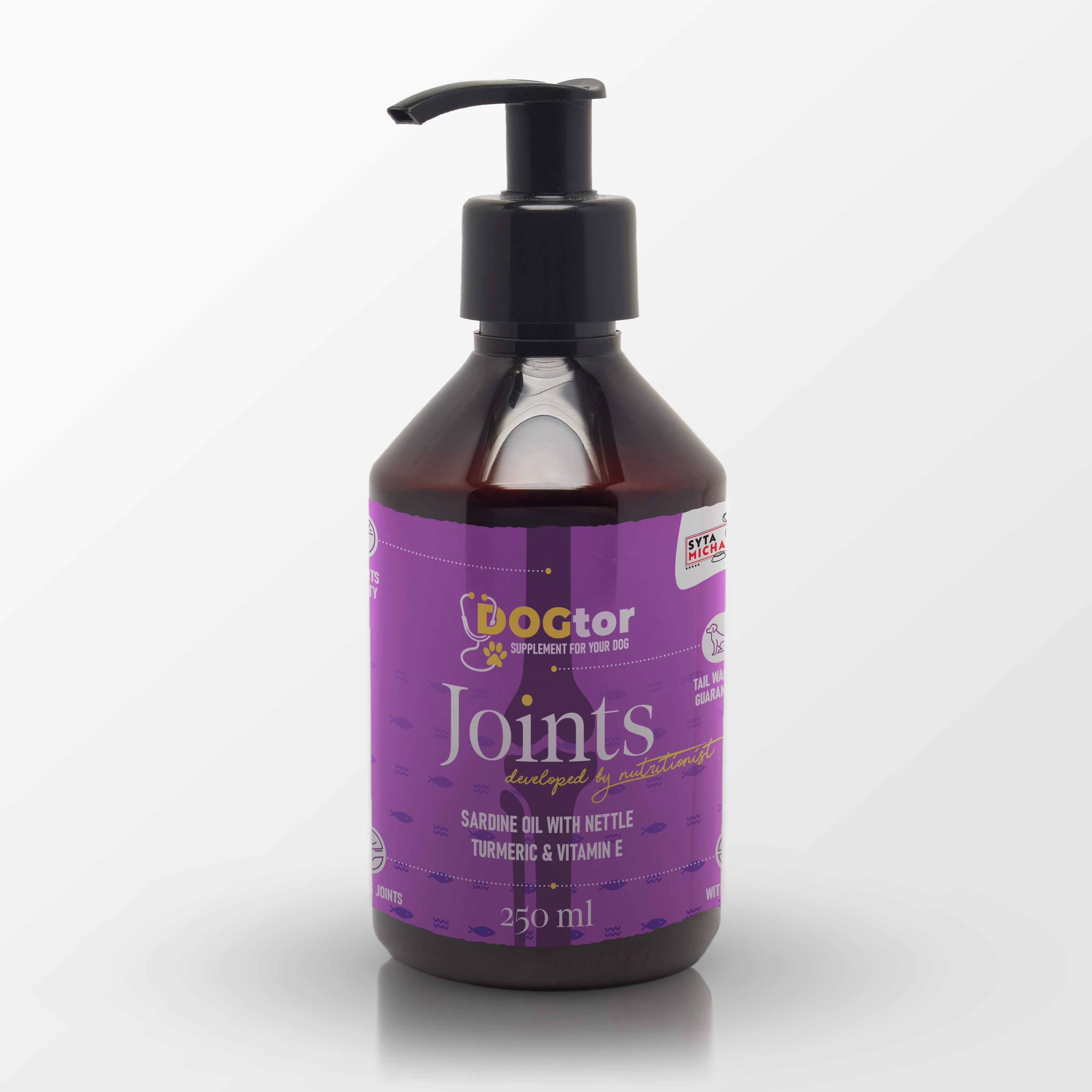
How to introduce MCT oil into your dog’s diet
Both with a senior and with an active dog, introduce the oil gradually to avoid stomach problems. Start with a small dose and watch how your dog reacts:
- small dog - about ¼ teaspoon a day,
- medium dog - about ½ teaspoon a day,
- large dog - about 1 teaspoon a day.
Increase the dose slowly over several days. Too much can cause diarrhoea or vomiting, so do not exceed the recommended doses.
When to consult your vet
MCT oil is a dietary supplement that can support your dog’s vitality, but it does not replace veterinary care. Contact your vet if:
- your dog has liver or pancreatic disease or chronic metabolic problems - in that case always agree supplementation beforehand,
- any health problems or a sudden change in behaviour appear,
- there is no improvement despite supplementation.
Based on an examination, the vet will make a diagnosis and recommend what to do next.
Energy from within at any age
MCT oil is an easily absorbed source of energy that can support the vitality of senior dogs and active dogs. It helps maintain mental sharpness, adds energy and supports the body’s overall nourishment. Syta Micha MCT oil was created with the needs of dogs of different ages and activity levels in mind.
Products mentioned
 You collect HAU DOLCE points for your purchases
Frequently asked questions
How can MCT oil help an older dog?
MCTs are quickly converted into energy, and the ketone bodies they produce can be an alternative fuel for the brain. Studies indicate that they can support focus and orientation in dogs with cognitive dysfunction.
How much MCT oil should I give my dog to start with?
About ¼ teaspoon a day for a small dog, ½ teaspoon for a medium dog and 1 teaspoon for a large dog. The dose is increased gradually over several days while watching how your dog reacts.
Does MCT oil rebuild glycogen after training?
Not directly, that is the job of carbohydrates. MCTs can, however, support recovery by providing readily available energy.
When should MCT oil not be given without consulting a vet?
When your dog has liver or pancreatic disease or chronic metabolic problems. Too high a dose can also cause diarrhoea or vomiting.