

Flaxseed is a source of alpha-linolenic acid (omega-3), fibre, lignans, and vitamins and minerals. Fibre and mucilage support the digestive tract and give a feeling of fullness, while omega-3s support the skin, coat and the body during inflammation. If you add flaxseed yourself, watch the dose, as too much fibre can cause bloating or diarrhoea.
Claims such as ‘for a beautiful, shiny coat’ or ‘for a healthy digestive system’ appear on many dog products. It is worth checking, though, what exactly in the composition stands behind them. In our dry puppy food, one of these ingredients is flaxseed.
In this article we describe what flaxseed contains and what role these components play in a dog's diet.
What flaxseed is
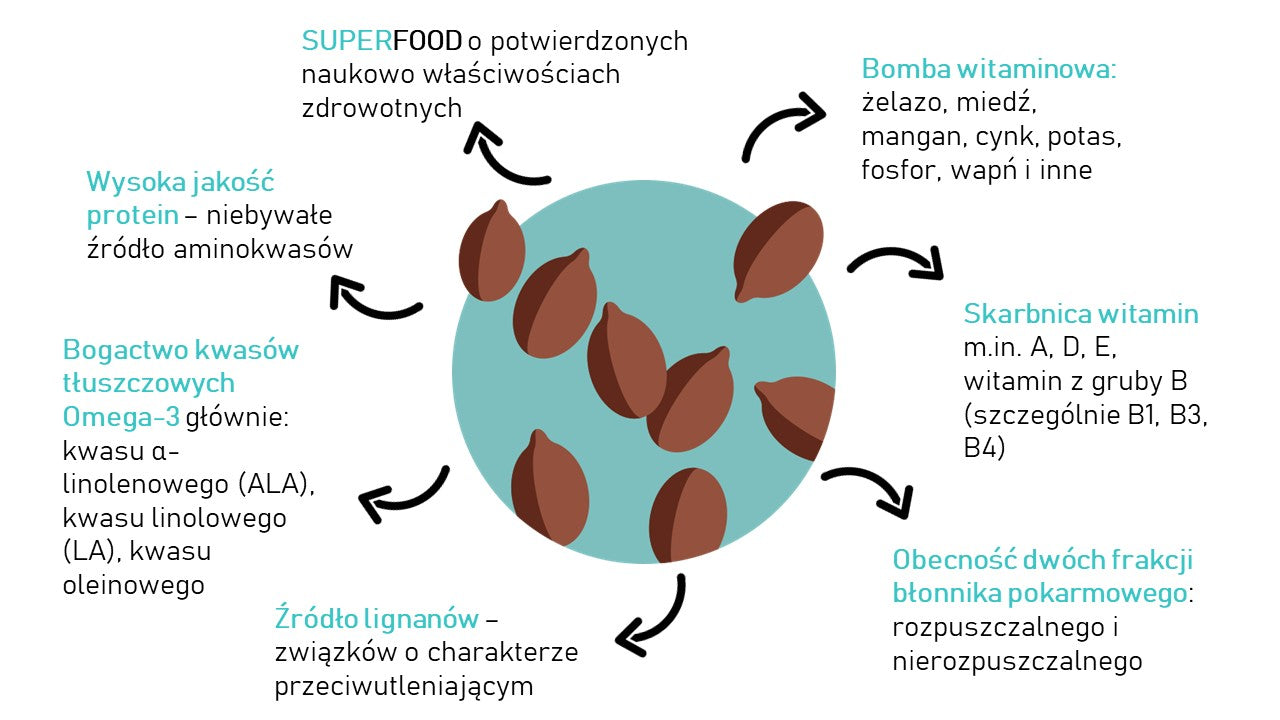
Flaxseed (linseed) is the seed of flax, an annual plant of the flax family (Linaceae). Flax is one of the oldest cultivated plants: as far back as ancient Mesopotamia it was used as a source of paper. Today it is grown all over the world, with India, the United States, China, the United Kingdom and Ethiopia among the leading producers.
The Latin name Linum usitatissimum L. means ‘most useful’. The main varieties are brown and yellow (golden). The seeds are flat and oval with pointed ends, and both varieties have similar nutritional properties and a similar amount of omega-3 fatty acids.
Flaxseed contains:
- antioxidants,
- vitamins (A, C, F and E),
- minerals (P, Mg, K, Na, Fe, Cu, Mn and Zn),
- proteins and unsaturated fatty acids,
- lignans, phenolic compounds and fibre.
This is why it is sometimes classed as a superfood. The group also includes foods that support the development of healthy gut flora, and flaxseed has these qualities.
Omega-3 fatty acids from flaxseed
A dog's diet should contain an adequate amount of omega-3 fatty acids. The precursor of the whole group is alpha-linolenic acid (ALA). Neither humans nor animals can synthesise it, so the diet is its only source.
EPA and DHA also matter, and the requirement for them varies across life stages. Growing puppies and kittens need more DHA than adult dogs and cats.
Omega-3 fatty acids:
- help the body limit inflammation,
- are involved in building cell membranes and in proper cell function,
- are needed for the nervous system, reproduction and growth,
- support immunity,
- help keep the skin moisturised and the coat shiny.
Research also suggests that omega-3 fatty acids from flaxseed may support cardiovascular health.
Fibre and mucilage - support for digestion
Flaxseed is a good source of dietary fibre, which is important for your dog's digestive health. It consists of two fractions:
- insoluble (cellulose and lignins), which increases stool bulk and shortens intestinal transit time, so it helps with constipation,
- water-soluble (pectins, mucilage and gums), which helps keep glucose levels steady after a meal and may lower cholesterol.
Mucilage has a protective, coating effect. It soothes an irritated digestive tract and shields the stomach lining, which is why it can be helpful during antibiotic treatment or with digestive problems. Flaxseed in Syta Micha food also increases the feeling of fullness, which helps maintain a healthy body weight.
Important: if you add ground flaxseed to meals yourself, keep an eye on the dose, as too much fibre can cause discomfort, bloating or diarrhoea. Flaxseed is gluten-free.
Lignans - natural antioxidants
Lignans are plant phenolic compounds that act as antioxidants and phytoestrogens. In flaxseed these are mainly secoisolariciresinol diglucoside (SDG, 294-700 mg/100 g), as well as matairesinol (0.55 mg/100 g), lariciresinol (3.04 mg/100 g) and pinoresinol (3.32 mg/100 g).
Gut bacteria convert SDG into enterodiol and enterolactone. These compounds help maintain hormonal balance and, as antioxidants, help neutralise free radicals. Flaxseed is considered the richest source of lignans.
Vitamins and minerals in flaxseed
Flaxseed contains many vitamins and minerals important for a dog's body:
- vitamins C, E, B1, B2, B3, B5, B6 and folic acid,
- calcium, magnesium, phosphorus, copper and zinc,
- tocopherols, i.e. natural lipid antioxidants.
Vitamin A is responsible for proper vision, calcium and phosphorus support the bones and joints, and B vitamins are needed for puppies to develop properly.
Flaxseed in Syta Micha food
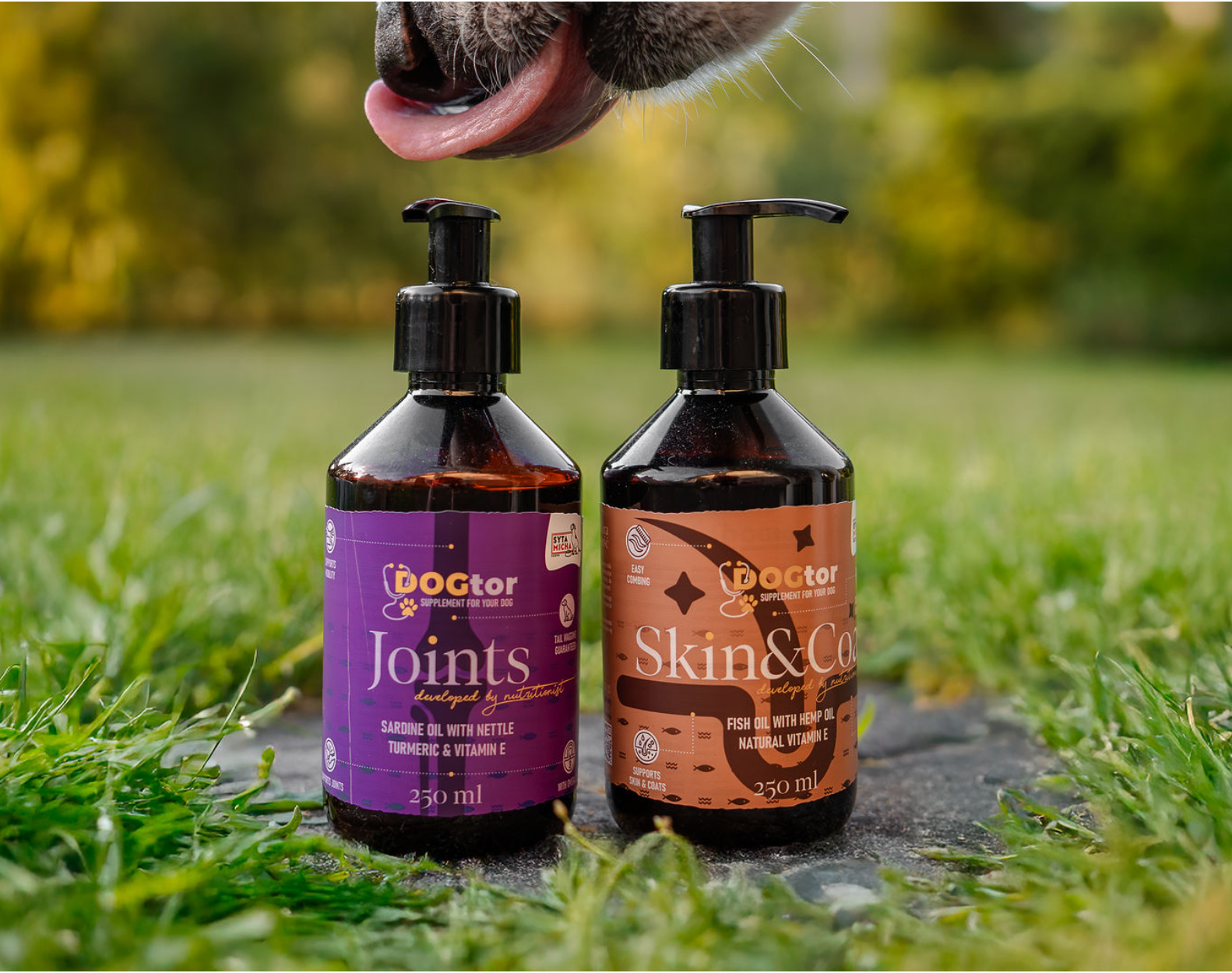
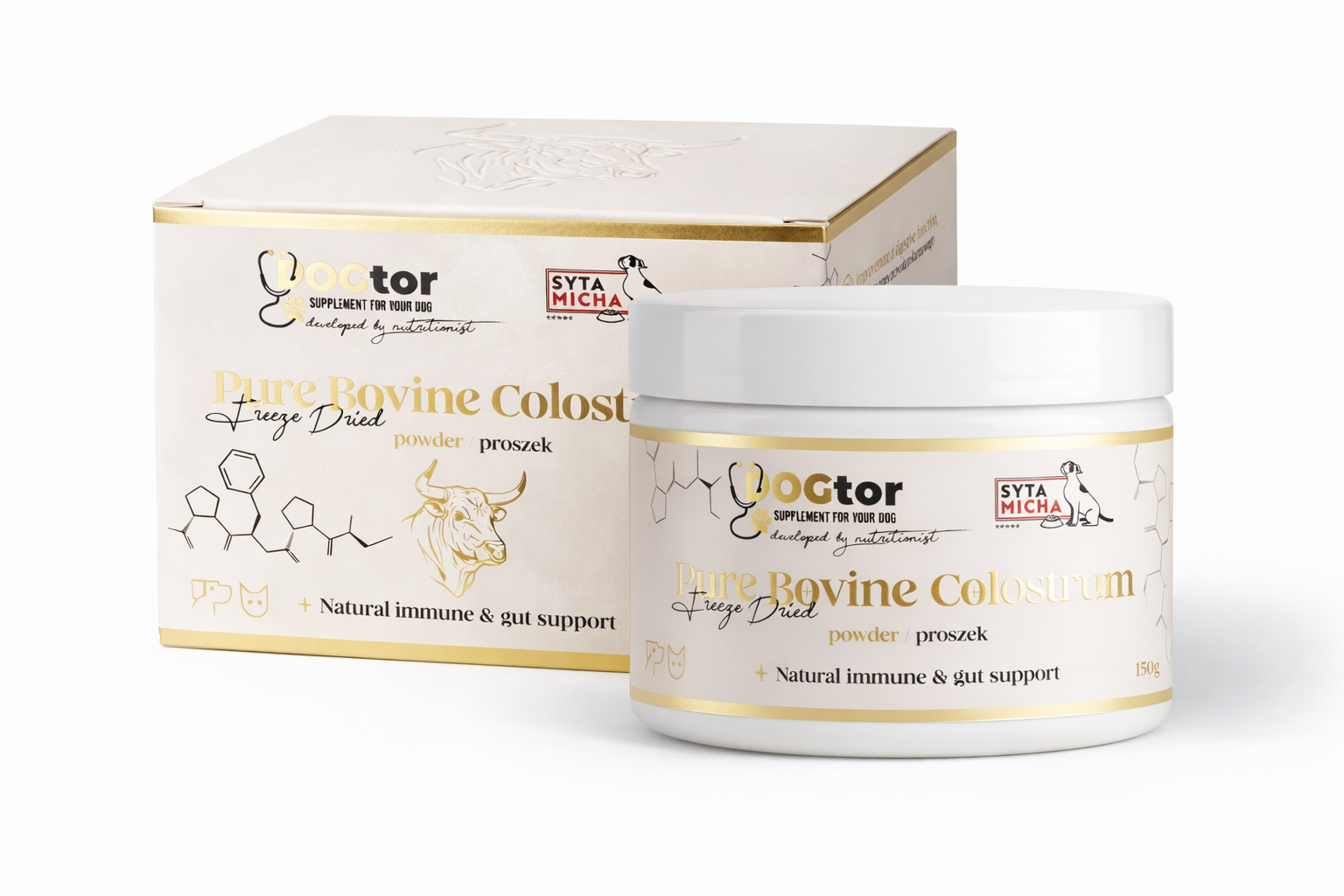
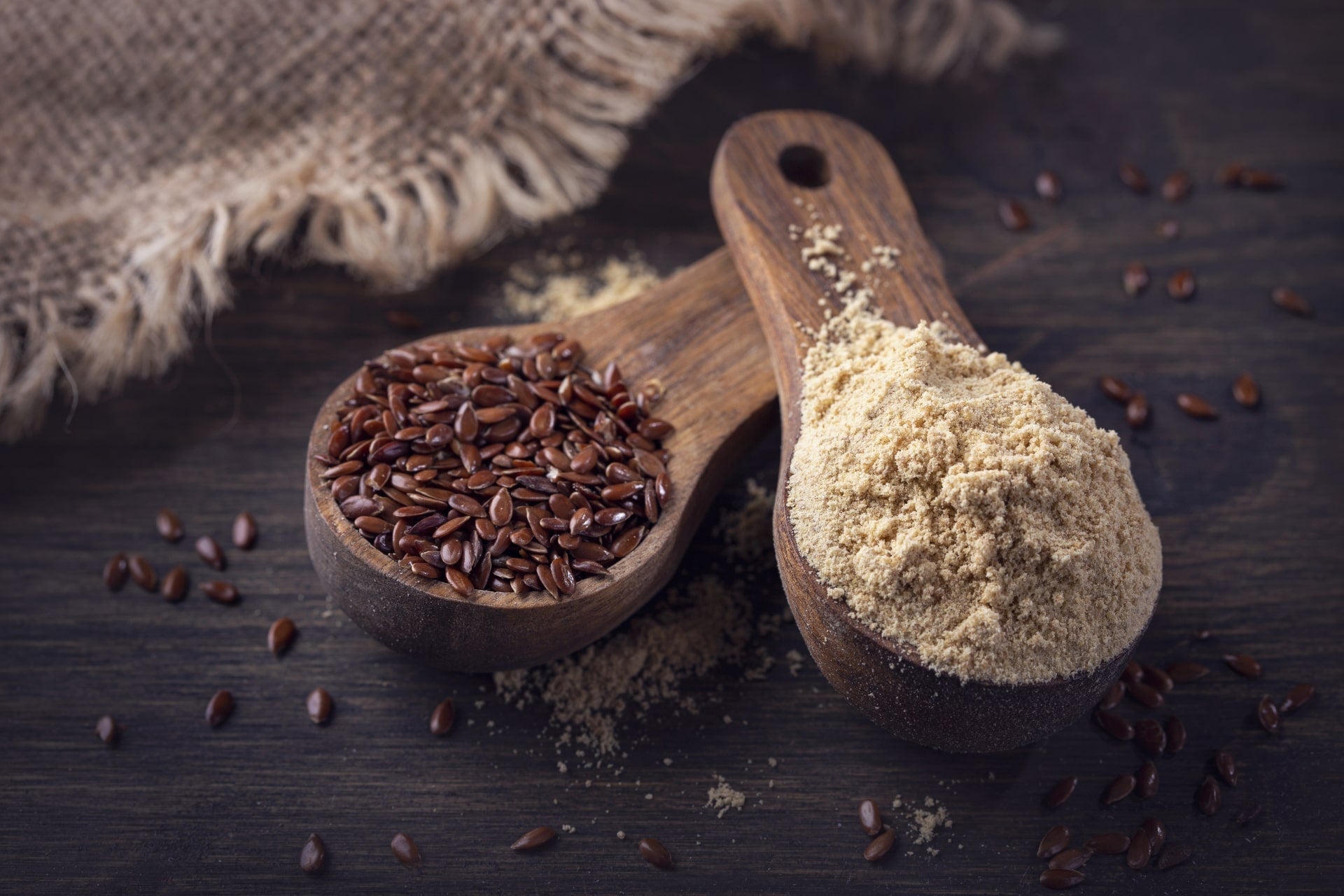
We add flaxseed to our dry puppy food (lamb, raspberry and pumpkin and rabbit and turkey, banana and courgette), to the DOGTOR skin and coat supplement, and linseed oil (38.1%) to Skin & Coat oil. Why:
- it is a source of proteins, vitamins and minerals needed for healthy development,
- omega-3 fatty acids support the body during inflammation, including in the joints,
- omega-3s help keep the skin moisturised,
- it supports the digestive system and helps with constipation,
- mucilage slows stomach emptying, which gives a longer feeling of fullness and helps control body weight,
- flax proteins are rich in arginine and glutamine,
- phenolic acids and flavonoids have an antioxidant effect.
An adequate amount of omega-3 fatty acids may help ease the symptoms of skin or joint inflammation and keep the coat shiny. The flaxseed added to our food is safe for dogs, and if your dog has health problems, it is always worth discussing the diet with a vet.
References
- Adolphe J., 2016. FLAXSEED: A Nutrient-Packed Ingredient for Pet Food. Nutrition.
- Adolphe J., Fitzpatrick K., 2016. FLAXSEED: Nutrition Benefits for Dogs and Cats. Nutrition Benefits for Cats and Dogs, 2, 1-4. [www.flaxcouncil.ca]
- Benefits for Cats and Dogs, 1, 1-4. [www.flaxcouncil.ca].
- Bernacchia R., Preti R., Vinci G., 2014. Chemical Composition and Health Benefits of Flaxseed. Austin Journal of Nutrition and Food Sciences, 2(8), 1045.
- Chłopicka J, Dobrowolska-Iwanek J, Paśko P, Bartoń H., 2013. Aktywność antyoksydacyjna i całkowita zawartość polifenoli oraz sensoryczna ocena chlebów wypiekanych z dodatkiem lnu. Problemy Higieny i Epidemiologii, 94(2), 305-308.
- Cote E., 2010. Clinical Veterinary Advisor - E-Book: Dogs and Cats. Mosby, 2nd edition.
- Cote E., 2014. Clinical Veterinary Advisor - E-Book: Dogs and Cats. Mosby, 3nd edition.
- Daun JK, Barthet VJ, Chornick TL, Duguid S. Structure, composition, and variety development of flaxseed. Flaxseed in human nutrition Thompson LU, Cunnane SC. 2003; 1-40.
- Fleming JA, Kris-Etherton P.M., 2014. The Evidence for α-Linolenic Acid and Cardiovascular Disease Benefits: Comparisons with Eicosapentaenoic Acid and Docosahexaenoic Acid. Advances in Nutrition, 5(6), 863-876.
- Goyal A., Sharma, Upadhyay N., Gill S., Sihag M., 2014. Flax and flaxseed oil: an ancient medicine & modern functional food. Journal of Food Science and Technology, 51(9), 1633-1653.
- Kowalski R., Kowalska G., 2018. Polskie superfoods, 51-53.
- Lenox C.E., 2016. ROLE OF DIETARY FATTY ACIDS IN DOGS & CATS. TODAY’S VETERINARY PRACTICE. [tvpjournal.com].
- Mantri R., Sonavane S., Arya S., 2012. Flaxseed Health Benefits & Applications. Food Marketing and Technology, 24-28.
- Mirowski A., 2014. Żywieniowe czynniki ryzyka chorób układu kostno-stawowego u szczeniąt psów ras dużych i olbrzymich. Życie Weterynaryjne, 89(2), 125-128.
- Palka A., Wilczyńska A., Flis M., 2017. Wpływ dodatku nasion oleistych na zawartość podstawowych składników odżywczych w koktajlach mleczno-owocowych oraz na ich kwasowość. Problemy Higieny i Epidemiologii, 98(4), 334-339.
- Priy R., Katoch M., Kumar A., 2016. Flaxseed-composition and its health benefits. Research in Environment and Life Sciences, 9(3), 310-316.
- Tkaczyk A., Kowal K., Ślaska B., 2019. Zespół Imerslund-Gräsbecka - rzadka choroba genetyczna psów. JOURNAL OF ANIMAL SCIENCE, BIOLOGY AND BIOECONOMY, XXXVII (2), 5-14.
- Wawryka J., Teodorowicz A., Zdrojewicz Z., 2017. Zastosowanie lecznicze siemienia lnianego. Medycyna Rodzinna, 20(1), 41-47.
- [www1.] Healthy Ingredients for Your Pet: Flaxseed, 2019. https://www.petnet.io/blogs/food/healthy-ingredients-for-your-pet-flaxseed [accessed: 25.05.2020].
- [www2.] Benefits of flaxseed for dogs, 2018. https://missinglinkproducts.com/2018/02/23/benefits-flaxseed-dogs [accessed: 25.05.2020].
- [www3.] Grieves D., 2017. Healthy Foods Checklist: Flaxseed for Dogs. https://www.petmd.com/dog/nutrition/healthy-foods-checklist-flaxseed-dogs
- [www4.] Beynen A.C., 2017. Flax in dog food. https://www.researchgate.net/publication/321699728_Beynen_AC_2017_Flax_in_dog_food
Products mentioned
 You collect HAU DOLCE points for your purchases
Frequently asked questions
Is flaxseed safe for dogs?
Yes, in the right amount. If you add ground flaxseed to meals yourself, watch the dose, as too much fibre can cause discomfort, bloating or diarrhoea.
Does flaxseed contain gluten?
No, flaxseed is gluten-free.
Which omega-3 fatty acids does flaxseed contain?
Mainly alpha-linolenic acid (ALA), the precursor of the whole omega-3 group. Neither humans nor animals can produce it, so it must come from the diet.
How does flaxseed affect a dog's digestion?
It contains insoluble fibre, which increases stool bulk and shortens intestinal transit, as well as soluble fibre. Mucilage has a protective effect on the stomach and an irritated digestive tract.
What is the difference between brown and golden flaxseed?
Both varieties have similar nutritional properties and a similar amount of omega-3 fatty acids.