With chronic kidney disease, treats can be a hidden source of phosphorus and sodium that upsets the balance of even a well-chosen renal food. Dried offal, cheese, cold cuts and biscuits without stated analytical constituents are best ruled out. Vegetables, cooked rice and potatoes are safer, and the phosphorus budget for treats is worth agreeing with your vet.
Dried liver contains around 25-38 mg of phosphorus per gram. On a renal diet, where the daily phosphorus limit is just a few hundred milligrams, a few grams of treats can undo a week of effort.
Most owners of dogs with chronic kidney disease (CKD) watch the food, read labels and go through the menu with their vet. And then they give the dog its favourite liver chew, because ‘one won’t hurt’. Unfortunately, it can. Here is why, and what to give instead.
Why treats are the biggest trap of a renal diet
Owners of dogs with CKD usually know the food has to be a specialist one. Treats, however, they see as a small thing, a moment of joy for the dog. And that is where the problem lies.
Hidden phosphorus
You cannot see phosphorus with the naked eye. Its main sources are animal proteins, dairy products and some legumes. In treats it turns up wherever there is meat, and most of all where the meat is dried or concentrated.
| Treat | Phosphorus |
|---|---|
| 1 g of dried beef liver | approx. 25-38 mg |
| 1 g of dried chicken liver | approx. 20-32 mg |
| 1 commercial biscuit with offal (approx. 2 g) | approx. 20-35 mg |
For a 10 kg dog with CKD at IRIS stage 2-3, a rough daily phosphorus limit from the whole diet is about 50-70 mg per 100 kcal ME, so at around 640 kcal a day that is approx. 320-450 mg of phosphorus in total. A few grams of treats can take up 30-50% of that limit, and the phosphorus from the food still has to be added on top.
Good food is not enough when the treats are wrong
Renal diets are carefully balanced for phosphorus, and the vet or nutritionist sets the daily portion. That calculation, however, assumes that all the phosphorus comes from the food. Treats with an unchecked composition upset the balance, however good the base food is.
It is a bit like a patient on a low-sodium diet who is careful with lunch and dinner but adds salt to their coffee. The result is spoilt not by a lack of discipline, but by one unconscious habit.
Sodium and blood pressure
Sodium is the second key nutrient to control in CKD. Too much of it raises blood pressure, and hypertension is both a consequence and a cause of kidney disease progression. Many treats contain salt as a preservative or flavour enhancer. Sodium in the diet of a dog with CKD should not exceed 0.2-0.3% of dry matter, and a single salty chew can push well past that limit in one go.
What not to give a dog with CKD
The products below are contraindicated or call for great caution. Some of them pass for healthy treats for healthy dogs, but with CKD they are a trap.
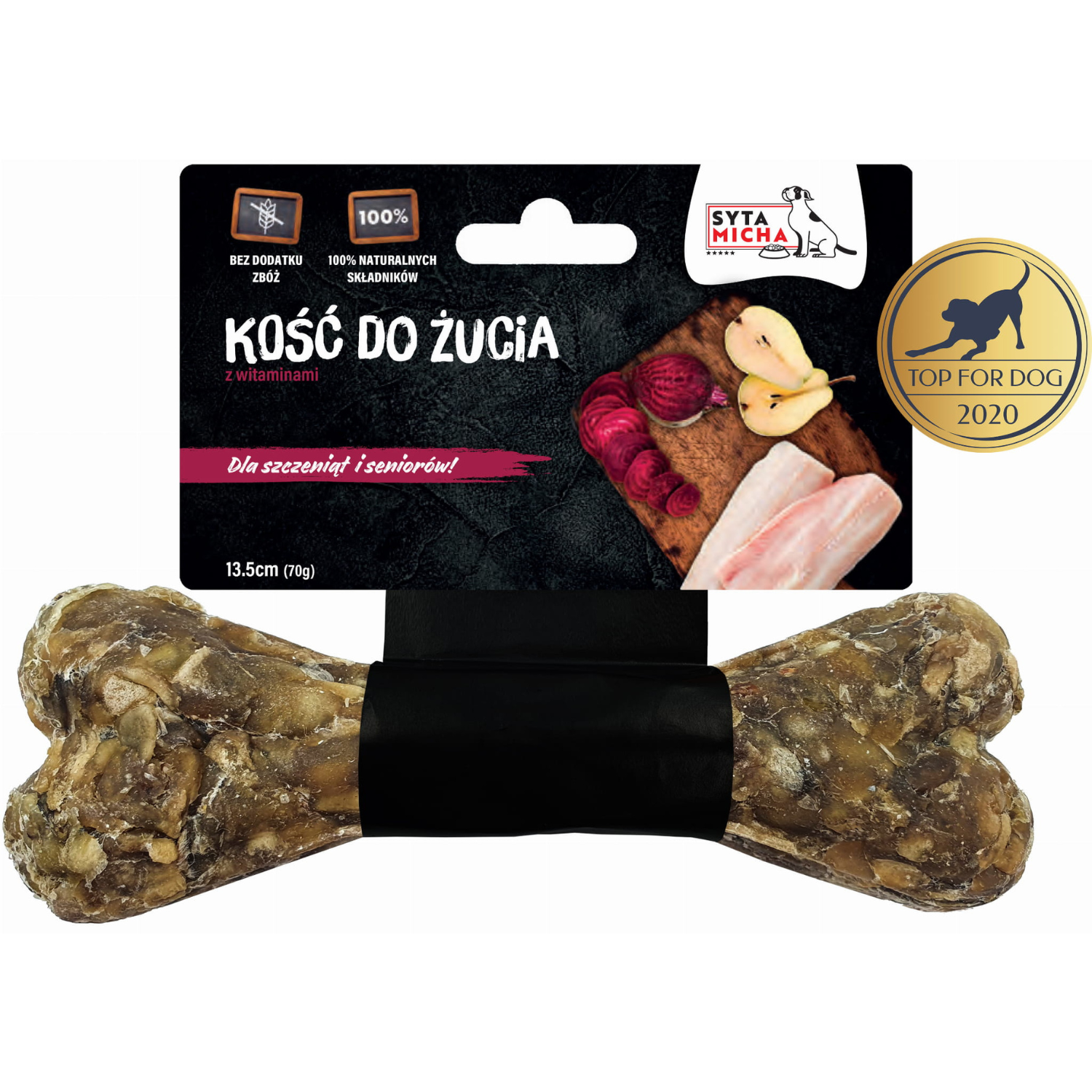
Dried offal
Liver, kidneys, lungs and heart are common ingredients in cheap treats. They are tasty and rich in protein, B vitamins and iron, but they are also among the richest sources of phosphorus. A 5 g portion of dried liver can provide up to around 190 mg of phosphorus at once, which is close to half the daily limit of a medium-sized dog.
Dried kidneys contain even more. Freeze-dried lung has less phosphorus than liver, but with CKD it also calls for caution. The rule is simple: with CKD, rule out any offal-based treat that does not state its phosphorus level.
Cheese and dairy products
Cheese is a popular training reward: tasty, easy to divide and cheap. With CKD it is a double problem, as it is high in phosphorus (milk protein is rich in it) and high in sodium. Parmesan provides around 700 mg of phosphorus per 100 g, hard cheese 500-600 mg, and even cottage cheese around 200-300 mg. None of these values is acceptable for a treat for a dog with CKD.
Biscuits of unknown composition
Many shop-bought treats are based on meat extracts and meals, with no phosphorus or sodium content stated. Without these values you cannot judge whether a product is safe for a dog with CKD, and that is reason enough to choose another one. This also applies to natural and single-protein treats: they can be excellent for a healthy dog and still contain 10-15 mg of phosphorus per gram.
Cold cuts, smoked and salted products
Cold cuts, sausages, salted and smoked meats, or any meat from the grocery shop, should not end up in the bowl of a dog with CKD. Lots of sodium, often phosphorus and preservatives too, is a combination that harms diseased kidneys. Tell your household and guests about the bans, because unplanned feeding by others is a common source of the problem.
What to give instead
A renal diet does not mean giving up on pleasure. There are ingredients that are gentler on the kidneys and that dogs welcome just as happily.
Vegetables low in phosphorus and sodium
This is the most often overlooked group, and at the same time one of the safest. Dogs usually enjoy crunching raw vegetables:
- carrot - low in phosphorus, naturally sweet, a good training reward,
- pumpkin cooked without seasoning - low in phosphorus and sodium, light on the stomach,
- cucumber - lots of water, almost no phosphorus, especially recommended with CKD,
- courgette - gentle, low in calories, low in phosphorus,
- celery - low in calories and phosphorus, lots of water.
It is better to avoid spinach, beetroot, beans and peas, which contain a lot of phosphates or oxalates that put a strain on the body with CKD.
Cooked rice and potatoes
Cooked white rice and potatoes, without salt, butter or seasoning, are a calorie-dense base that is low in phosphorus. Dogs with sensitive stomachs tolerate them well. They can be given as a treat or as a supplement to the diet, and they are a far better option than biscuits of unknown composition.
Dog Flakes in small portions
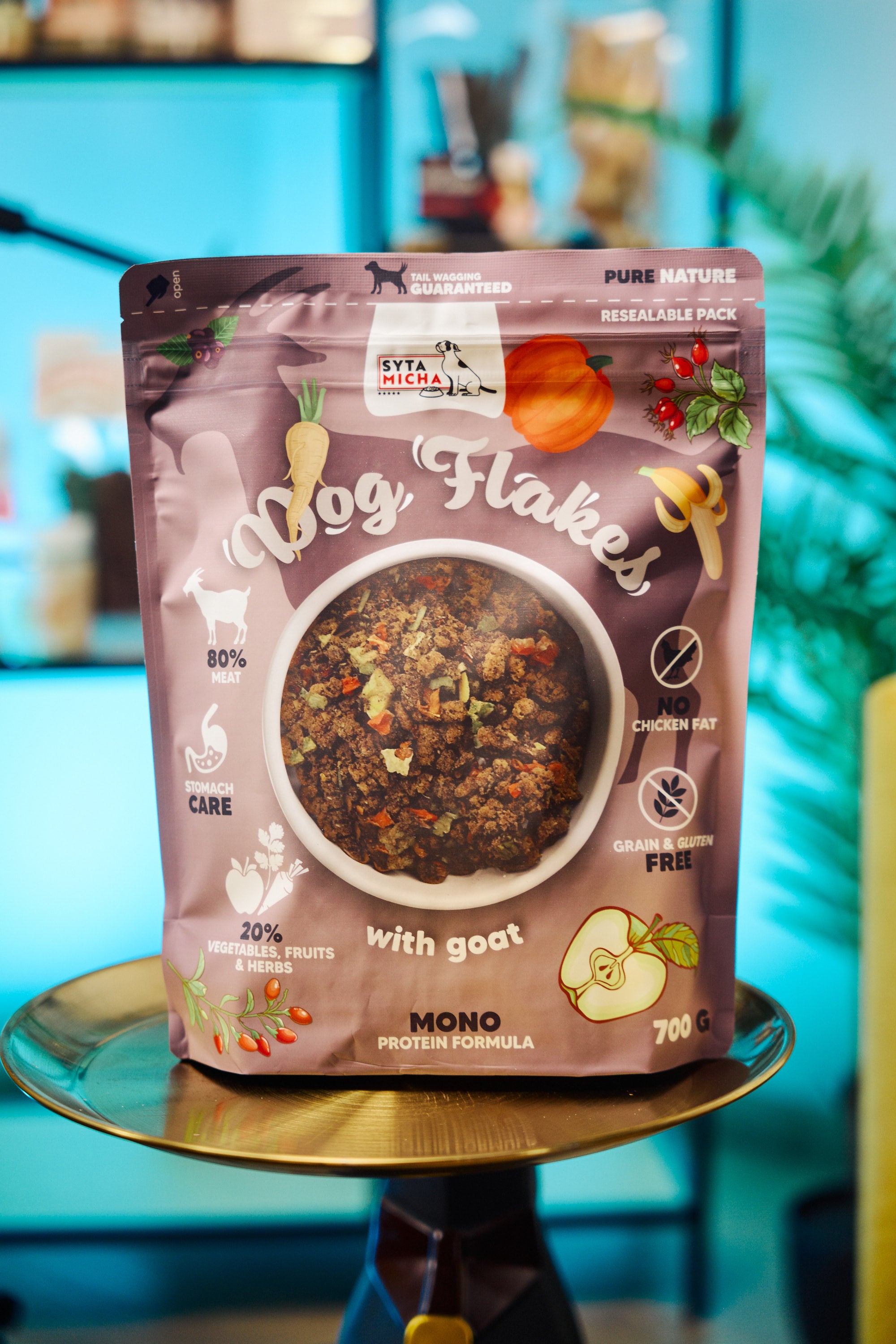
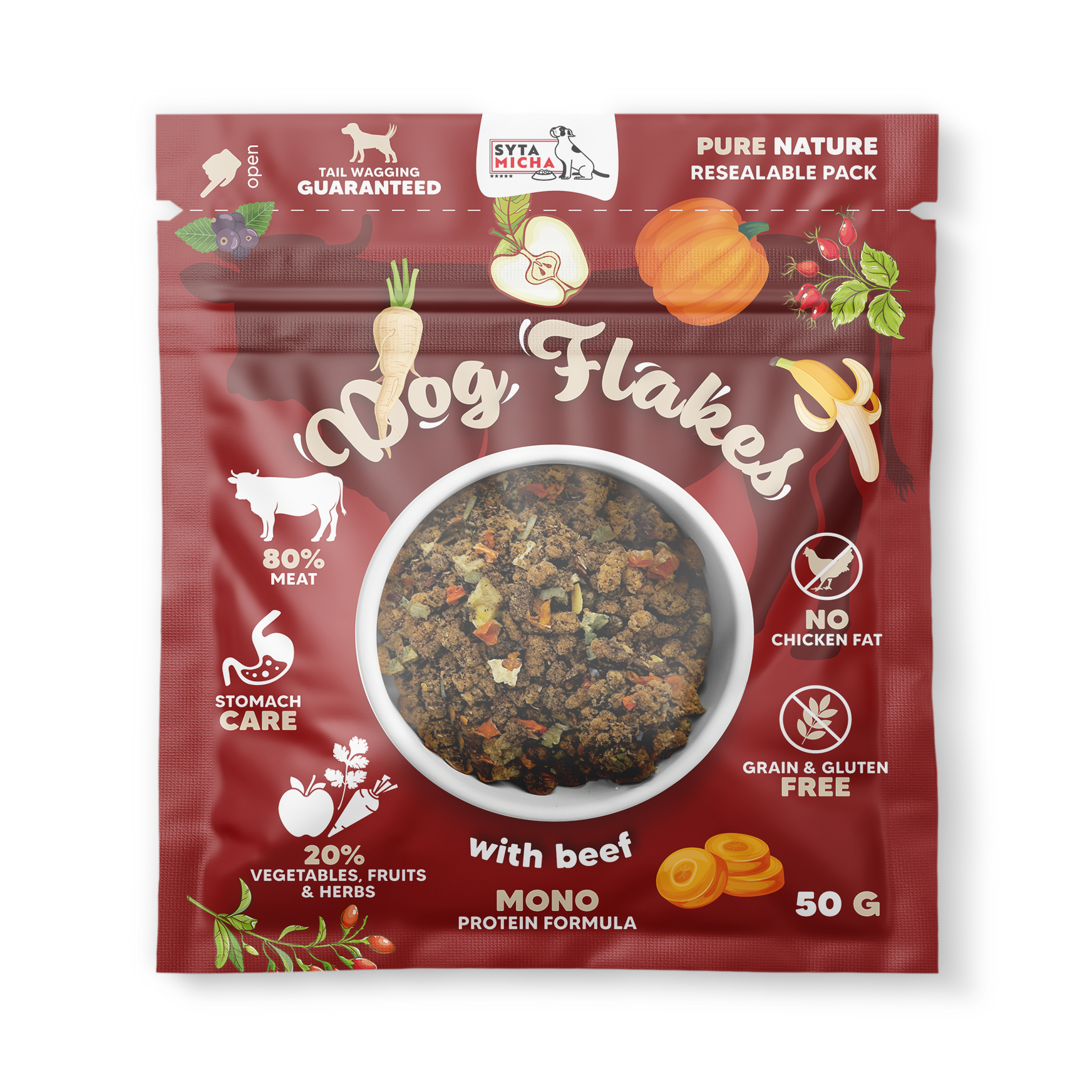
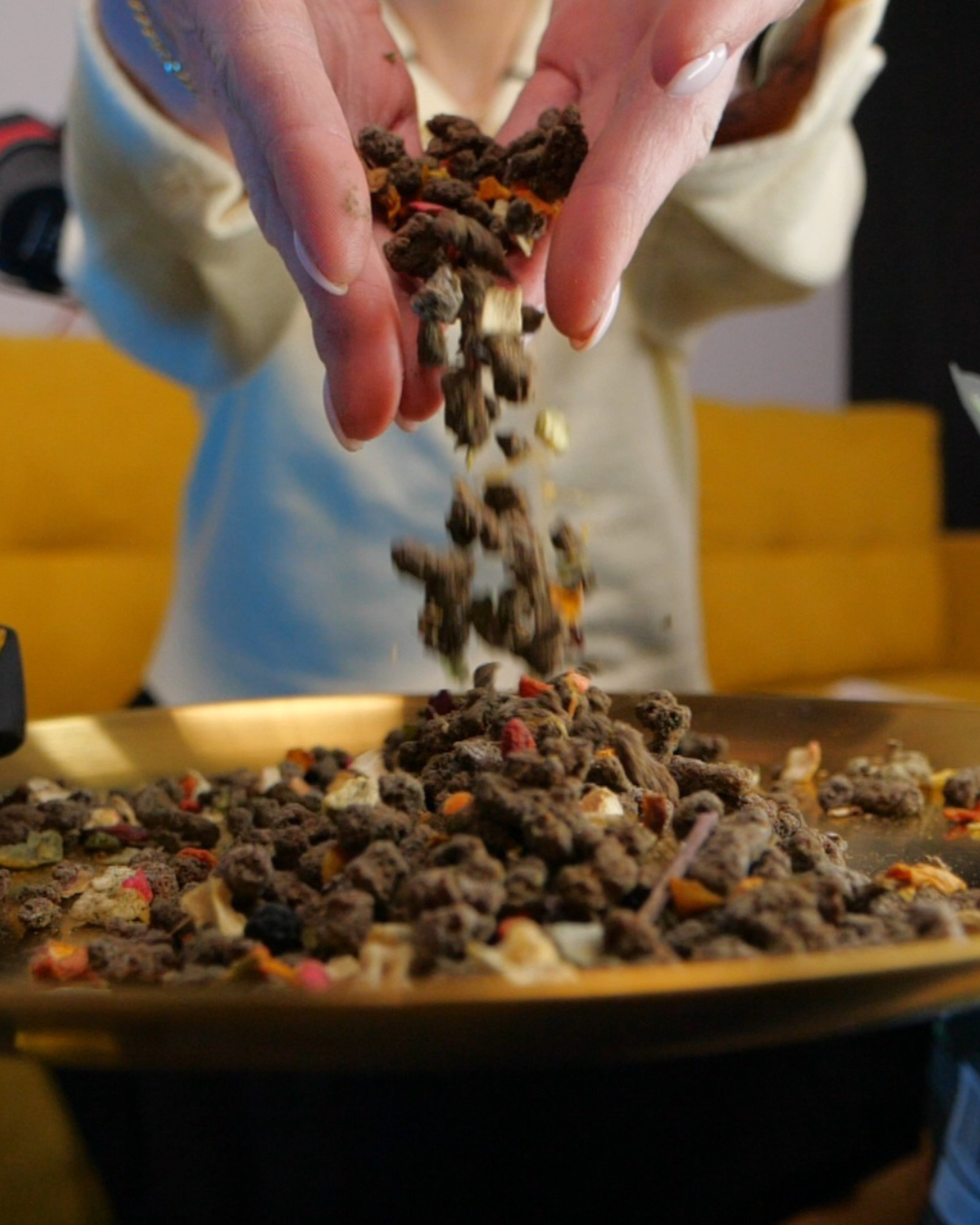
Dog Flakes Goat is 80% goat meat, vegetables (carrot, pumpkin, apple), spirulina and calendula, with no fillers, preservatives or artificial additives. Once agreed with your vet, it can be given as a topper or a small reward.
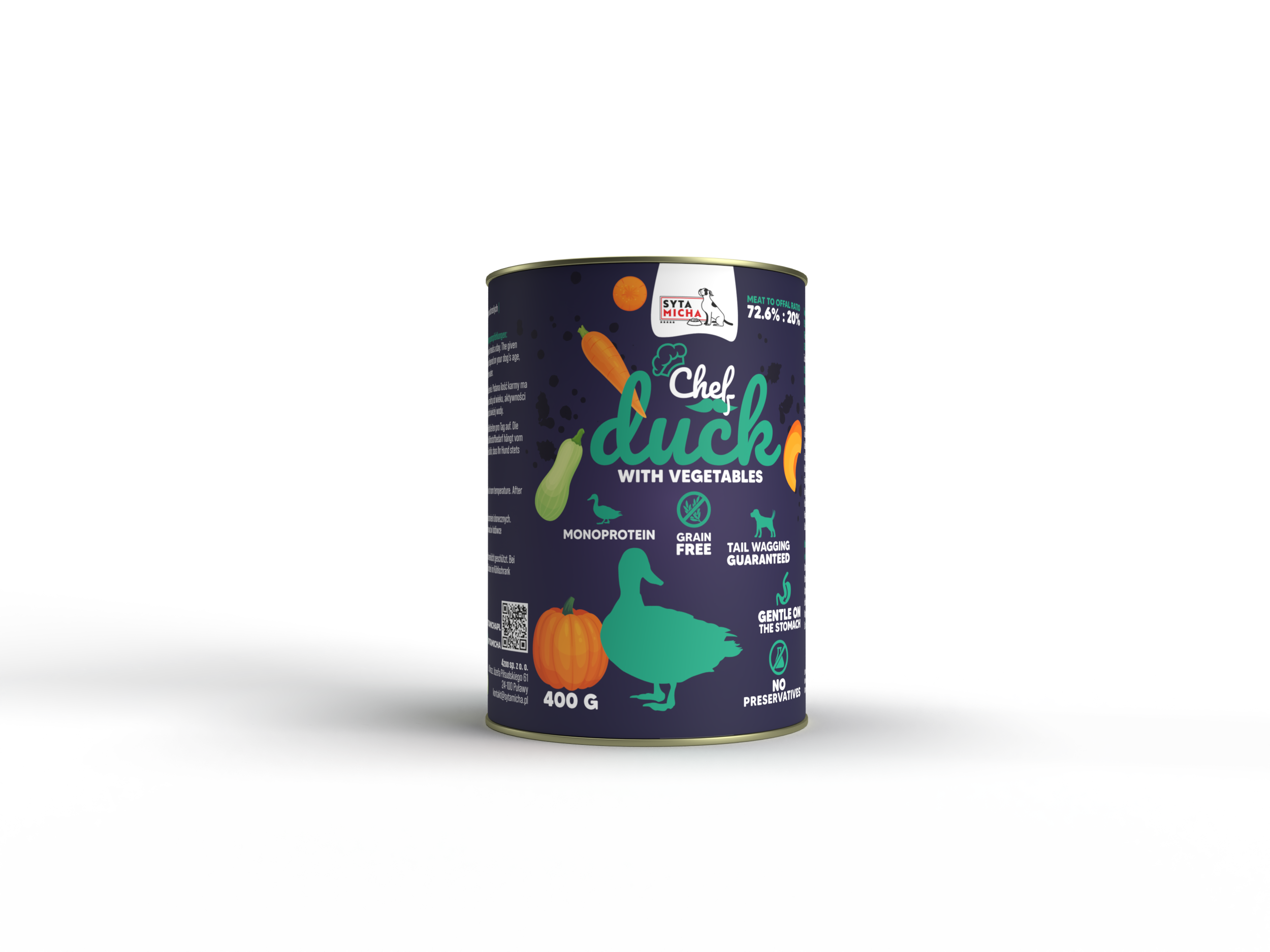
Dog Flakes Duck is an alternative protein for dogs that do not tolerate goat or rabbit. Give it in small portions as a treat. Do not use it as the main base of the diet for dogs with hypertension or cardiomyopathy without consulting your vet.
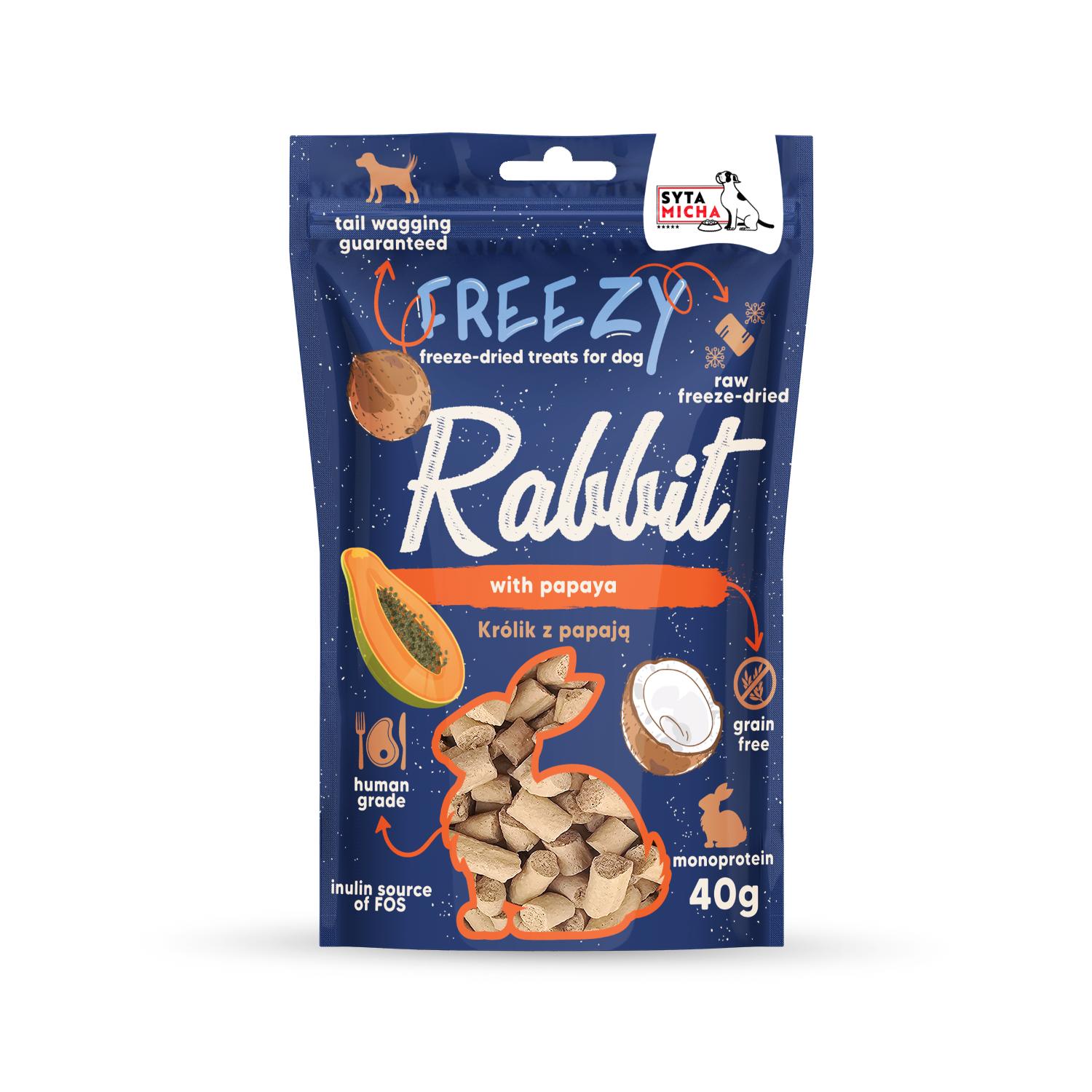
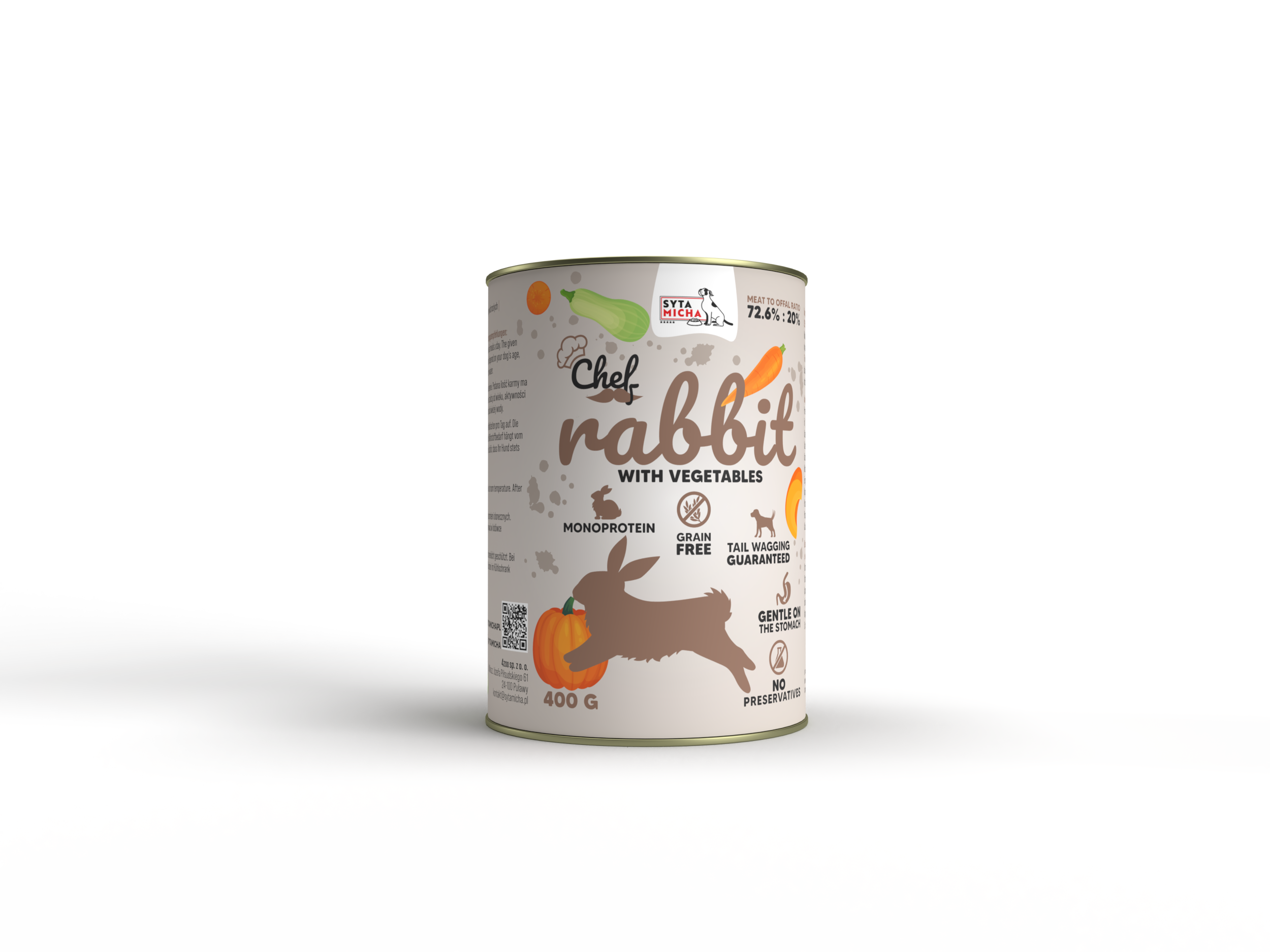
Before you add these products to a renal diet, check the phosphorus content (% of dry matter) on the label and include it in the daily phosphorus budget. Syta Micha products are not dietetic foods (PARNUTS). You will find all the variants in the Dog Flakes collection, including a 50 g trial pack.
How to read a treat label with CKD
Knowing how to read labels lets you shop with confidence without a consultation for every product.
Order of ingredients
Ingredients are listed in descending order by weight, so the first one dominates. With CKD, look for muscle meat in first place, not offal, extracts or meals. Low-phosphorus vegetables (carrot, pumpkin, courgette) in the middle of the list are a good sign. The composition should not include salt, sodium chloride, milk extracts or cheese powder.
Warning signs that mean it is better to put the product back on the shelf:
- meat or fish meal at the top of the list,
- offal extract,
- glycerine,
- BHA and BHT preservatives.
Values in the analytical constituents
A treat for a dog with CKD should have phosphorus below 0.4% of dry matter and sodium below 0.2-0.3% of dry matter. If the manufacturer does not state them, you do not know whether the product is safe. A lack of data does not mean safety, and with CKD it is reason enough to reach for something else.
The 10% rule on a renal diet
Treats should not provide more than 10% of a dog’s daily energy requirement. With CKD this rule still applies, but it is not only energy that counts, but phosphorus and sodium too. A treat can be low in calories and still exceed the daily phosphorus limit.
In practice:
- Agree a daily phosphorus budget with your vet or veterinary nutritionist (roughly 50-70 mg per 100 kcal ME).
- Work out how much phosphorus the daily portion of the base food provides.
- The rest is the budget for treats, usually 10-20% of the total.
- If you do not know the phosphorus content of a treat, keep it to a minimum or replace it with carrot or pumpkin.
A sample day for a 10 kg dog with CKD
The example is a rough guide. The real balance depends on the specific food, so check the phosphorus on the label and work it out individually with a nutritionist. A 10 kg dog, IRIS stage 2-3, approx. 640 kcal a day:
| Time | What | Phosphorus |
|---|---|---|
| Morning | a portion of Dog Flakes Rabbit | approx. 80-100 mg |
| Walk | a few slices of carrot | approx. 8-10 mg |
| Evening | a portion of food and a small piece of boiled potato | approx. 80-110 mg |
| Total | approx. 168-220 mg |
For comparison: two pieces of dried liver weighing 3 g in total would add around 75-115 mg of phosphorus at once, which is close to or above the limit for treats.
5 rules for safely rewarding a dog with CKD
- Treats are a common source of hidden phosphorus and sodium. They can undo the diet, even when the food is well balanced.
- We rule out dried offal, cheese and biscuits of unknown composition.
- Safer alternatives are carrot, pumpkin, cucumber, courgette and cooked rice and potatoes without seasoning.
- Read the analytical constituents: phosphorus below 0.4% of dry matter, sodium below 0.3%. If these values are missing, that is a reason not to give the product.
- With CKD, the 10% rule applies to phosphorus too. Plan the budget together with your vet.
This article is for educational purposes and does not replace a veterinary consultation. Discuss every feeding plan for a dog with CKD with a veterinary surgeon or nutritionist.
Products mentioned
 You collect HAU DOLCE points for your purchases
Frequently asked questions
Why are treats dangerous for a dog with kidney disease?
Many of them, especially dried offal and cheese, are high in phosphorus and sodium. A few grams can take up 30-50% of the daily phosphorus limit and upset the balance of a renal food.
What treats can I give a dog with CKD?
Safer options are low-phosphorus vegetables, e.g. carrot, cooked pumpkin, cucumber, courgette and celery, as well as cooked rice and potatoes without salt or seasoning.
What should I look for on a treat label with CKD?
Muscle meat should come first, and the analytical constituents should show phosphorus below 0.4% of dry matter and sodium below 0.2-0.3%. If the manufacturer does not state these values, it is better to choose another product.
How many treats can a dog with kidney disease have?
With CKD, the 10% rule applies not only to calories but to phosphorus too. Treats usually get 10-20% of the daily phosphorus budget, which is worth agreeing with your vet or nutritionist.
Can a dog with CKD eat cheese?
Not as a treat. Cheese is high in phosphorus and sodium, e.g. Parmesan has around 700 mg of phosphorus per 100 g, and even cottage cheese around 200-300 mg.