 HAU DOLCE



EPA and DHA from fish oil can lower glomerular pressure, limit inflammation and improve blood flow to the kidneys in dogs with CKD. Guidelines indicate a dose of 75-100 mg EPA+DHA per kg of body weight a day, ideally from IRIS stage 1-2. Linseed oil (ALA) cannot replace fish oil, and the whole supplementation plan must be agreed with your vet.
Omega-3 supplementation at a dose of 75-100 mg EPA+DHA per kilogram of body weight a day can support kidney function and protect the kidney tissue in dogs with chronic kidney disease (CKD). This is the dose indicated by veterinary guidelines (Brown et al., JAVMA 1998/2000; WSAVA Global Nutrition Guidelines 2021).
Even so, many dogs with CKD do not receive this supplementation. Often it is because owners do not know why it matters, how much to give and which product to choose. We answer those three questions below.
How omega-3s act on the kidneys
Omega-3 fatty acids, above all EPA (eicosapentaenoic acid) and DHA (docosahexaenoic acid), are not just about coat and joints. In kidney disease they act on the kidney tissue itself and influence three processes.
Lower pressure in the glomeruli
Glomeruli are microscopic structures that filter the blood. In CKD, excessive pressure inside them speeds up damage. EPA and DHA act as natural vasodilators: they widen the vessels, lower the pressure in the glomeruli and can slow down their fibrosis. This is one of the mechanisms that determine how fast the disease progresses.
Anti-inflammatory action
CKD is not just mechanical damage to the filter, but also chronic inflammation that destroys the remaining kidney tissue. EPA and DHA inhibit the production of inflammatory factors: TNF-alpha, IL-1 and IL-6. This can mean less inflammatory damage, better protection of the remaining nephrons and a higher level of secretory IgA, which supports gut immunity.
Important: omega-3s work differently from non-steroidal anti-inflammatory drugs (NSAIDs). NSAIDs block enzymes non-specifically and can damage the kidneys. Omega-3s modulate inflammatory pathways without that risk.
Better kidney blood flow and vessel protection
EPA and DHA improve blood fluidity and its ability to deliver oxygen to the tissues. A kidney with CKD is under-perfused, so better perfusion means more oxygen and nutrients for the healthy nephrons. Omega-3s also protect the vascular endothelium from oxidative damage, which may reduce the risk of cardiovascular complications, common in advanced CKD.
Why EPA and DHA from fish oil, and not ALA from linseed oil
This is one of the most common misunderstandings. Owners reach for linseed or hemp oil as a source of omega-3 because it is natural and easy to get. The problem is that a dog cannot make good use of it.
ALA conversion in dogs is only 5-15%
Linseed oil contains alpha-linolenic acid (ALA), a precursor of omega-3. The body has to convert it into EPA and then into DHA. In dogs it is estimated that only 5-15% of ALA is converted into EPA, and even less into DHA. In practice, linseed oil as a source of omega-3 for a dog with CKD is inadequate, whatever the amount.
Fish oil provides ready-made EPA and DHA
Fish oil provides EPA and DHA directly, in a form ready to be absorbed, with no conversion needed. Studies confirm that fish oil supplementation raises EPA and DHA levels in dogs’ blood, which cannot be achieved with ALA alone.
Krill oil also contains EPA and DHA, in phospholipid form, which may improve absorption. However, there are few krill products for dogs, and they cost far more than sardine oil.
How much omega-3 to give a dog with kidney disease
Many owners do not know the answer to this question and give doses that are too small to have any effect.
Dose with CKD: 75-100 mg EPA+DHA per kg of body weight a day
Guidelines based on clinical studies set the dose for dogs with CKD at 75-100 mg EPA+DHA per kilogram of body weight a day. That is much more than the rough doses used in general prevention (approx. 40-60 mg/kg/day, with no single standard, to be agreed with your vet). It is worth telling these two contexts apart.
Most fish oils have a daily dose of a few millilitres. Check the label for the combined EPA and DHA content in mg per millilitre, not just a general statement that it ‘contains omega-3’.
When to start: IRIS stage 1-2
Omega-3s work best while the kidneys still function relatively well. At IRIS stages 1-2, supplementation can slow the progression of the disease: studies show that in dogs with CKD receiving omega-3, creatinine rises more slowly. At IRIS stages 3-4 the effect is smaller, but omega-3s are still worth considering as part of supportive treatment.
If your vet has confirmed IRIS stage 1 or 2, it is a good moment to talk to them about supplementation, before the results get worse.
How to give omega-3 day to day
Oil as a food topper
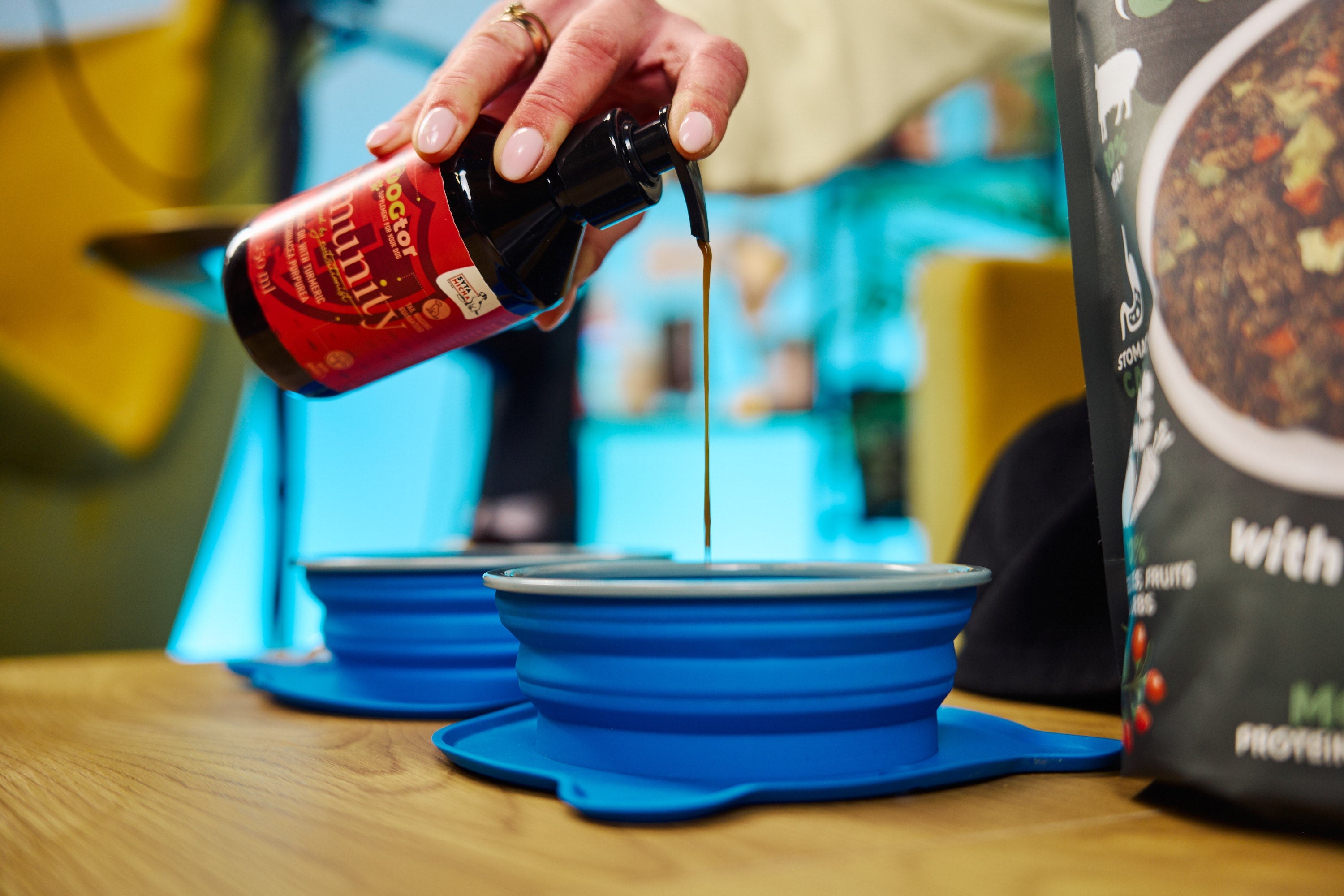
The simplest way is to pour the right amount of oil into the bowl and mix it with the food. Dogs generally accept the taste of fish oil well, although there are exceptions.
If your dog eats twice a day, split the dose between the two meals. This reduces the risk of an upset stomach at higher doses and gives a more even concentration of EPA and DHA throughout the day.
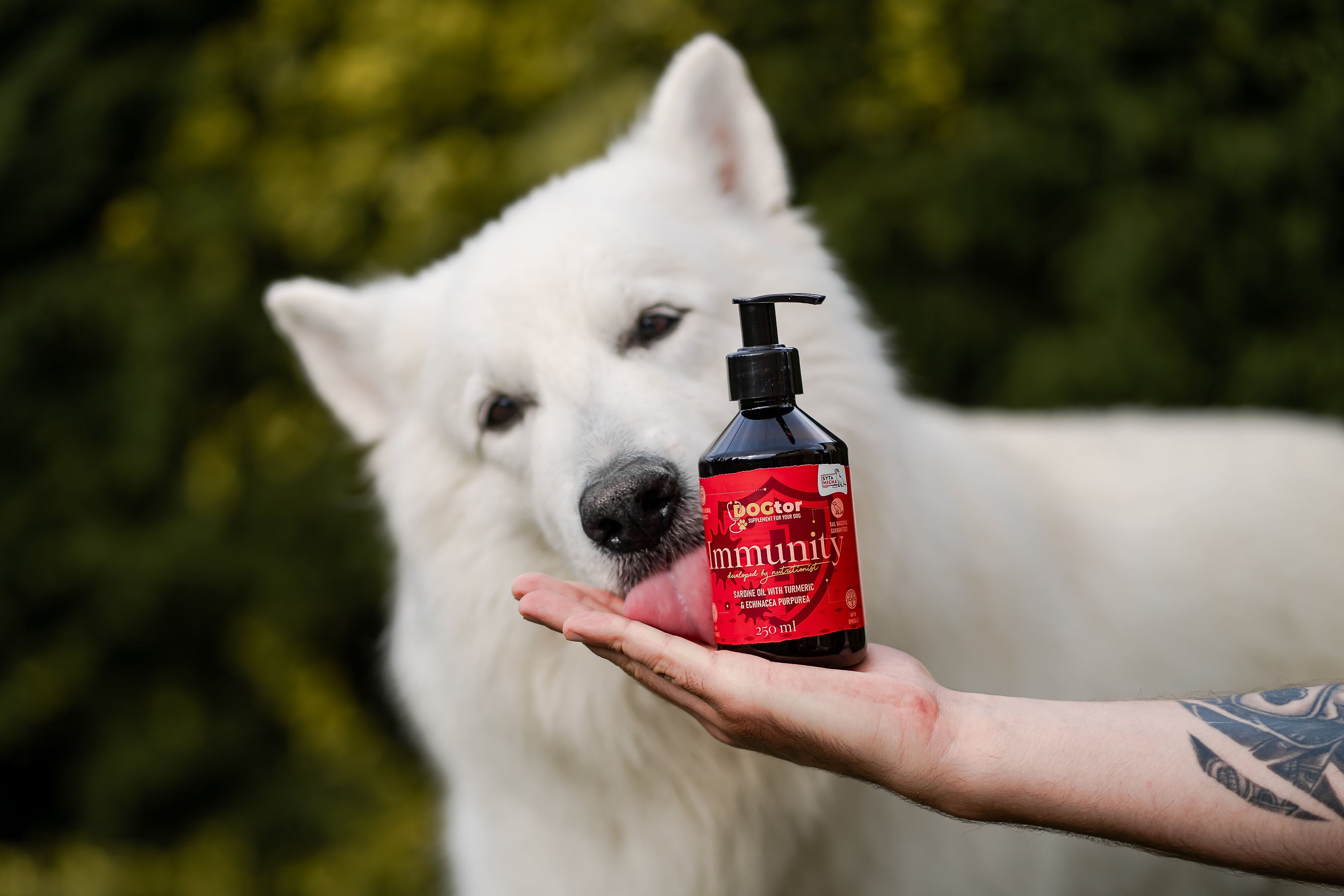
Our range includes Immunity Oil 250 ml. Its base is sardine oil rich in EPA and DHA (EPA 13.72%, DHA 9%), complemented by purple coneflower and turmeric extract and vitamin E, which helps protect cells against oxidative stress. The oil is added straight to the bowl.
How to choose a fish oil
Not every fish oil is the same. When choosing, check:
- the EPA and DHA content in mg per ml or per 100 ml, not just a mention of omega-3,
- no oxidising preservatives (BHA, BHT), because fish oils go rancid quickly,
- freshness: an oil past its date or stored badly loses its activity,
- no added flavourings or colourings, which are unnecessary with CKD,
- purity in terms of heavy metals, which matters especially with oils from large fish.
Sardines and other small fish (sprats, anchovies) carry fewer contaminants, so sardine oil is a safer choice for long-term supplementation.
Can you overdose on omega-3?
Omega-3s are considered safe across a wide range of doses. At very high doses, above 300 mg/kg/day, side effects may appear: prolonged blood clotting time, an upset stomach, diarrhoea. At the doses recommended for CKD (75-100 mg/kg/day) the risk is very low.
Anticoagulants: do not combine omega-3 with anticoagulant medicines (e.g. aspirin, clopidogrel) without consulting your vet, as their effects on clotting can add up.
Omega-3 and other supplements with CKD
Omega-3 is one element of support with CKD, but not the only one. Here are other substances with proven or probable supportive effects.
B vitamins
With CKD, the kidneys often let water-soluble vitamins through. Vitamins B1, B6, B12 and folic acid are lost in the urine much faster than in a healthy dog. Deficiencies impair kidney cell metabolism, neurological function and red blood cell production (anaemia is common with CKD).
A vitamin B complex is well tolerated and worth considering from IRIS stage 2. Agree the dosage with your vet.
Vitamin E and vitamin C
Oxidative stress is one of the mechanisms that damage the kidneys in CKD. Vitamin E acts as an antioxidant at the level of the cell membrane. The dose is set by the vet based on body weight, disease stage and test results. The FEDIAF standard for vitamin E in a complete food for adult dogs is a minimum of 50 IU/kg of diet dry matter. That is a different value from clinical supplementation calculated per kg of body weight.
Dogs produce vitamin C themselves, but with marked oxidative stress, supplementation (roughly up to 30 mg/kg body weight/day) may be justified, after consulting your vet. Note: excess vitamin C may encourage oxalate formation in dogs predisposed to oxalate stones.
5 things worth knowing about omega-3 with CKD
- EPA and DHA can reduce inflammation and glomerular pressure and improve blood flow to the kidneys.
- Linseed oil (ALA) does not replace fish oil, because dogs convert ALA into EPA and DHA poorly.
- The dose with CKD is 75-100 mg EPA+DHA per kg of body weight a day, more than in typical prevention.
- The earlier you start (IRIS stage 1-2), the greater the protective effect can be.
- Omega-3 is a supplement, not a medicine. It does not replace a renal diet or drug treatment.
This article is for educational purposes and does not replace a veterinary consultation. Agree every supplementation plan for a dog with CKD with a veterinary surgeon and an animal nutritionist.
Frequently asked questions
How much omega-3 should I give a dog with kidney disease?
Veterinary guidelines indicate 75-100 mg EPA+DHA per kilogram of body weight a day. That is more than in general prevention, so it is worth agreeing the dose with your vet.
Is linseed oil enough for a dog with CKD?
No. A dog converts only 5-15% of the ALA from linseed oil into EPA, and even less into DHA. Fish oil provides EPA and DHA in ready-made form.
When should I start giving omega-3 with CKD?
Ideally at IRIS stage 1-2, while the kidneys still function relatively well. At stages 3-4 the effect is smaller, but supplementation is still worth considering.
Can you overdose on omega-3?
At very high doses, above 300 mg/kg/day, side effects such as prolonged clotting time and diarrhoea may occur. At the doses recommended for CKD the risk is very low, but do not combine omega-3 with anticoagulants without consulting your vet.