An allergy is an immune reaction - a trace amount of an ingredient is enough. An intolerance depends on the portion and causes mainly intestinal symptoms. The most common culprits are lactose, too much fat and too fast a change of food.
Intolerance and allergy are sometimes used interchangeably, although they are two different mechanisms. The practical consequences are big enough that it is worth telling them apart.
The difference in one sentence
With an allergy, the immune system reacts and a trace amount of an ingredient is enough. With an intolerance, the immune system is not involved, and the reaction usually depends on the dose.
| Food allergy | Intolerance | |
|---|---|---|
| Mechanism | immune reaction | impaired digestion or absorption |
| Amount | a trace is enough | depends on the portion |
| Main symptoms | skin, itching | intestinal |
| Reaction time | from hours to days | usually faster, after a meal |
Typical culprits
- Lactose - adult dogs have little lactase, so cow's milk often ends in bloating and loose stools. Goat's milk is sometimes better tolerated, but not always.
- Too much fat - the most common cause that nobody thinks of. A fatty meal in a dog with a sensitive digestive system produces symptoms that look like an intolerance to an ingredient.
- Some grains and pulses - usually because of their fibre and oligosaccharide content, not the grain itself.
- Too fast a change of food - a classic false alarm. The symptoms are identical, the cause is completely different.
How to find out
The same way as with an allergy: by trial. An elimination diet works just as well here, with one difference - it is worth checking not only whether your dog tolerates a given ingredient, but also in what amount.
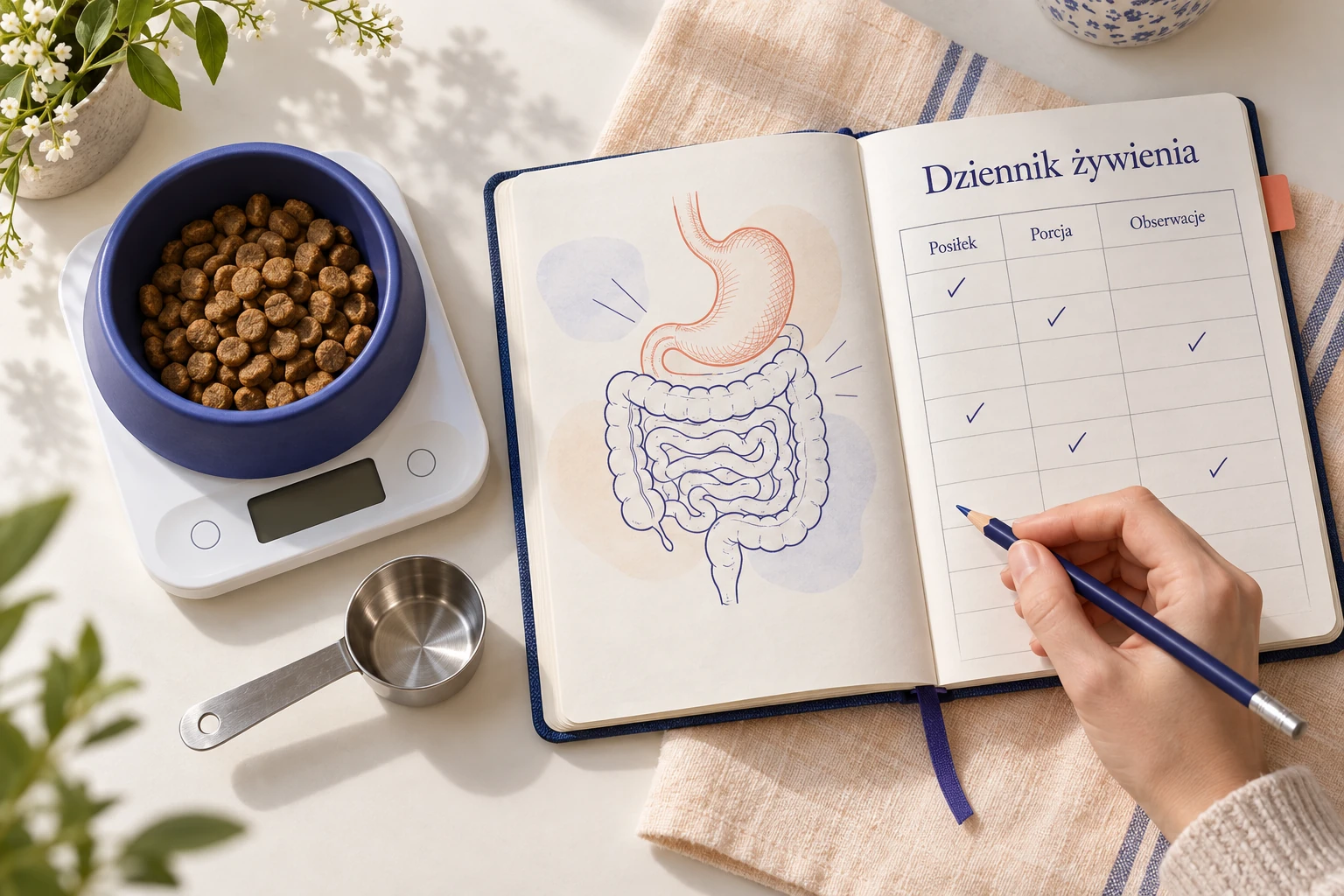
Keep a diary: what, how much, at what time and what the stool was like the next day. After two weeks the pattern usually reveals itself.
What to choose in the meantime
Easily digestible food with a short ingredient list and moderate fat. The fat on a wet food label looks innocent, but once converted to dry matter it can be high - and this is the most common mistake when choosing food for a dog with a sensitive digestive system.
Prebiotics and pumpkin can also help.
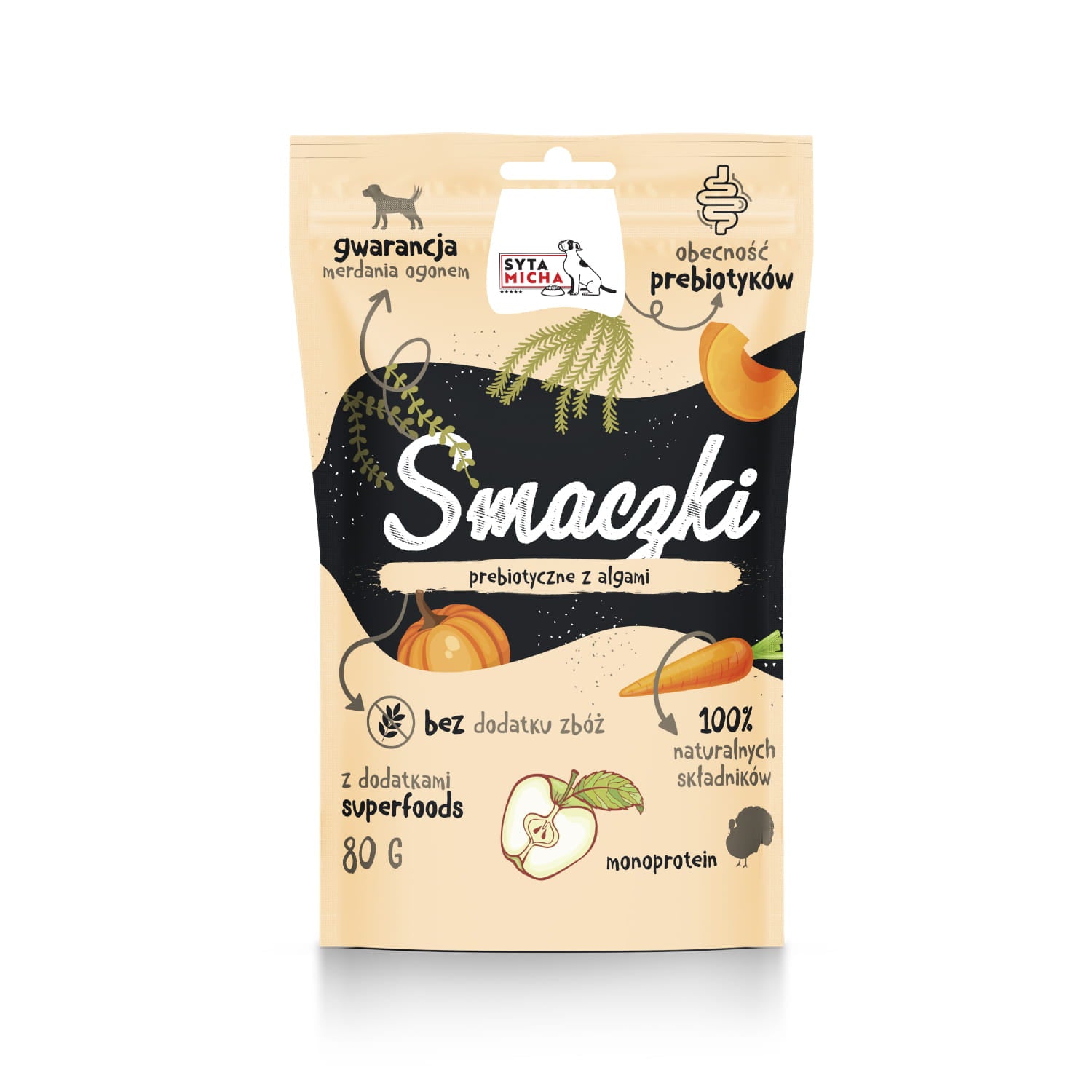 Prebiotic dog treats (GI²D Complex) with seaweed 80g · 19,90 zł
Products mentioned
 You collect HAU DOLCE points for your purchases

Frequently asked questions
How does a food intolerance differ from a food allergy in dogs?
With an allergy, the immune system reacts and a trace amount of an ingredient is enough. With an intolerance, the reaction depends on the dose, and the symptoms are mainly intestinal rather than skin-related.
How can I recognise an intolerance in my dog?
Through observation and an elimination diet. The key is to note not only what your dog ate, but also how much.
Can dogs drink milk?
Most adult dogs digest lactose poorly. A small amount usually does no harm, but a bowl of milk often ends in diarrhoea.