
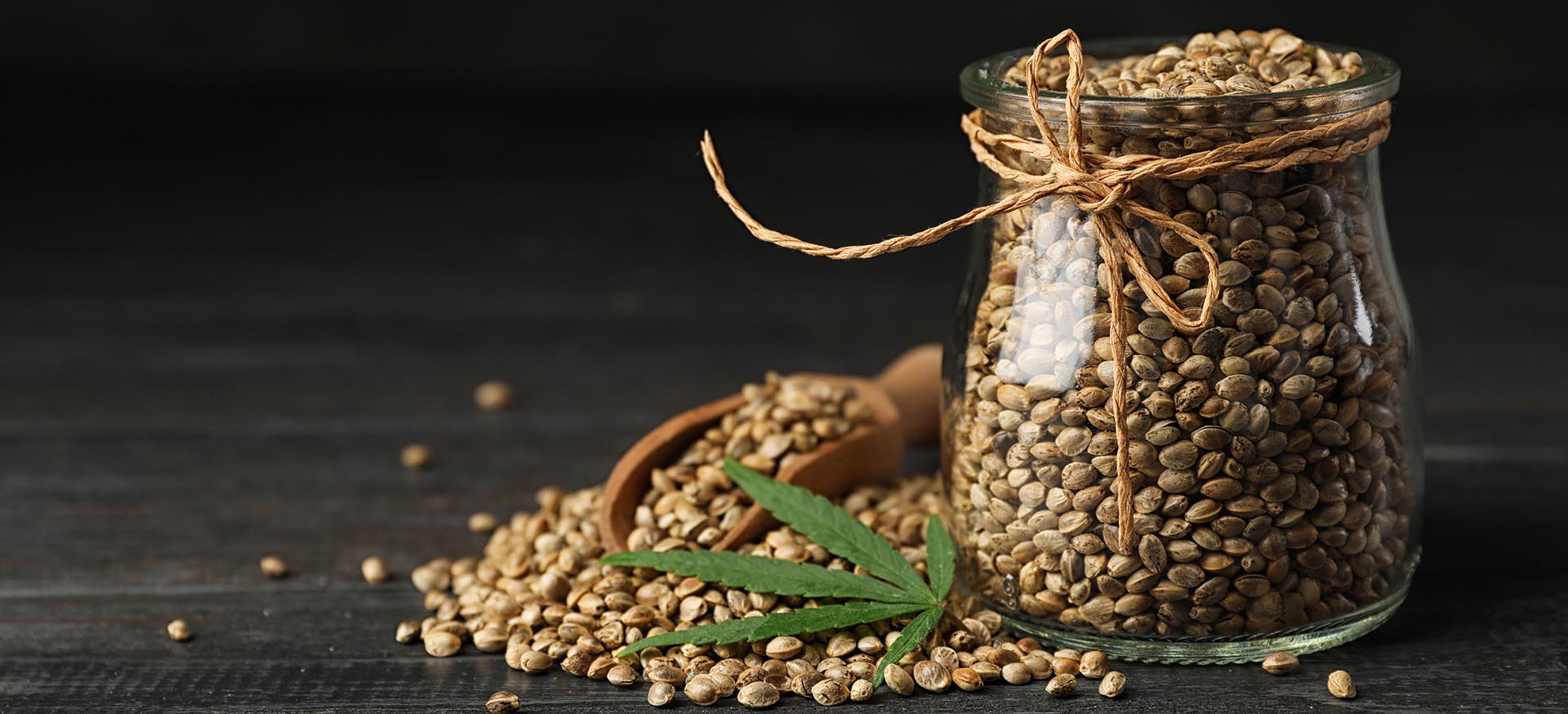
Industrial hemp seeds are safe for dogs because they contain no THC. They provide vitamins E and A, omega-3 and omega-6 fatty acids in a 1:3 ratio that support the skin and coat, protein with the full set of essential amino acids (up to 40 g per 100 g) and fibre. They may also support joint condition.
Hemp seeds are another product from the group of so-called superfoods that works well not only for people but for animals too. Because they are so rich in nutrients, they were already an important source of food and a medicinal raw material in antiquity.
The hemp seeds used in food for people and animals contain no THC, the addictive component, so they are safe. They come from industrial hemp, not from Indian hemp, from which marijuana is produced.
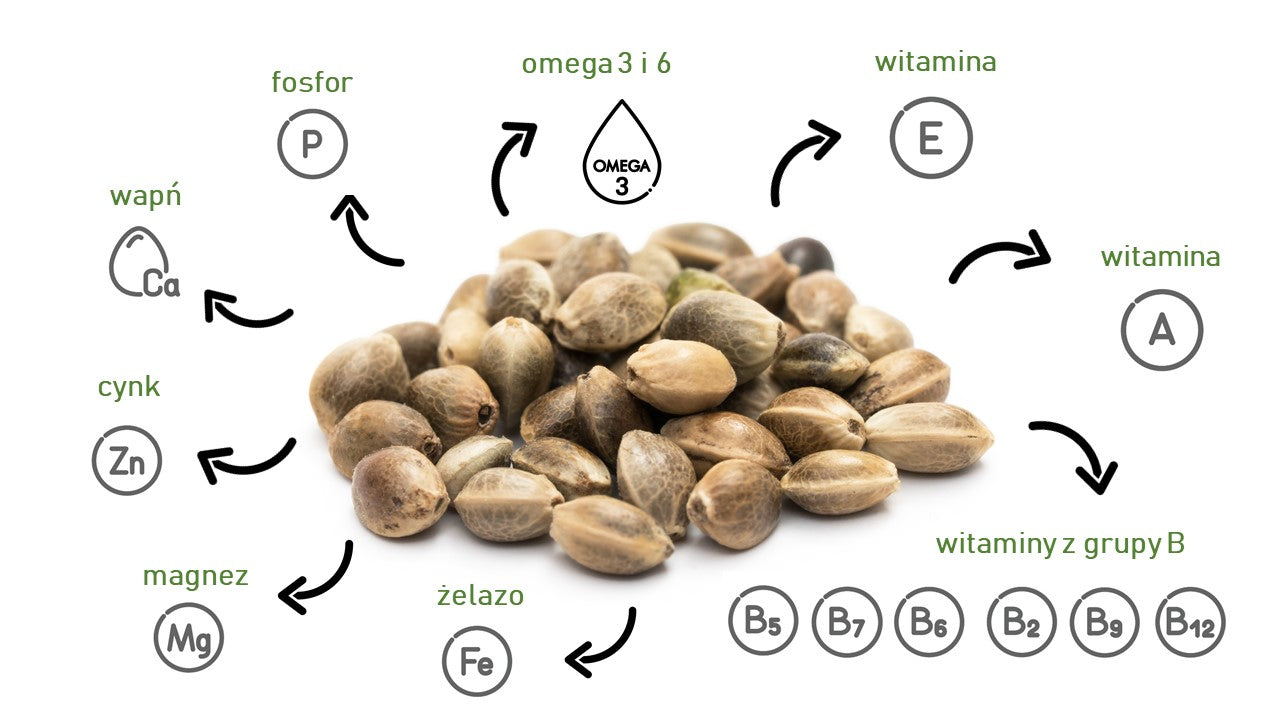
Vitamins in hemp seeds
Hemp seeds are small grains rich in vitamins and minerals. Their composition is shown in the graphic below.
Vitamin E
Vitamin E is an antioxidant that protects the body against free radicals. It supports natural immunity and the work of the blood-forming system, the nervous system and the muscles. It is sometimes recommended in the diet of seniors, as it may ease cognitive dysfunction in older dogs.
Vitamin A
Vitamin A compounds are responsible for, among other things, healthy cell growth and differentiation, vision and immunity. Researchers are still describing further functions, e.g. its role in fat metabolism, insulin response, energy balance and the nervous system.
Omega-3 and omega-6 fatty acids for skin and coat
Hemp contains the essential fatty acids (EFAs) omega-3 and omega-6 in a ratio of 1:3. A dog’s body does not produce them itself, so they have to come from food.
EFAs have a beneficial effect on the skin, coat and wound healing, which is why they are used as support for skin and joint problems. They work well before shows and during shedding, when we want a beautiful coat. A deficiency of these acids can increase sensitivity to allergens and cause excessive flaking of the skin.
Other valuable components
Besides fatty acids, hemp seeds contain:
- tocopherols (mainly the gamma form, classed as vitamin E),
- carotenoids,
- phytosterols (sterols and stanols),
- polyphenols, including flavonoids, which protect the LDL cholesterol fraction from oxidation.
Hemp protein
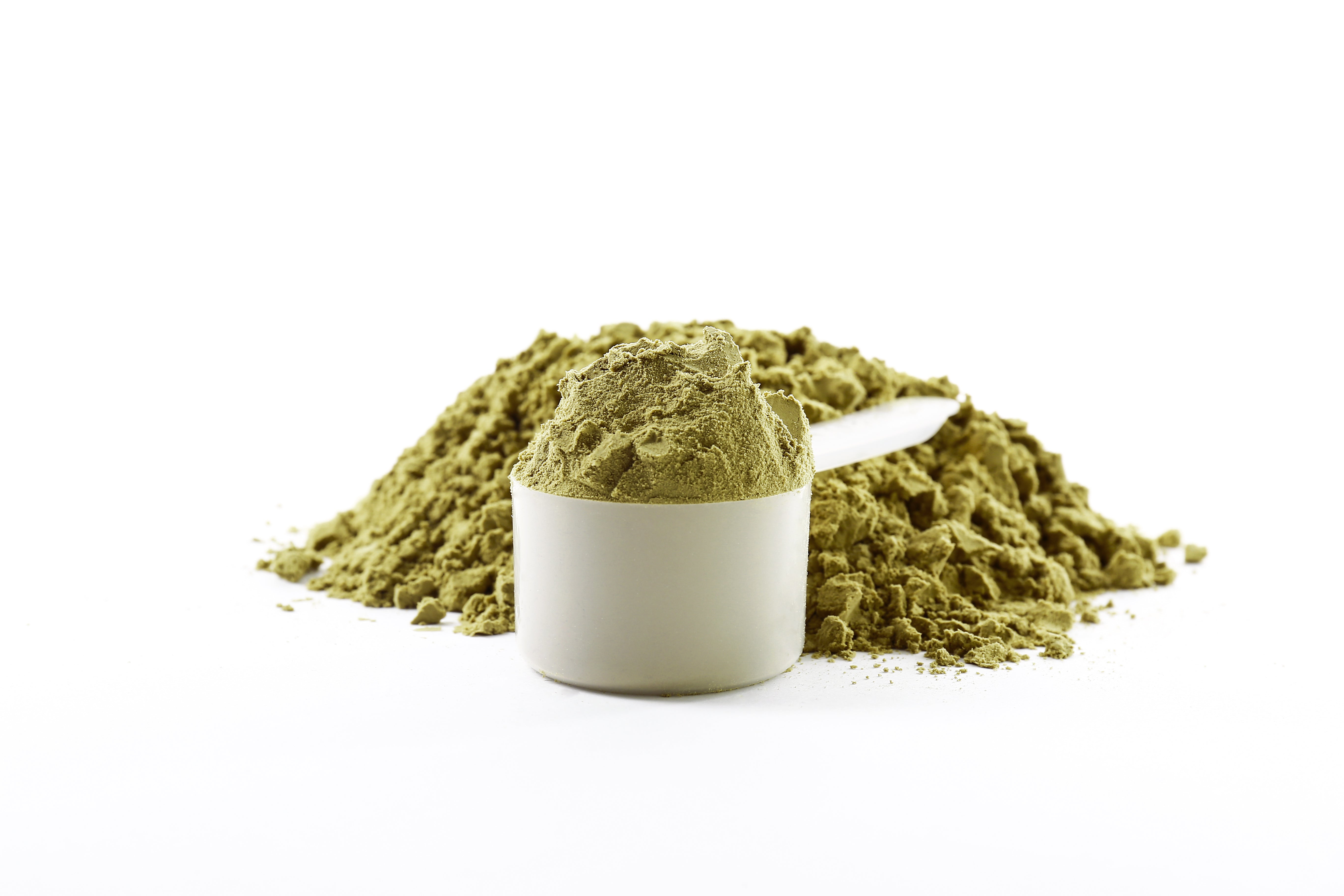
Hemp seeds are a rich source of protein: 100 g contains up to 40 g of protein. It contains the full set of essential amino acids, which the body cannot produce itself. Its biological value is 74, close to that of protein from meat. Unlike animal protein, hemp contains no cholesterol.
The amino acids from hemp protein are easily absorbed, and the protein itself is a good building block for muscle, which matters for canine athletes. In addition, hemp protein:
- does not upset the body’s acid-base balance,
- is easily digestible,
- supports bones and muscle recovery,
- is gluten-free, so it is worth considering for dogs with allergies too.

Comparison of the percentage amino acid composition of industrial hemp seed protein, soya bean protein and hen’s egg protein (Callaway 2004, Raikos et al. 2015).
Fibre and joint support
Hemp seeds also contain a lot of dietary fibre, which affects how the digestive system works.
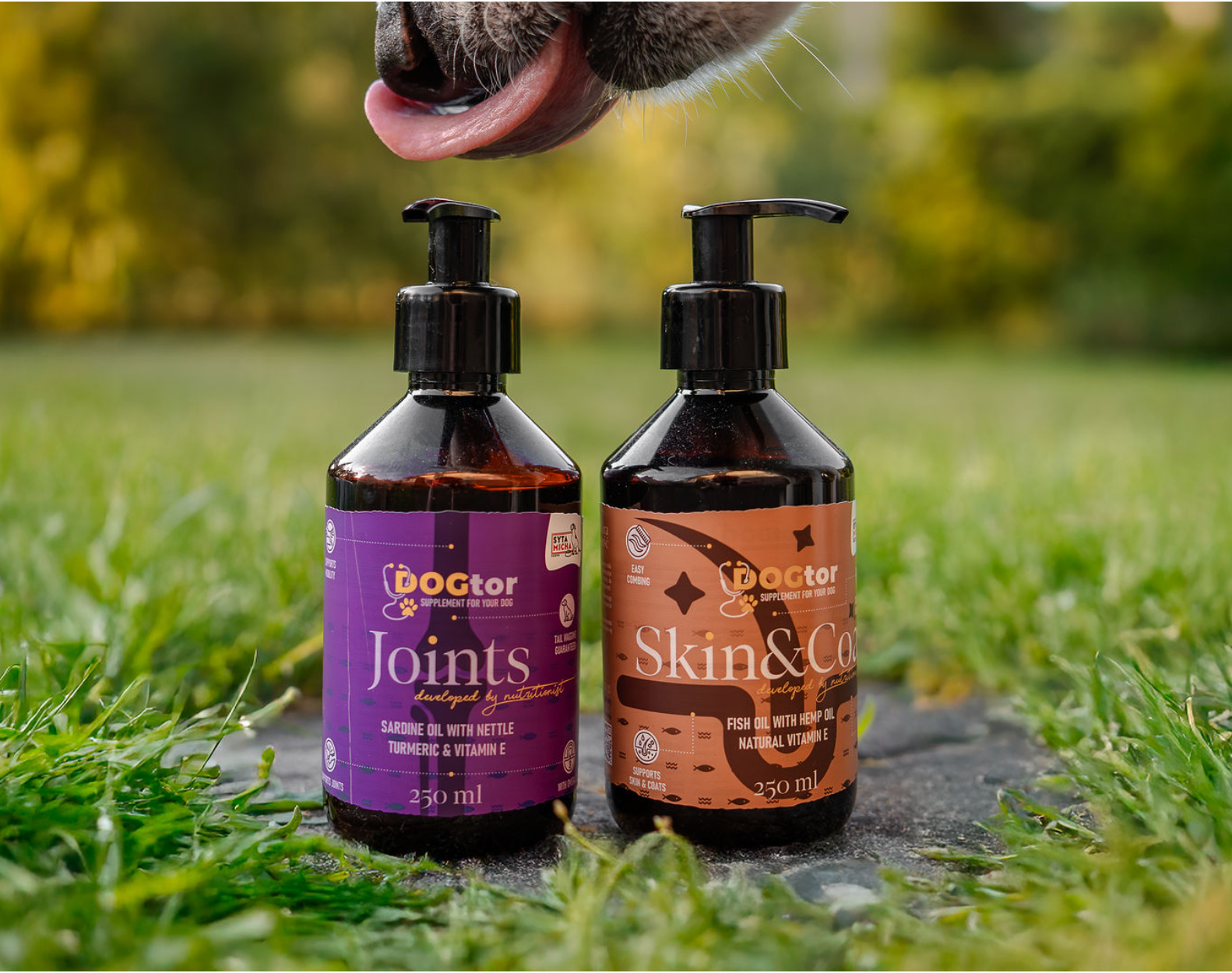
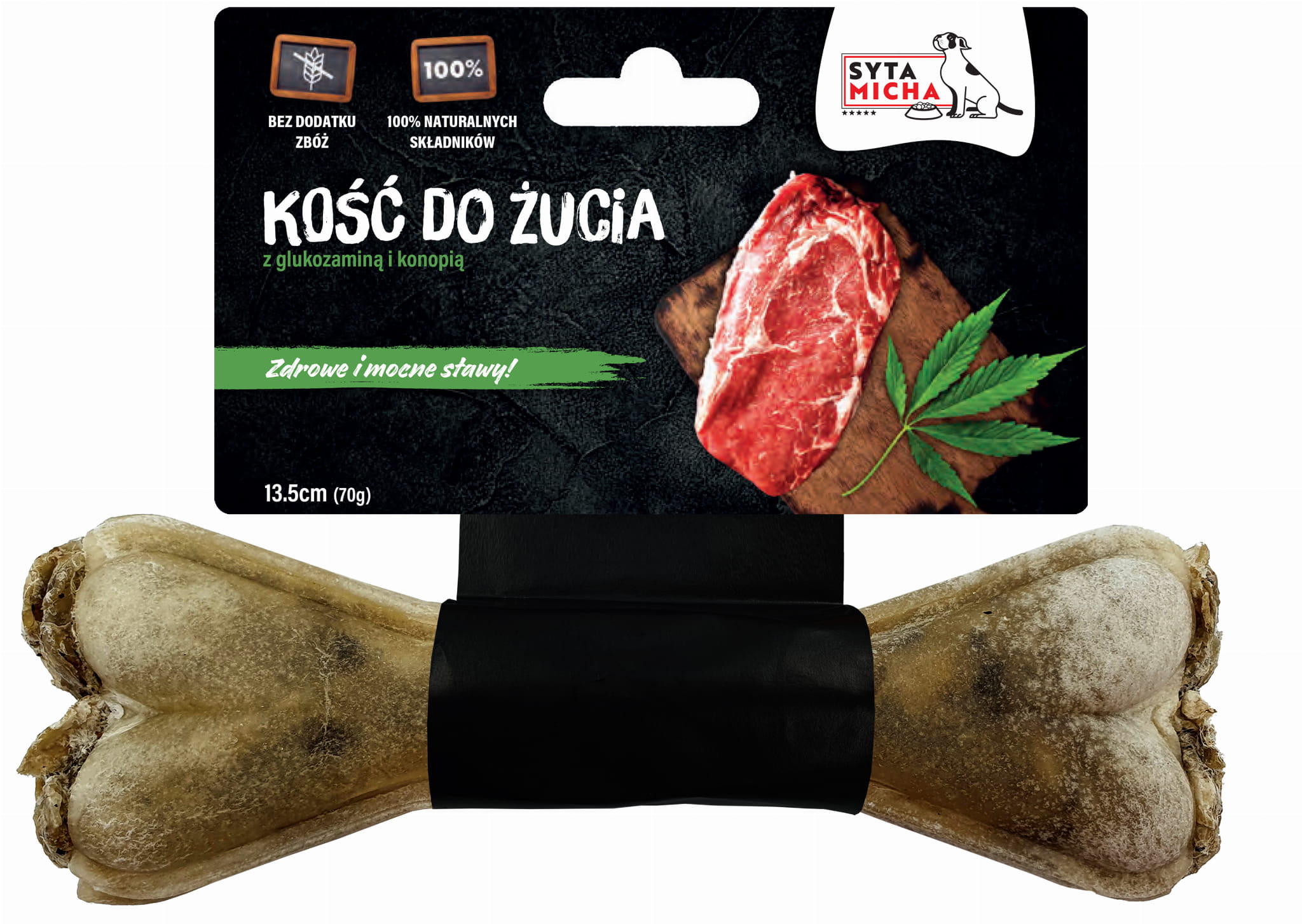
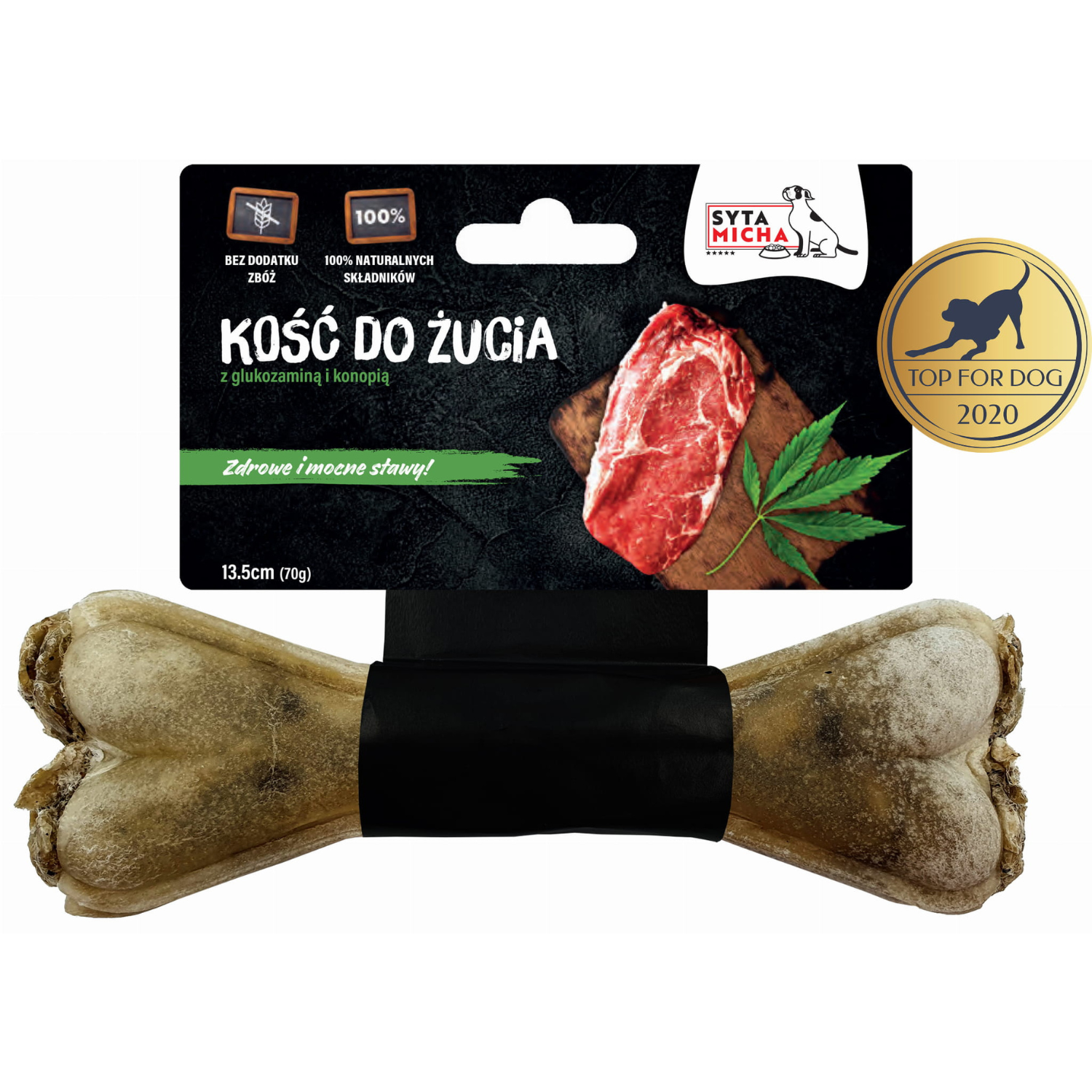
According to the studies cited, hemp components may inhibit the production of pro-inflammatory cytokines, which are involved in the development of joint inflammation. That is why hemp seeds are one of the ingredients of our functional chew bones, which support joint condition. They are a tasty and valuable addition to a dog’s diet. Hemp oil (4.5%) is also in our Skin & Coat oil, alongside sardine oil and linseed oil.

Bibliography
- Burgel L., Hartung J., Pflugfelder A., Graeff-Hönninger S., 2020. Impact of Growth Stage and Biomass Fractions on Cannabinoid Content and Yield of Different Hemp (Cannabis sativa L.) Genotypes. Agronomy, 10, 372.
- Callaway JC. Hempseed as a nutritional resource: an overview. Euphytica. 2004; 140(1-2): 65-72.
- Dąbrowski G., Skrajda M., 2016. Lipid and protein fraction of hemp seed (C. sativa L.) and its beneficial influence on human health. Journal of Education, Health and Sport, 6, 9, 357-366.
- Girgih AT, He R, Malomo S, Offengenden M, Wu J, Aluko RE. Structural and functional characterization of hemp seed (Cannabis sativa L.) protein-derived antioxidant and antihypertensive peptides. Journal of Functional Foods. 2014; 6: 384-394.
- Jeong M., Cho J., Shin J-I., Jeon Y-J., Kim J-K., Lee S-J., Kim E-S., Lee K., 2014. Hempseed oil induces reactive oxygen species- and C/EBP homologous protein-mediated apoptosis in MH7A human rheumatoid arthritis fibroblast-like synovial cells. Journal of Ethnopharmacology, doi.org/10.1016/j.jep.2014.04.052i.
- Noh M.F., Gunasegavan R.D.N., Musta S., 2019. Vitamin A in Health and Disease. IntechOpen.
- Raikos V, Duthie G, Ranawana V. Denaturation and oxidative stability of hemp seed (Cannabis sativa L.) Protein isolate as affected by heat treatment. Plant Foods for Human Nutrition. 2015; 70(3): 304-309.
Authors: Ewa Kwas, Joanna Wajs, MSc in Dietetics
Products mentioned
 You collect HAU DOLCE points for your purchases
Frequently asked questions
Are hemp seeds safe for dogs?
Yes. The seeds used in food come from industrial hemp, not Indian hemp, and contain no THC, the addictive component.
How much protein do hemp seeds contain?
100 g of seeds contains up to 40 g of protein. It contains the full set of essential amino acids, and its biological value (74) is close to that of protein from meat.
How do hemp seeds affect a dog’s coat?
They contain omega-3 and omega-6 fatty acids in a 1:3 ratio, which have a beneficial effect on the skin and coat. That is why they work well during shedding and before shows.
Do hemp seeds support a dog’s joints?
According to the studies cited, hemp components may inhibit the production of pro-inflammatory cytokines linked to joint inflammation. That is why they are one of the ingredients of our functional chew bones.