

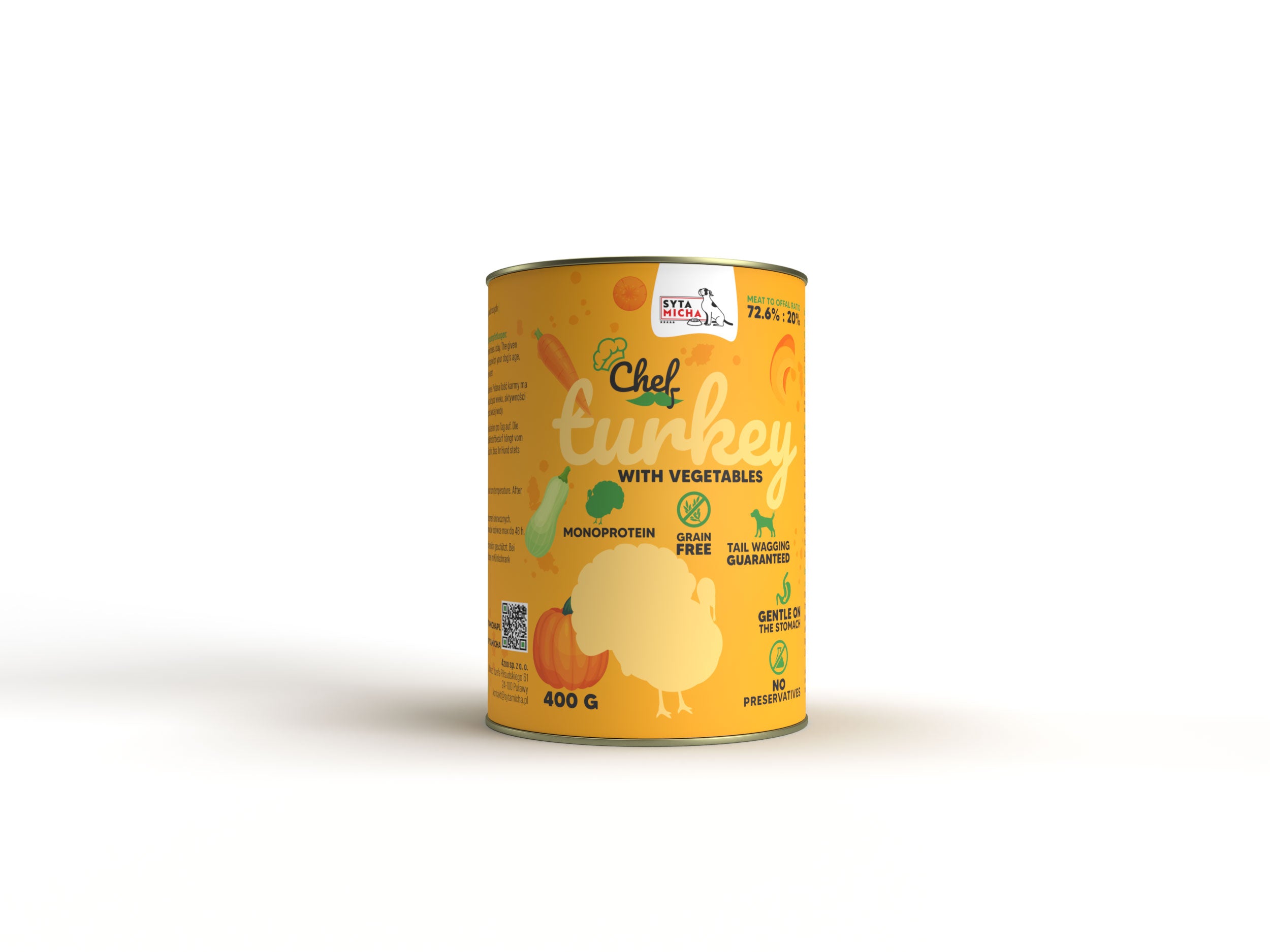
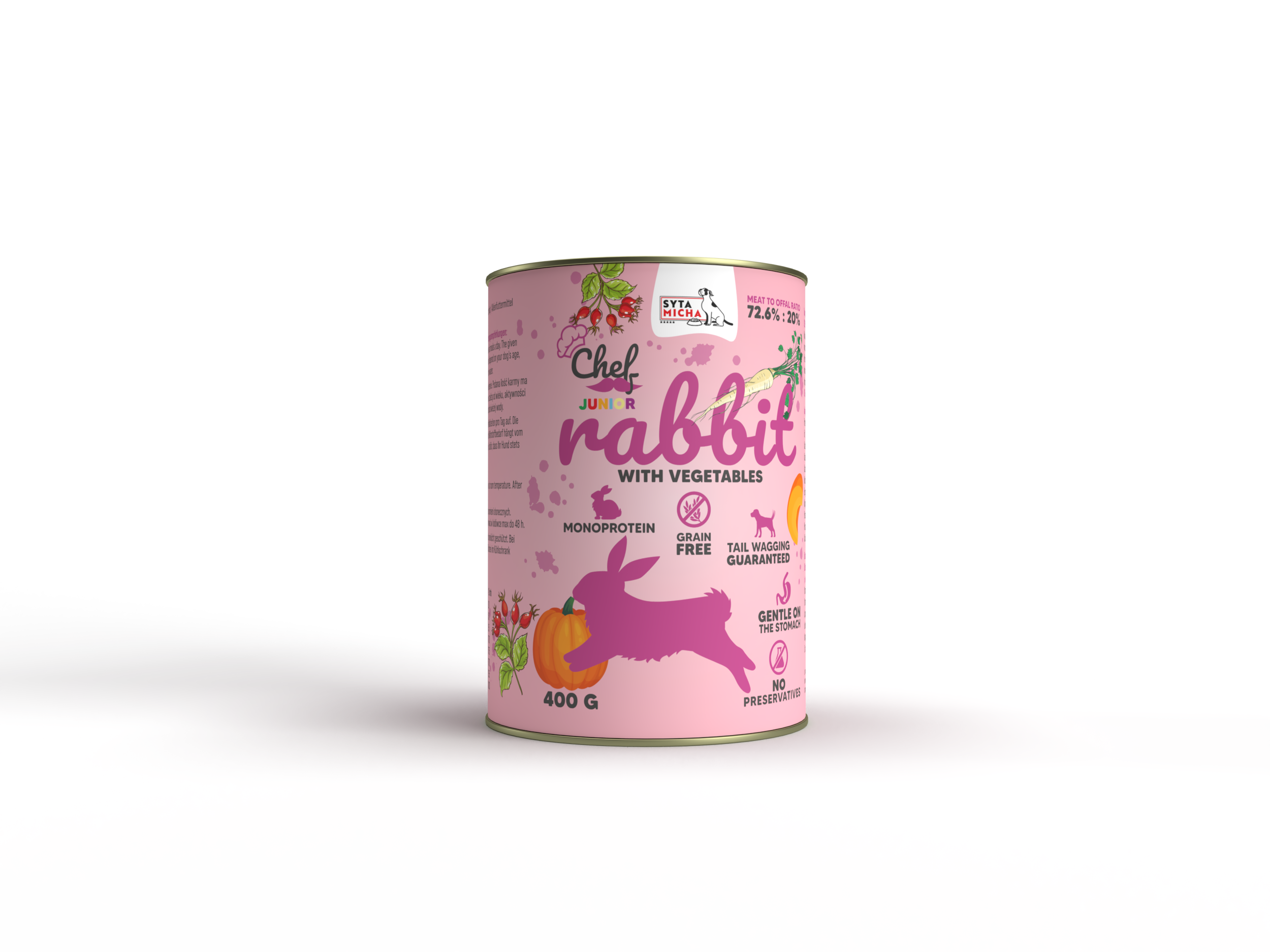
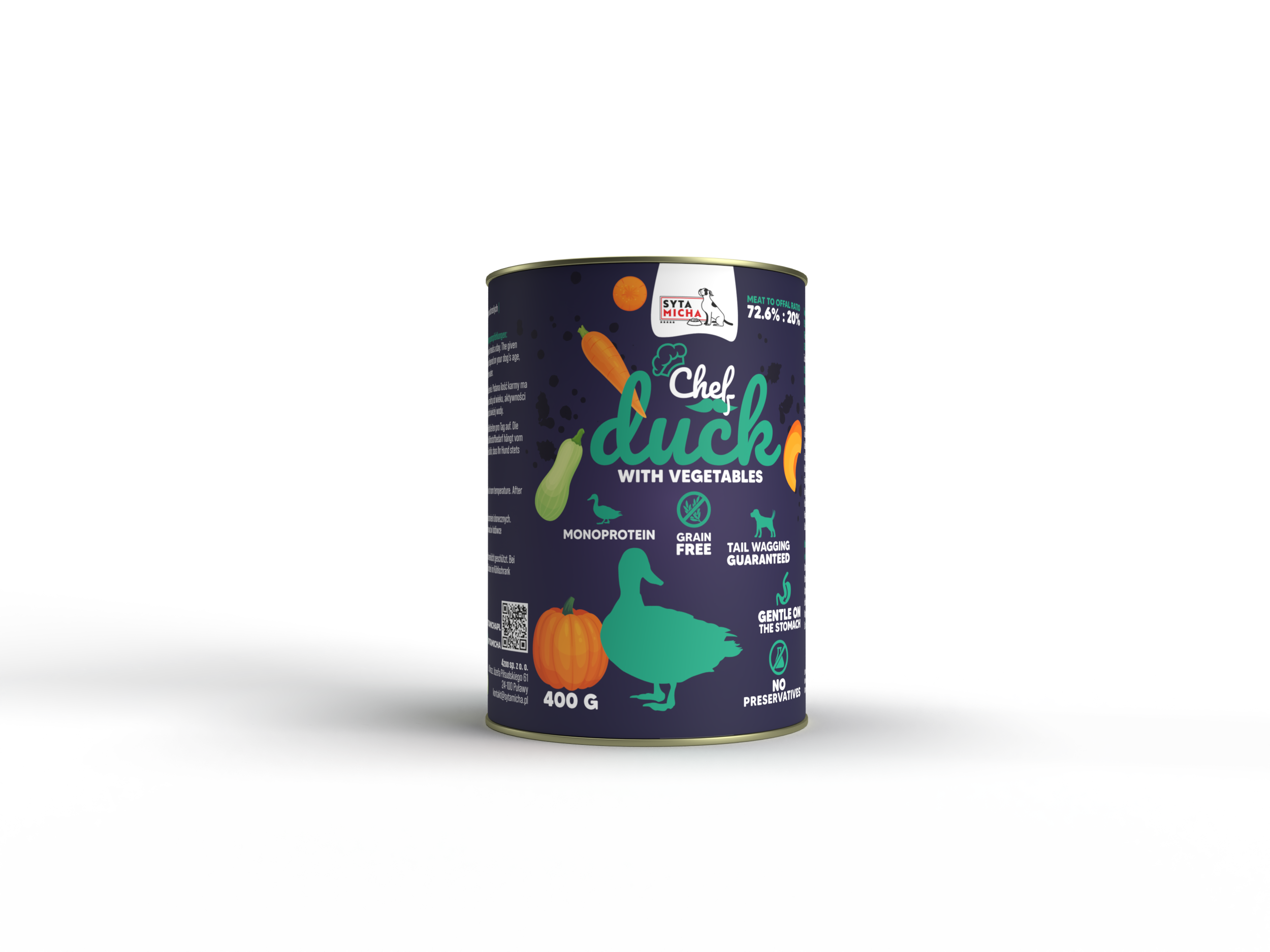
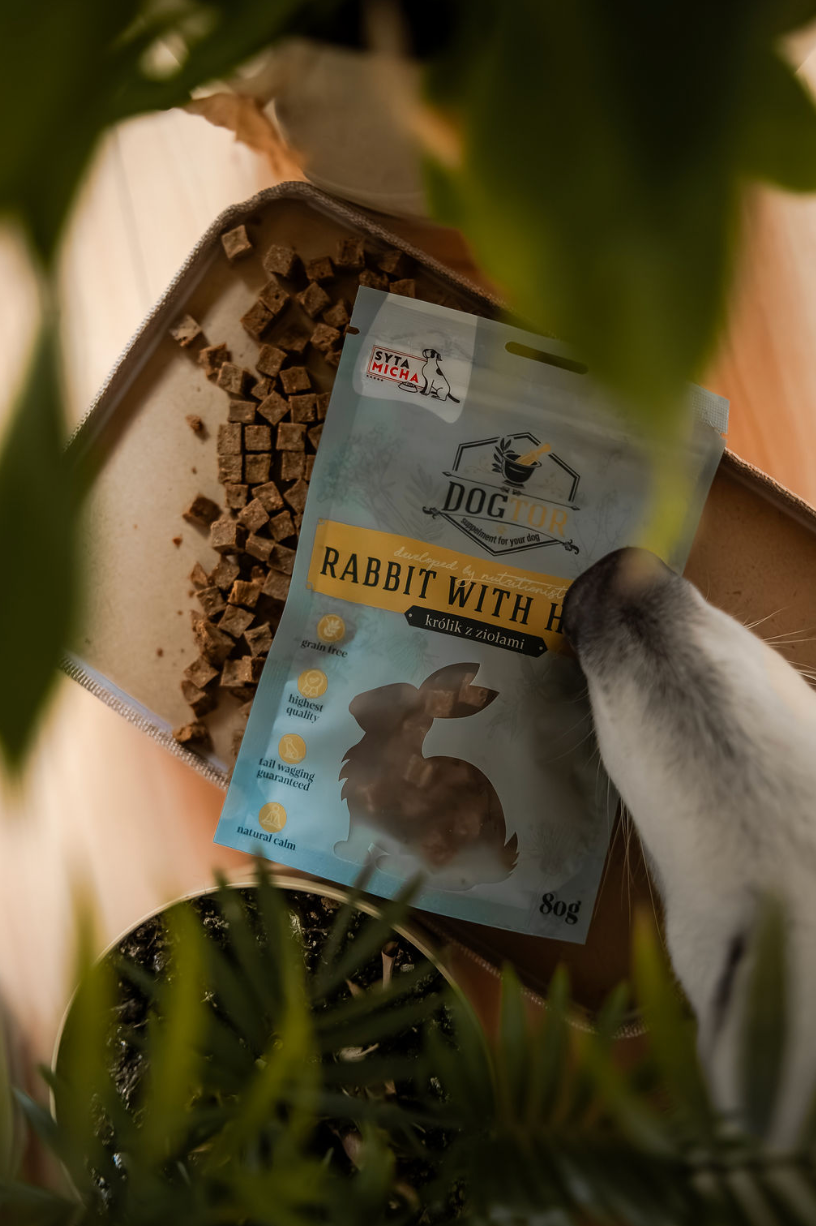
Training treats should make up no more than 10% of a dog’s daily calorie requirement. The requirement is calculated from RER (70 × body weight in kg to the power of 0.75) multiplied by an activity factor, and the calories from rewards are taken off the evening portion of food. Small, low-calorie treats with a short composition let you reward more often without the risk of excess weight.
A training session means dozens of repetitions, and each one ends with a reward. Your dog is motivated and happy to work. The problem comes in the evening, when you measure out the main meal and wonder how many calories your dog has already eaten in rewards.
If you do not know, you are not alone. It is one of the most common mistakes made by owners of active dogs. Excess weight in working and sporting dogs puts a strain on the joints, slows reactions and shortens careers. We show you a simple way to manage the calories from treats so your dog stays lean, healthy and still keen to work.
Why training rewards easily lead to overfeeding
A training treat seems small and harmless: a piece of meat the size of a fingernail, a slice of dried fillet. On its own it changes little. The problem is the scale: an intensive session can mean 30-50 rewards, and with a calorie-dense treat that is already a significant contribution to the daily balance.
Many owners do not take the calories from rewards off the main meal. The dog gets a full portion in the evening, even though it has already eaten quite a lot during the day. After a few months it gains weight and becomes sluggish, and the owner cannot understand why, since they feed a good food.
How to calculate your dog’s daily calorie requirement
The starting point is RER (Resting Energy Requirement), which is multiplied by an activity factor.
RER = 70 × (body weight in kg)^0.75
Then multiply the result by the activity factor:
- adult entire dog, moderate activity: × 1.8,
- adult neutered dog, moderate activity: × 1.6,
- very active, working dog: × 2.0-3.0.
The factors are rough values in line with FEDIAF/NRC guidelines. Always verify the final requirement by assessing your dog’s body condition score (BCS).
Example: an active 30 kg Labrador
- RER = 70 × 30^0.75 = 70 × 12.8 = approx. 896 kcal,
- multiplied by 2.0 = approx. 1792 kcal a day.
That is the dog’s whole calorie budget for the day, treats included.
How to choose a training treat
Not every treat is suitable for training. Pay attention to:
- calories - the lower they are, the more rewards you can give without the risk of overfeeding,
- composition - a short ingredient list, meat in first place, no sugars or unnecessary fillers,
- size - small pieces, easy to swallow, so your dog does not lose focus by chewing,
- palatability - your dog has to want to work for it, especially on harder tasks.
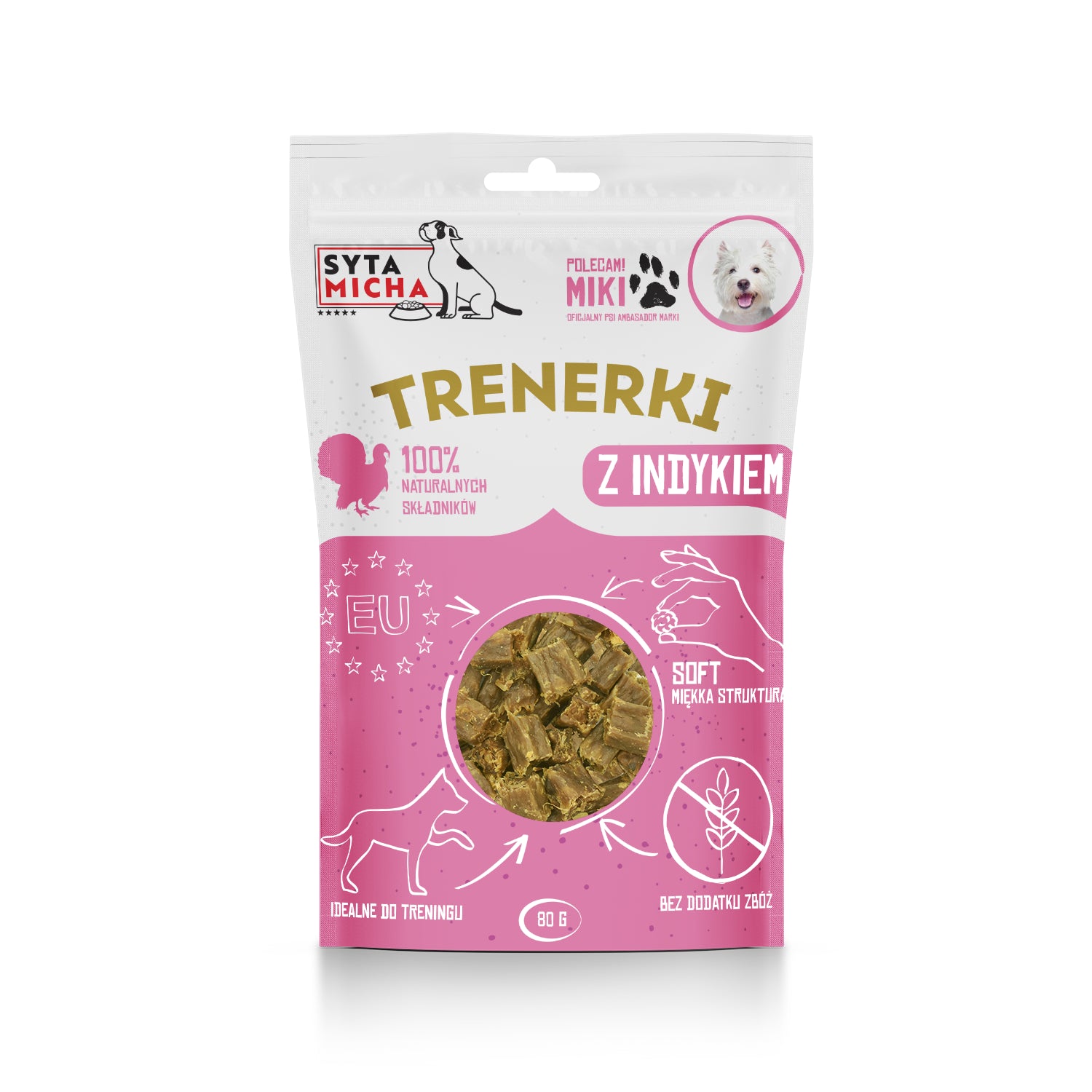 Trenerki with turkey for dogs 80g · 10,49 zł
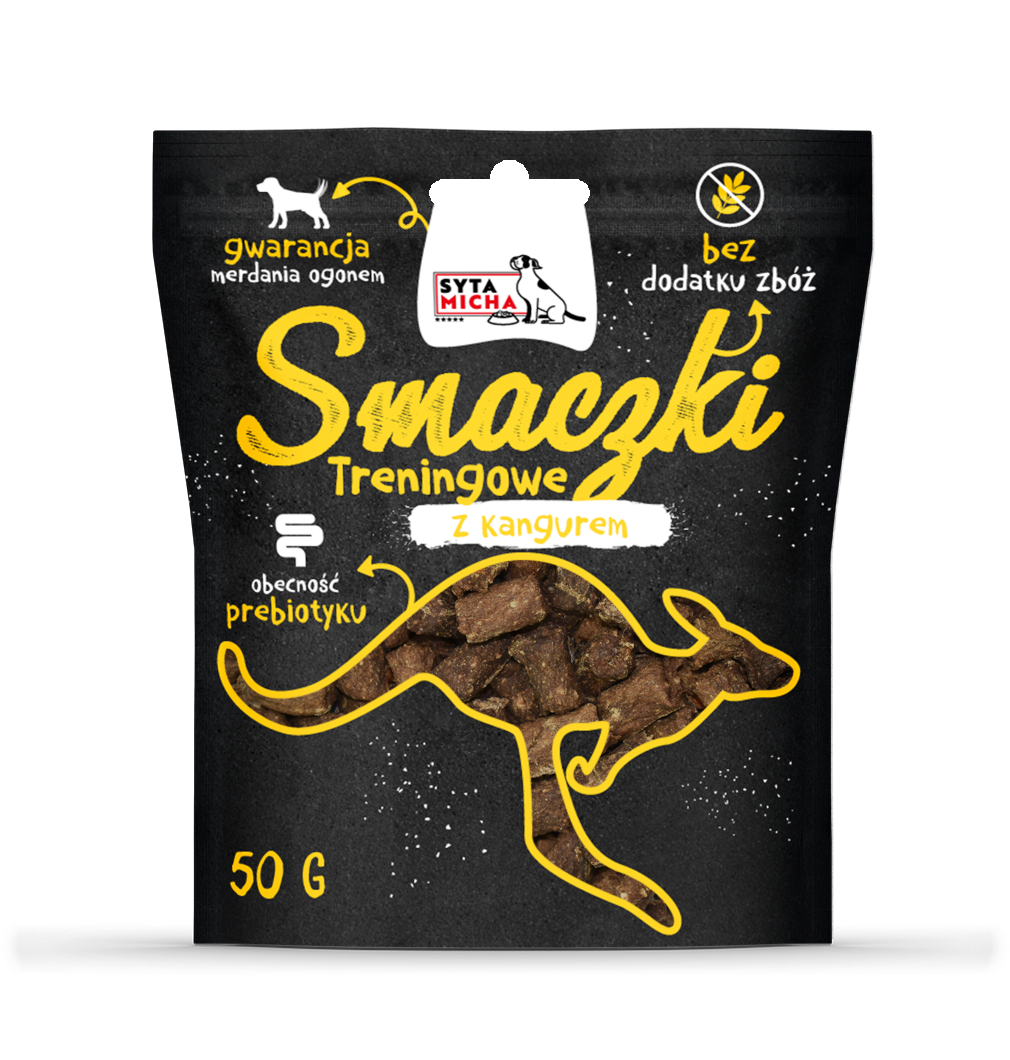 Training treats with kangaroo 50g · 13,90 zł
The 10% rule - how to count treats in the calorie balance
The rule is simple and works in practice:
- Treats make up a maximum of 10% of the daily calorie requirement.
- Check the calorie content of the treat on the packaging (kcal/100 g).
- Work out how many calories your dog ate in rewards that day.
- Take that amount off the evening portion of food.
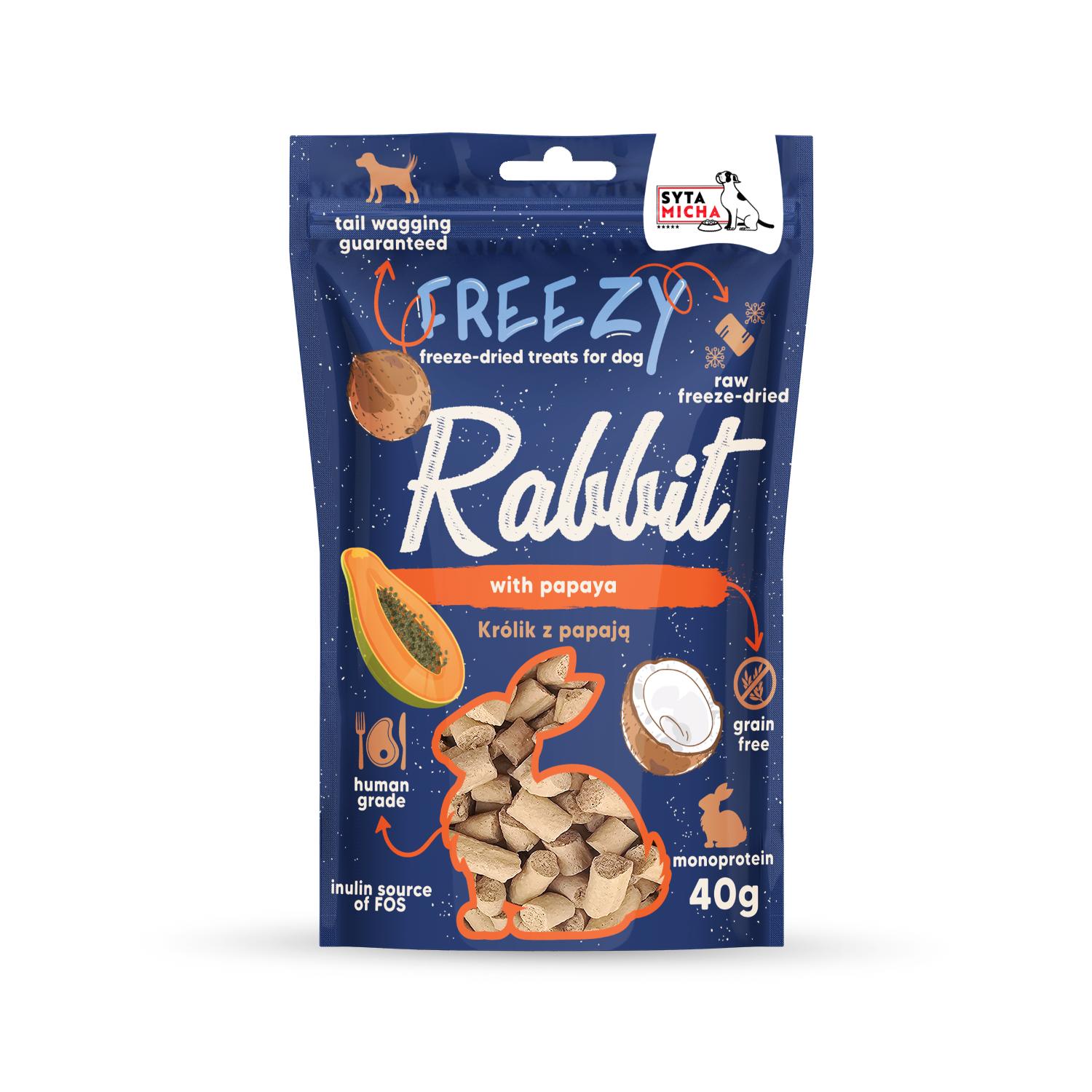
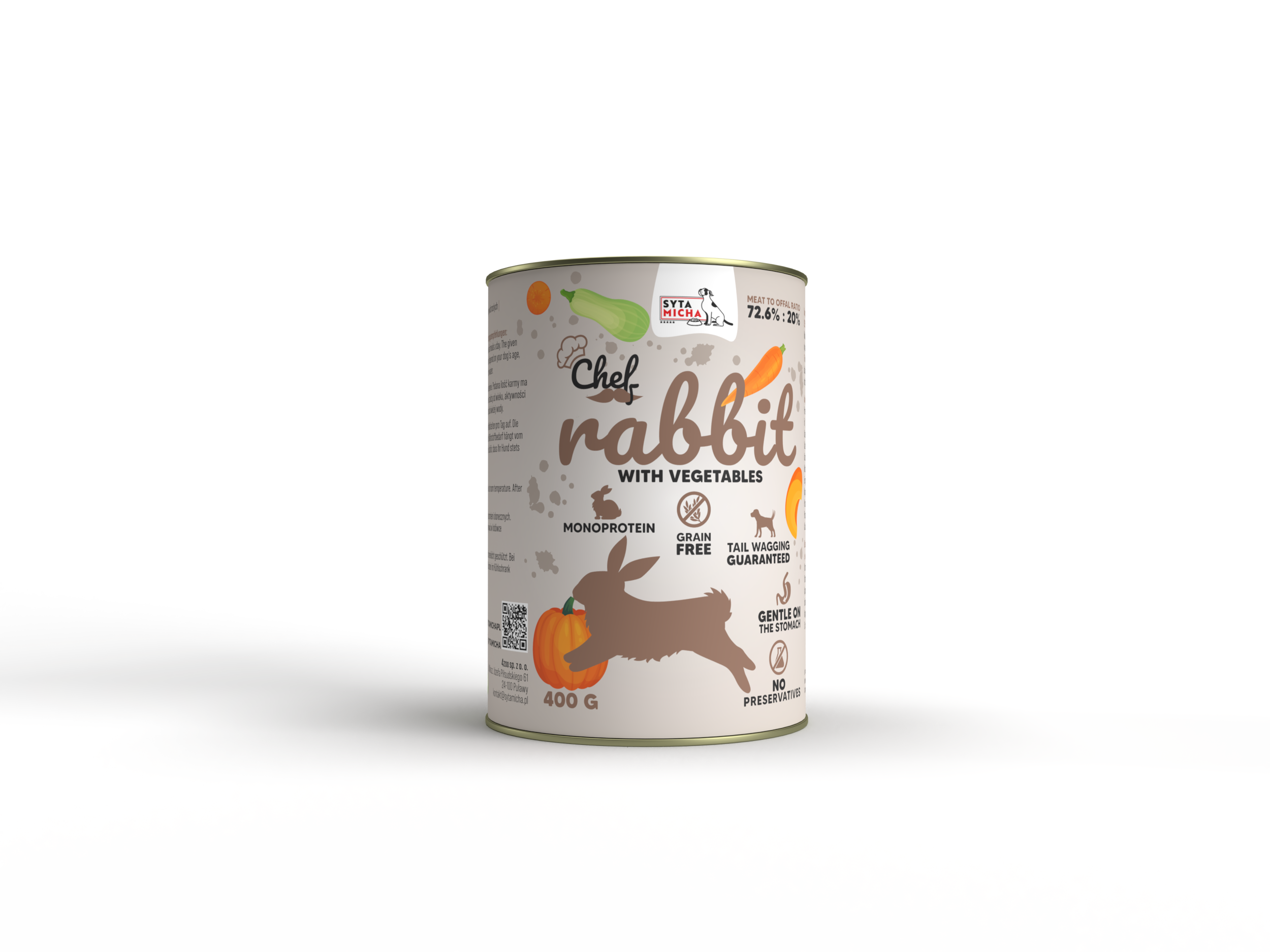
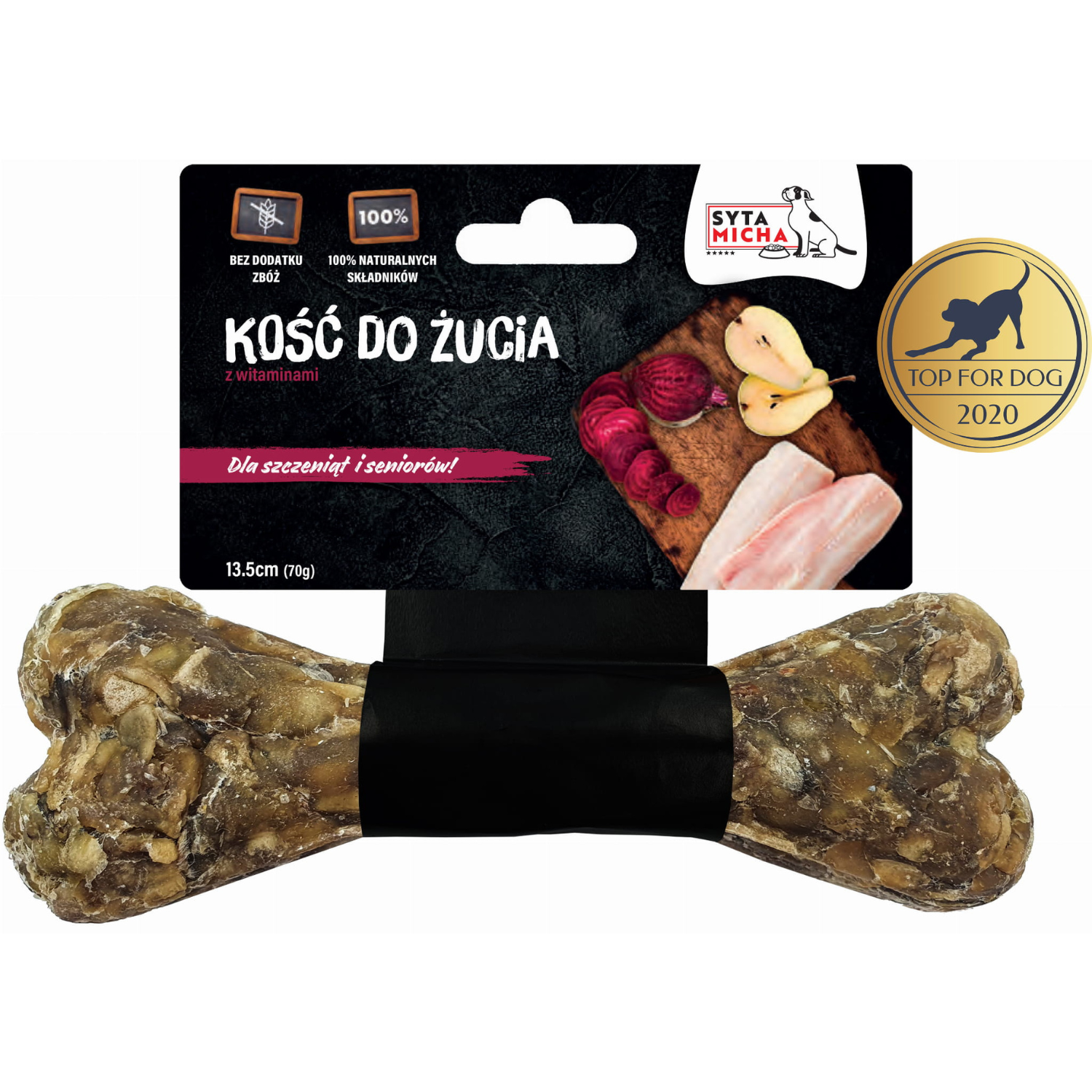
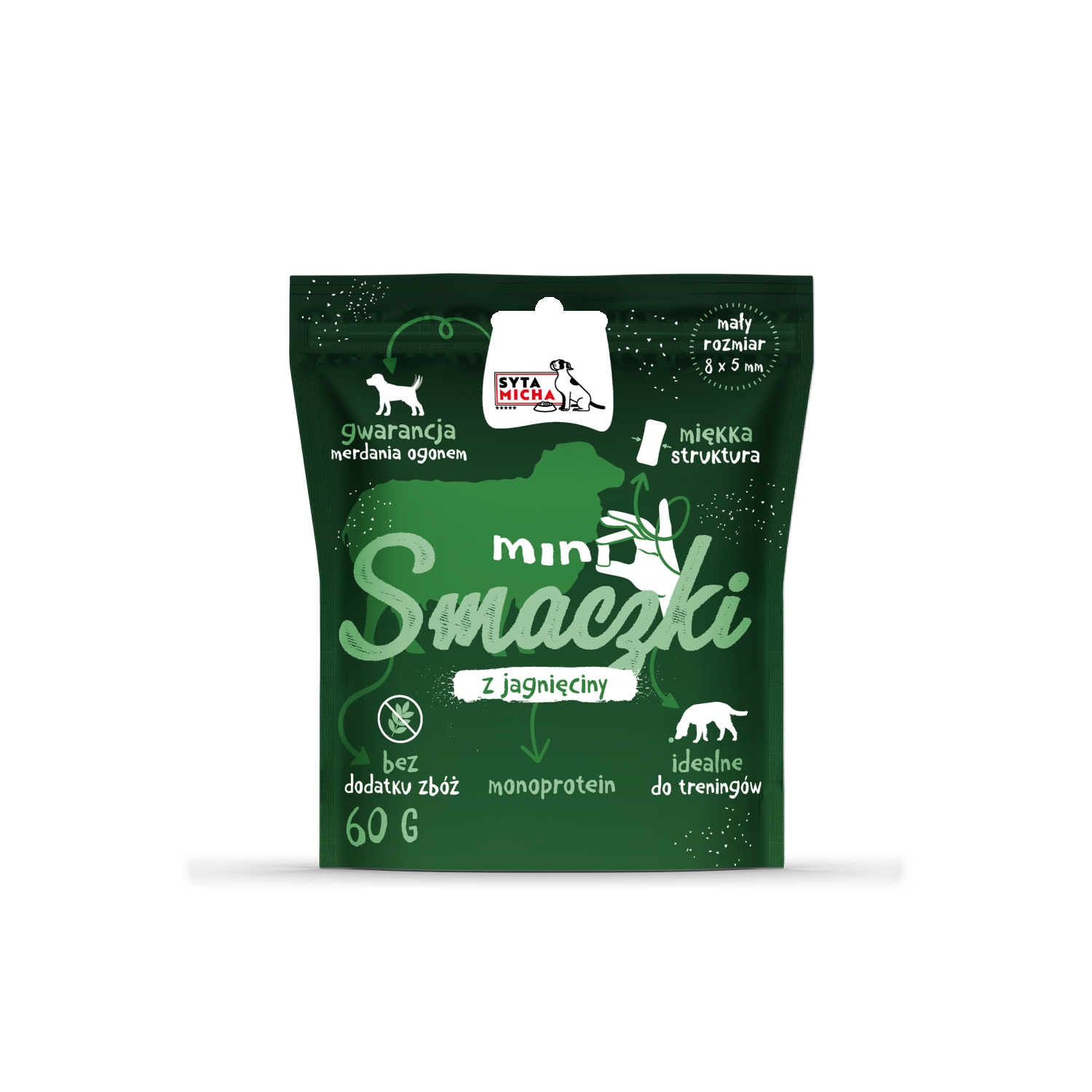
Syta Micha treats have a clear composition and stated calorie content, so you do not have to guess. You can also break one treat into several smaller pieces. A dog responds to the reward itself, not to its size, so smaller pieces mean more repetitions from the same pool of calories.
A sample menu for an active dog with rewards
Labrador 30 kg, active, daily budget approx. 1800 kcal
- Morning: 40% of the daily portion of food (approx. 720 kcal),
- training session: Syta Micha treats, approx. 150-180 kcal in total (approx. 10% of the budget),
- evening: a reduced portion of food (approx. 900 kcal), after taking off the calories from treats.
Total: approx. 1770-1800 kcal, so within range. The dog is full, motivated to work, and its figure stays under control.
The key rules in brief
- Training treats matter for your dog’s motivation, but they have to be counted in the daily calorie balance.
- Rewards should not exceed 10% of the daily energy requirement.
- Choose low-calorie treats with a short composition, and you can reward more often.
- Take the calories from rewards off the evening portion of food. It is a simple habit that makes a big difference.
Looking for treats that make it easy to keep your dog’s weight in check? In the Syta Micha range you will find rewards with a clear composition and stated calorie content.
Products mentioned
 You collect HAU DOLCE points for your purchases
Frequently asked questions
How many treats can a dog have in a day?
Treats should make up no more than 10% of a dog’s daily calorie requirement. The dog should get the rest of its energy from a complete food.
How do I calculate my dog’s daily calorie requirement?
First work out RER = 70 × (body weight in kg)^0.75, then multiply the result by an activity factor, e.g. 1.6 for an adult neutered dog with moderate activity. Always verify the result by assessing body condition (BCS).
How do I allow for treats in the food portion?
Check the calorie content of the treat on the packaging, work out how many calories your dog ate in rewards, and take that amount off the evening portion of food.
Which treat works best for training?
Small, low in calories, with a short composition and meat in first place, no sugar or fillers, and tasty for your dog. You can also break one treat into several pieces.