 HAU DOLCE
Prebiotic for dogs
A prebiotic is an ingredient a dog cannot digest on its own: it passes through the small intestine intact and in the large intestine becomes food for gut bacteria.
A prebiotic for dogs is a food component that a dog's body does not break down with its own enzymes. It passes through the small intestine intact, and only in the large intestine does it meet bacteria that can break it down.
How a prebiotic works
Gut bacteria ferment the prebiotic, and this process produces short-chain fatty acids, abbreviated SCFA: mainly butyrate, propionate and acetate. They are a source of energy for the cells lining the large intestine. This is a physiological mechanism, not a therapeutic effect.
Prebiotic vs probiotic
The difference is simple: a probiotic is live bacteria, a prebiotic is food for the bacteria the dog already has. A prebiotic is not sensitive to temperature or storage time, so it is easier to add to a treat or food.
Where to look for it in the composition
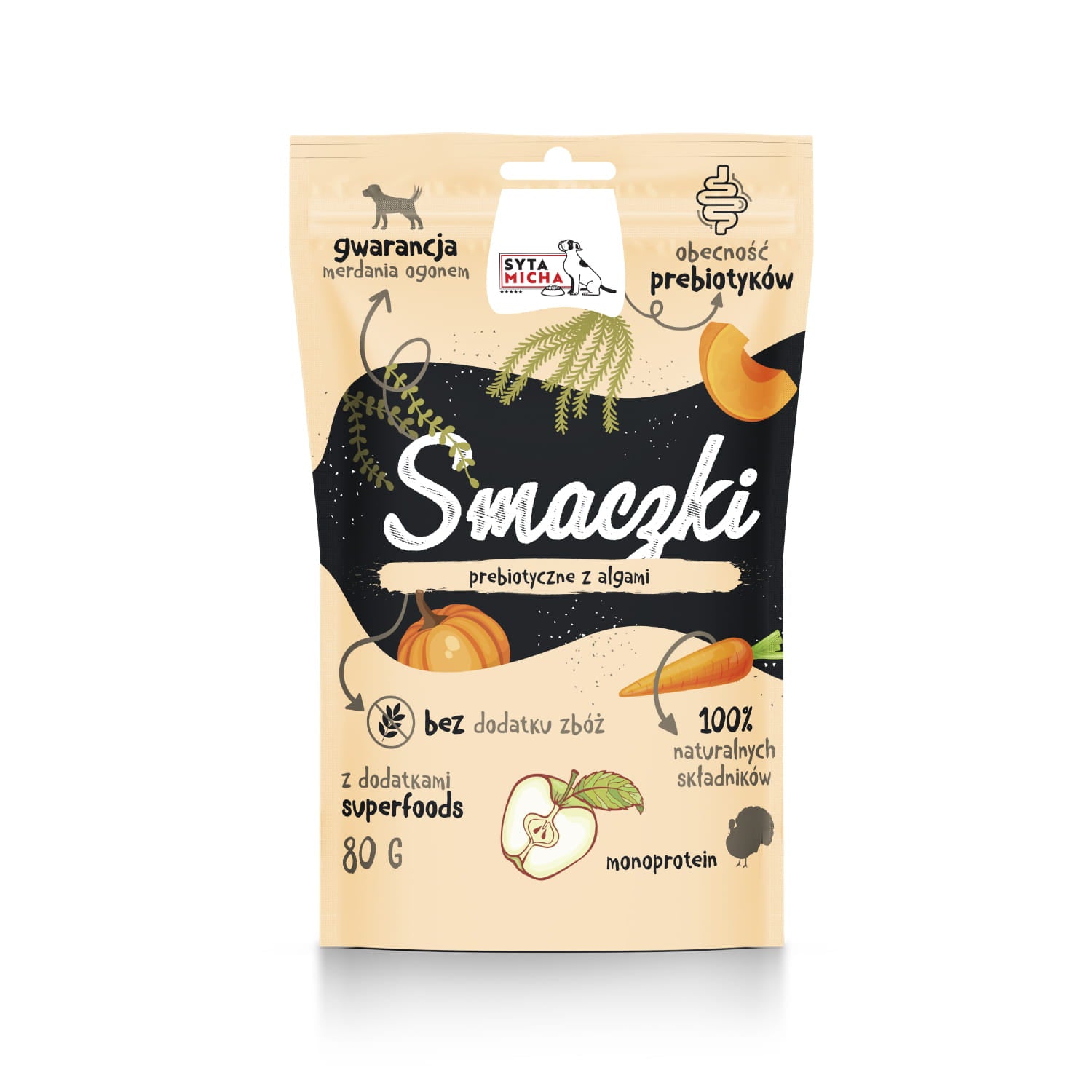
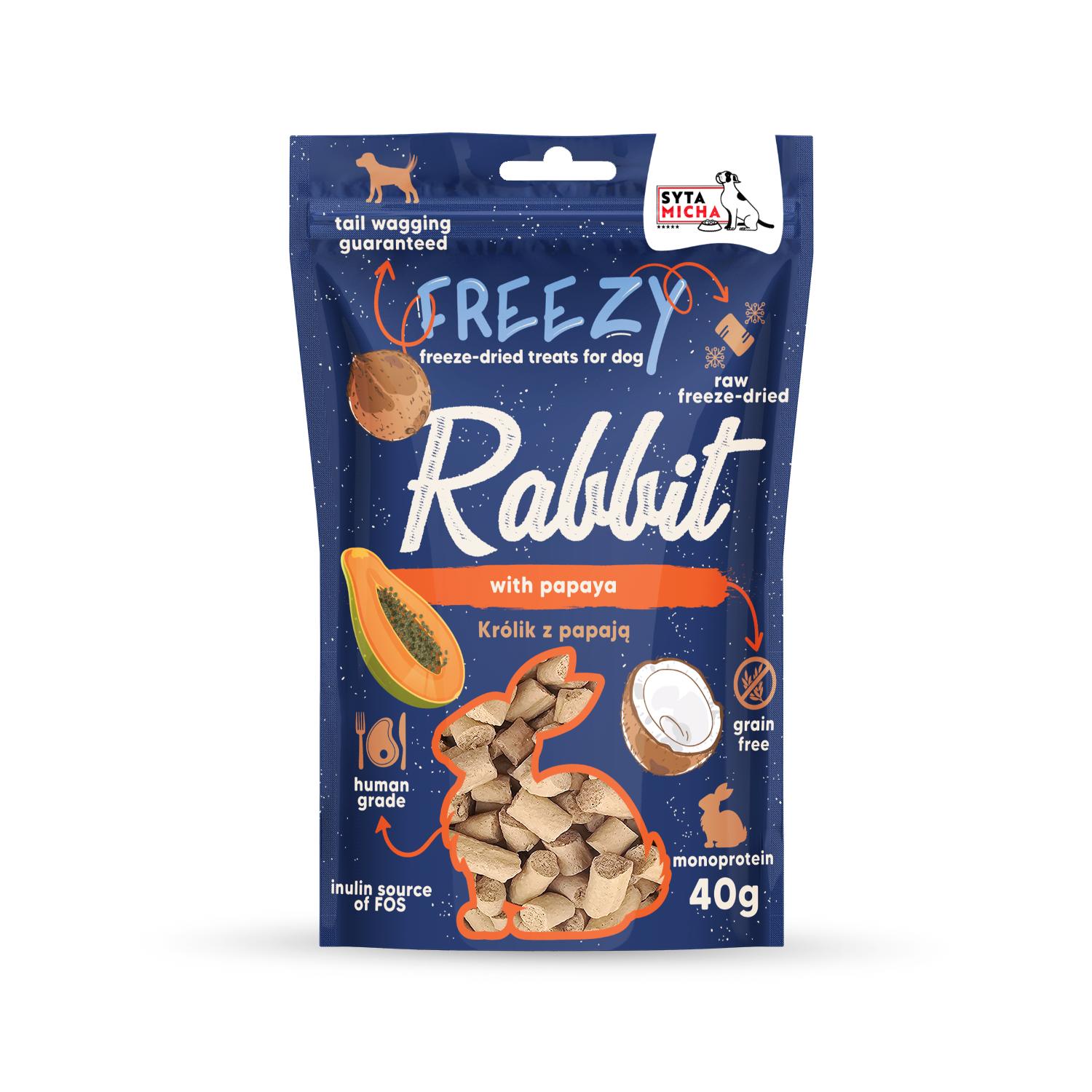
In foods and treats, the role of a prebiotic is most often played by plant fibres: pectins from apple pomace, inulin from chicory, fructooligosaccharides (FOS), mannanoligosaccharides (MOS) from yeast and polysaccharides from brown algae.