 HAU DOLCE
Welcome back 🐾
Sign in to your Syta Micha account
Popular searches
Categories
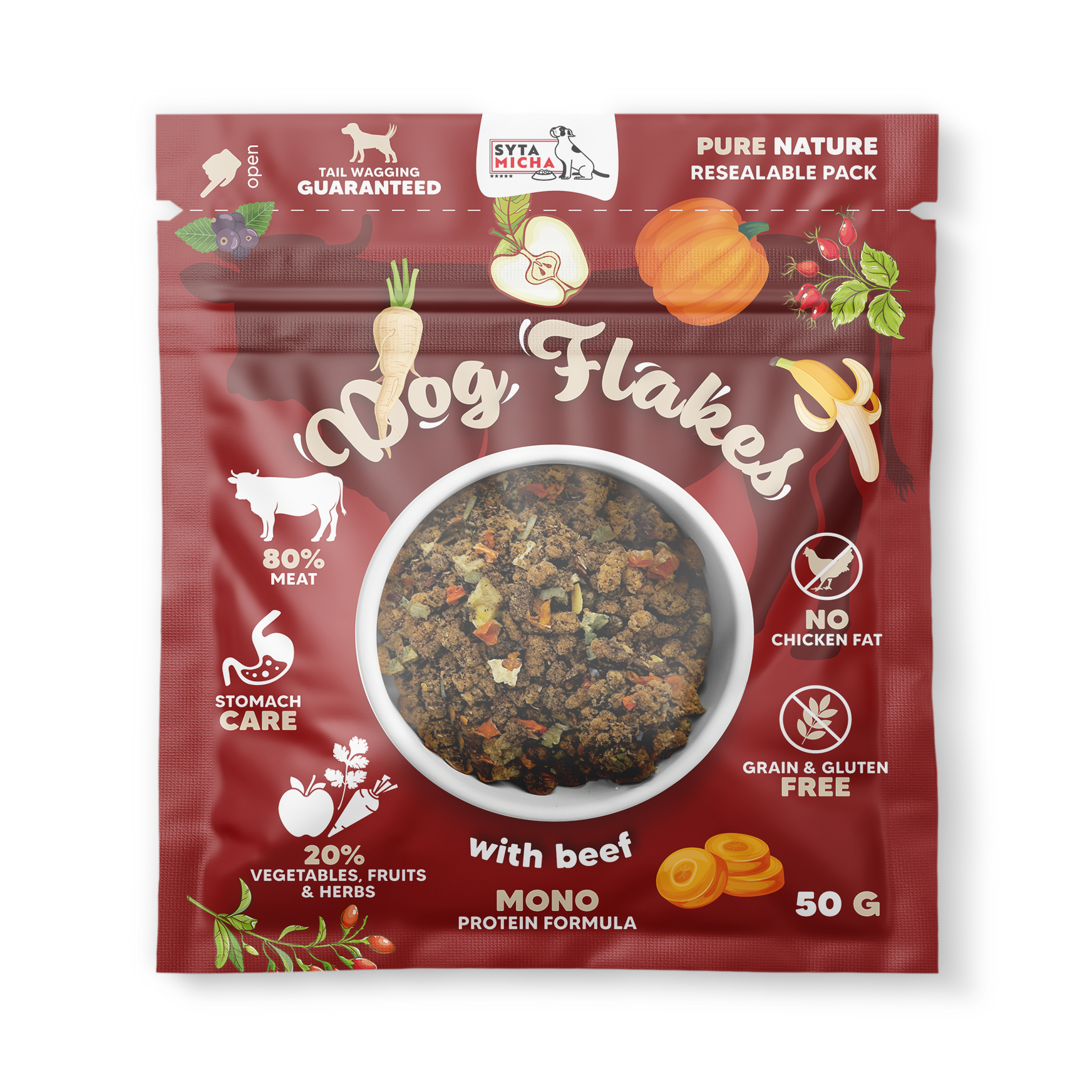
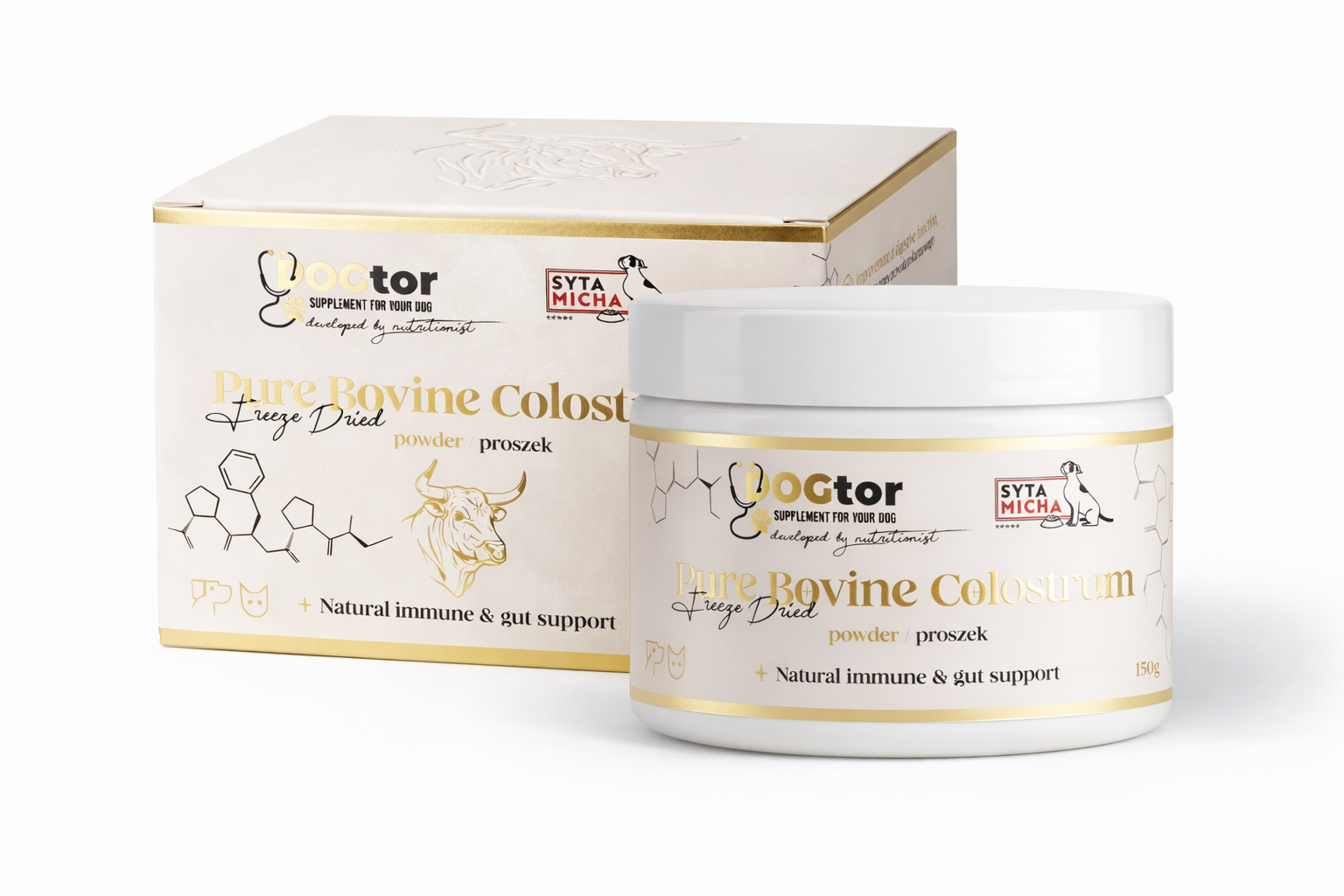
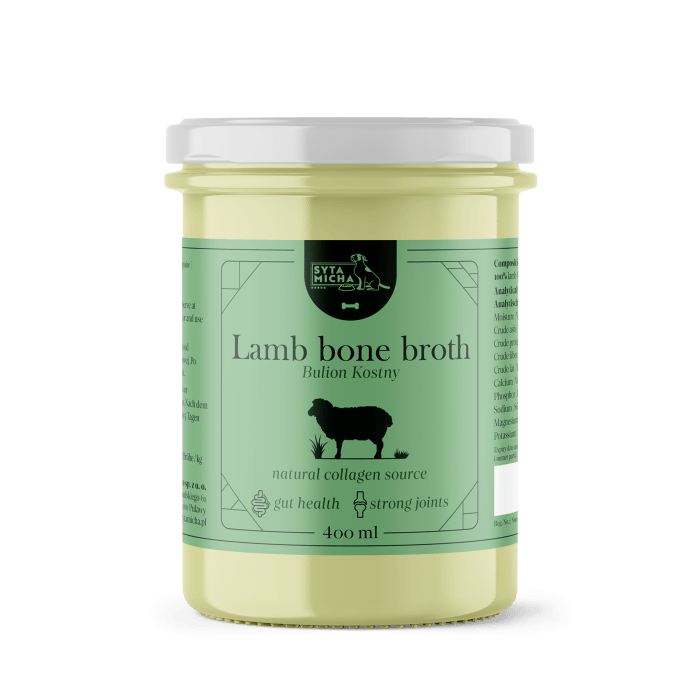
Recommended products
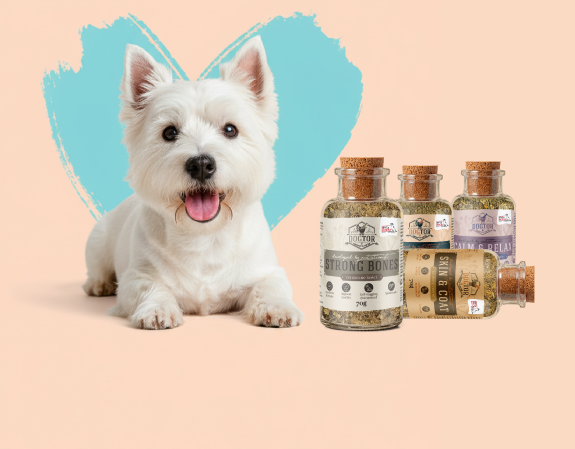
DOGTOR dog supplements
Dog supplements from the DOGTOR line reach their goal in two ways: a powdered herbal blend you sprinkle into the bowl, or an oil you dose with a spoon. You choose based on what's happening with your dog right now: mobility, digestion, immunity, skin and coat, calming or metabolism. Each of them complements the daily diet, rather than replacing it. The whole line contains no artificial colourings or preservatives, and the recipes are based on herbs, pressed oils and animal-derived raw materials. Below I've set out how herbs differ from oils and which supplement gives more to which dog.


Which dog supplements should you choose?
Good dog supplements are chosen for one specific issue, not for everything at once. That's why every product in the DOGTOR line states plainly in its name what it addresses: joints, digestion, immunity, skin and coat, strong bones, metabolism, gut protection and calming.
The herbal blends come as a powder in different weights, from 50 g for calming to 120 g for digestion. You sprinkle the herbs over the food, so they go down most easily with dogs who eat anything. The oils in 250 ml and 200 ml bottles go on top of the portion and usually win over fussy dogs faster, because they improve the aroma of the whole bowl.
- Powdered herbs: one issue, powder form, sprinkled over dry or wet food.
- Oils: sardine oil base or plant-based MCT oil, dosed with a spoon.
- Colostrum: freeze-dried bovine colostrum, a category of its own.
- Treats with herbs: rabbit with herbs for hand-feeding, when your dog won't take powder.
Joint supplements for dogs: herbs or oil?
You'll find joint supplements for dogs in both forms with us, and it's a real choice, not a duplicate. The herbal joint supplements for dogs are DOGTOR for joints 80 g and DOGTOR for strong bones 90 g, and the oil version is Joints oil for dogs.
Herbs are usually chosen by owners of dogs who eat dry food and tolerate powdered additives well. Oil makes sense when you also want to raise the share of omega-3 fatty acids in the diet, because Joints oil is based on sardine oil and contains them in a significant concentration. There's nothing to stop you combining the two.
Sardine oil and MCT oil for dogs
The dog oil in our line plays two quite different roles. The sardine-based dog oils are Joints oil, Immunity oil, Skin & Coat oil and Digestion oil, all in 250 ml bottles, with omega-3 fatty acids in the form of EPA and DHA and added vitamin D3.
The second type is MCT oil 200 ml, i.e. plant-derived medium-chain triglycerides, in which caprylic and capric acid make up the entire fat. It's not a substitute for fish oil, but a separate, quickly available source of energy that some owners add for older and working dogs.
Colostrum for dogs, or bovine colostrum
Our colostrum for dogs is DOGTOR Colostrum 150 g. This colostrum for dogs is freeze-dried bovine colostrum with a standardised content of 20% IgG immunoglobulins, with no additives and no sugar.
Colostrum is the first food after birth, so nature has already composed it. The product is intended for dogs and cats, which is rare in our range. I've written more about the raw material itself in the glossary entry colostrum for dogs.
How to give supplements to your dog
Dog supplements are given with food, not separately, and this affects how well the supplement works more than you might think. Powdered blends are best mixed into a moist portion or into dry food sprinkled with water, so the herbs don't stay at the bottom of the bowl.
Oils are poured over the top just before serving, because that's when the aroma works best. You'll find the dosage for each product on its page, as it depends on your dog's weight and on the composition itself. If you feed dry dog food, adding oil or broth also changes the texture of the portion, which can be an extra argument for dogs who eat reluctantly.