

Food accounts for a minority of itching cases. First rule out parasites and skin infection, then atopy, and only at the end food allergy - that is when an elimination diet on a novel protein makes sense.
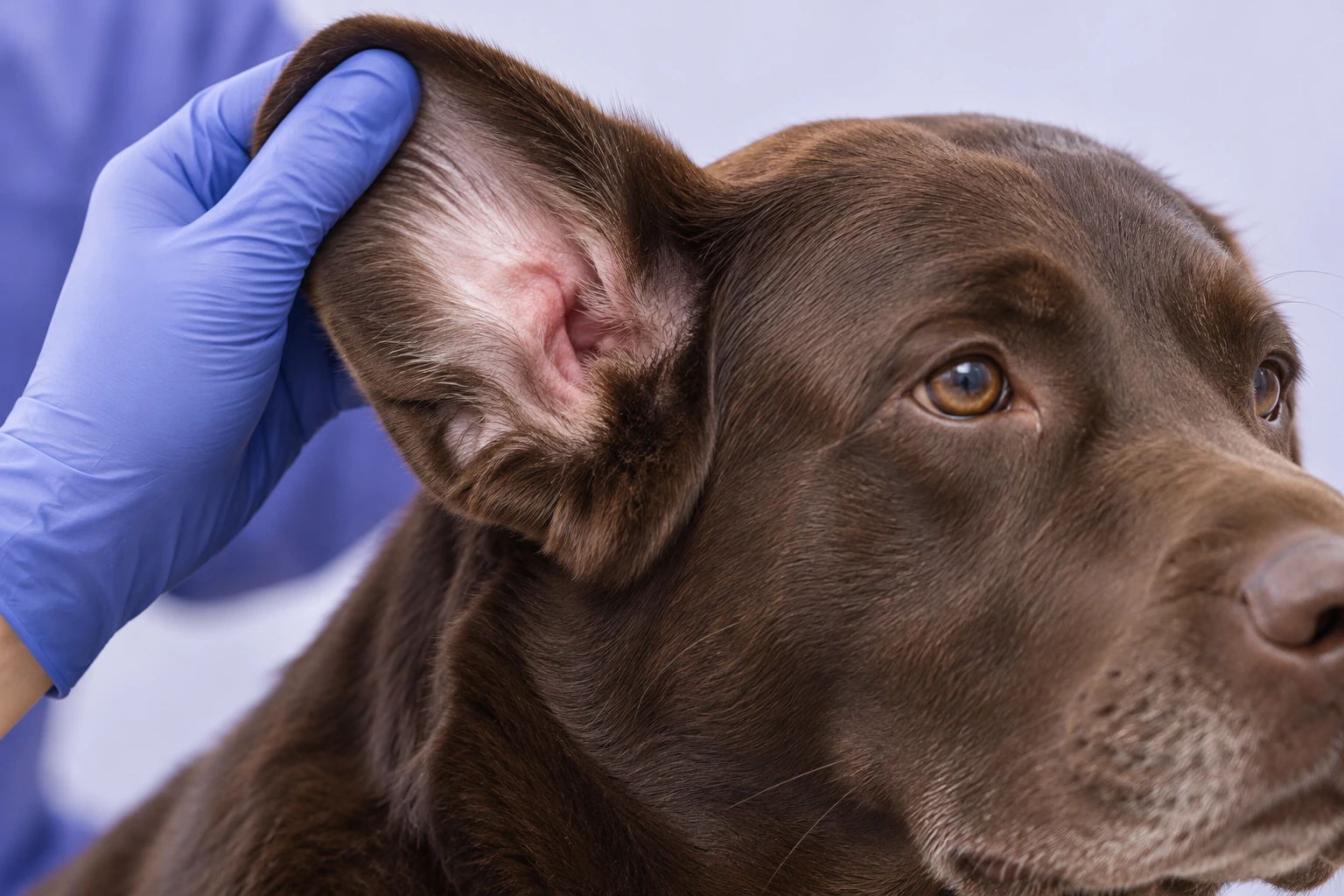
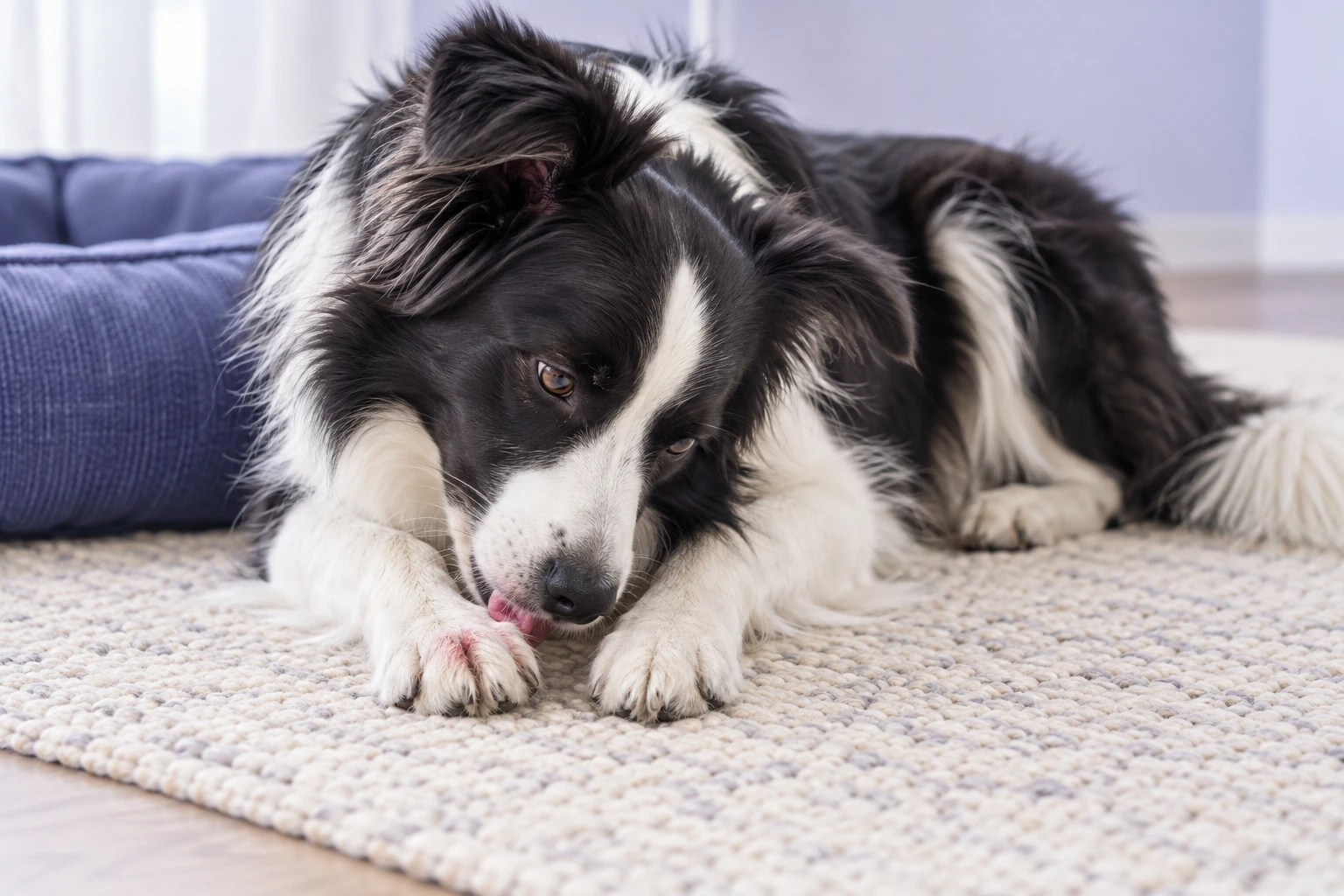
Your dog scratches at night so loudly you can hear it through the wall. It chews its paws, rubs its face on the carpet and has red ears. Owners most often start by changing the food, because it is the only thing they have direct control over.
The problem is that food accounts for a minority of itching cases. If you start there, in all the other situations you will lose a few weeks and still not know what is going on.
An order that saves time
1. External parasites
Fleas, mange mites, Demodex. This is the first thing to rule out, because it is the most common and the easiest to check. Not seeing fleas does not mean there are none: with a flea saliva allergy, a few bites a month are enough to keep a dog scratching non-stop.
2. Skin infection
Yeasts and bacteria get into scratched skin and keep the itch going on their own. A vicious circle forms: the dog scratches because it has an infection, and has an infection because it scratches. Without treatment, no diet will break it.
3. Environmental allergy (atopy)
Pollen, house dust mites, moulds. Symptoms usually get worse seasonally and affect the paws, belly, face and ears the most. This is the most common allergy in dogs.
4. Food allergy
Only at this point. What is characteristic is that the symptoms are year-round and do not ease when the seasons change. I described the details in a separate article on food allergy in dogs.
Where diet fits into all this
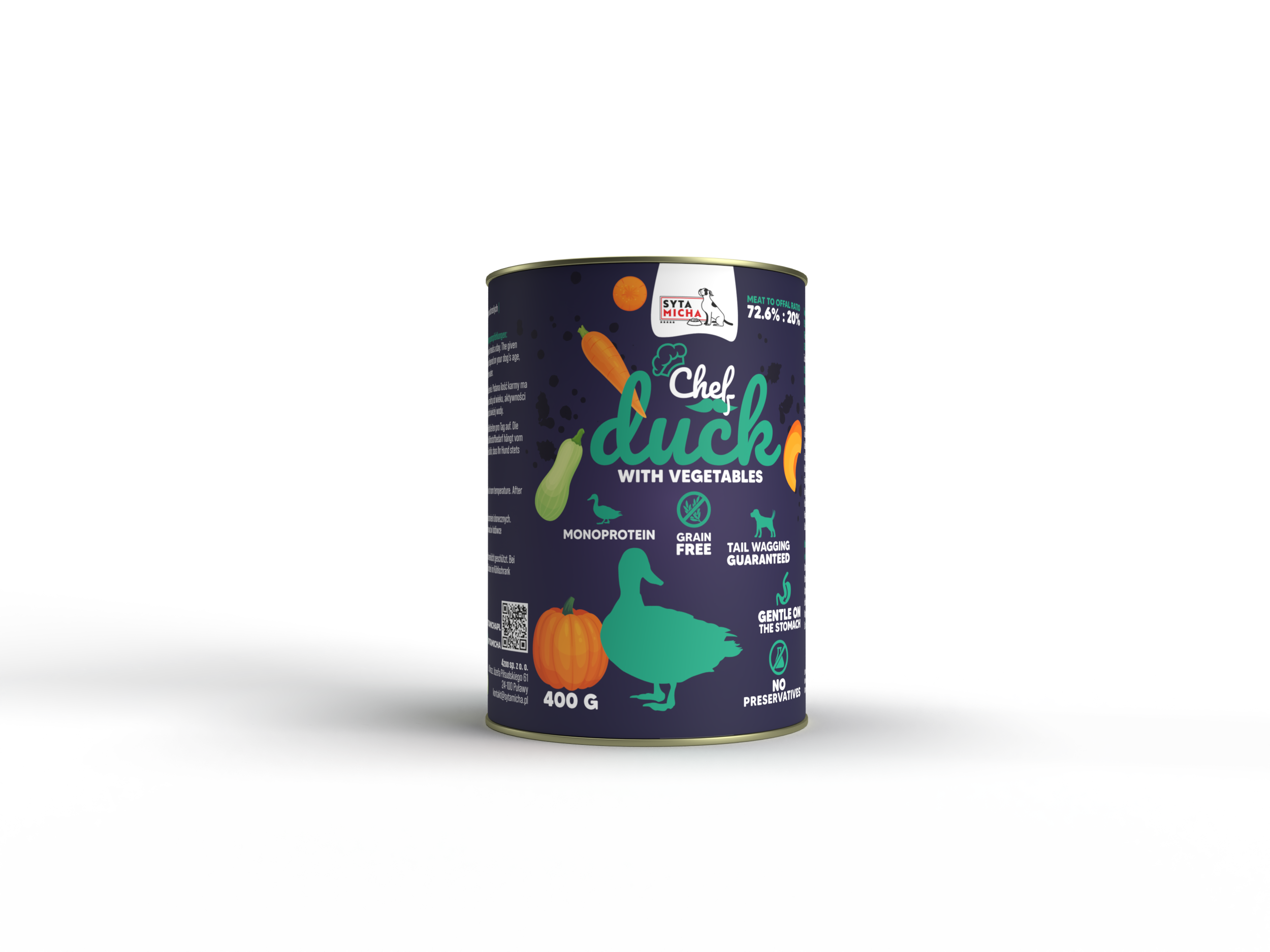
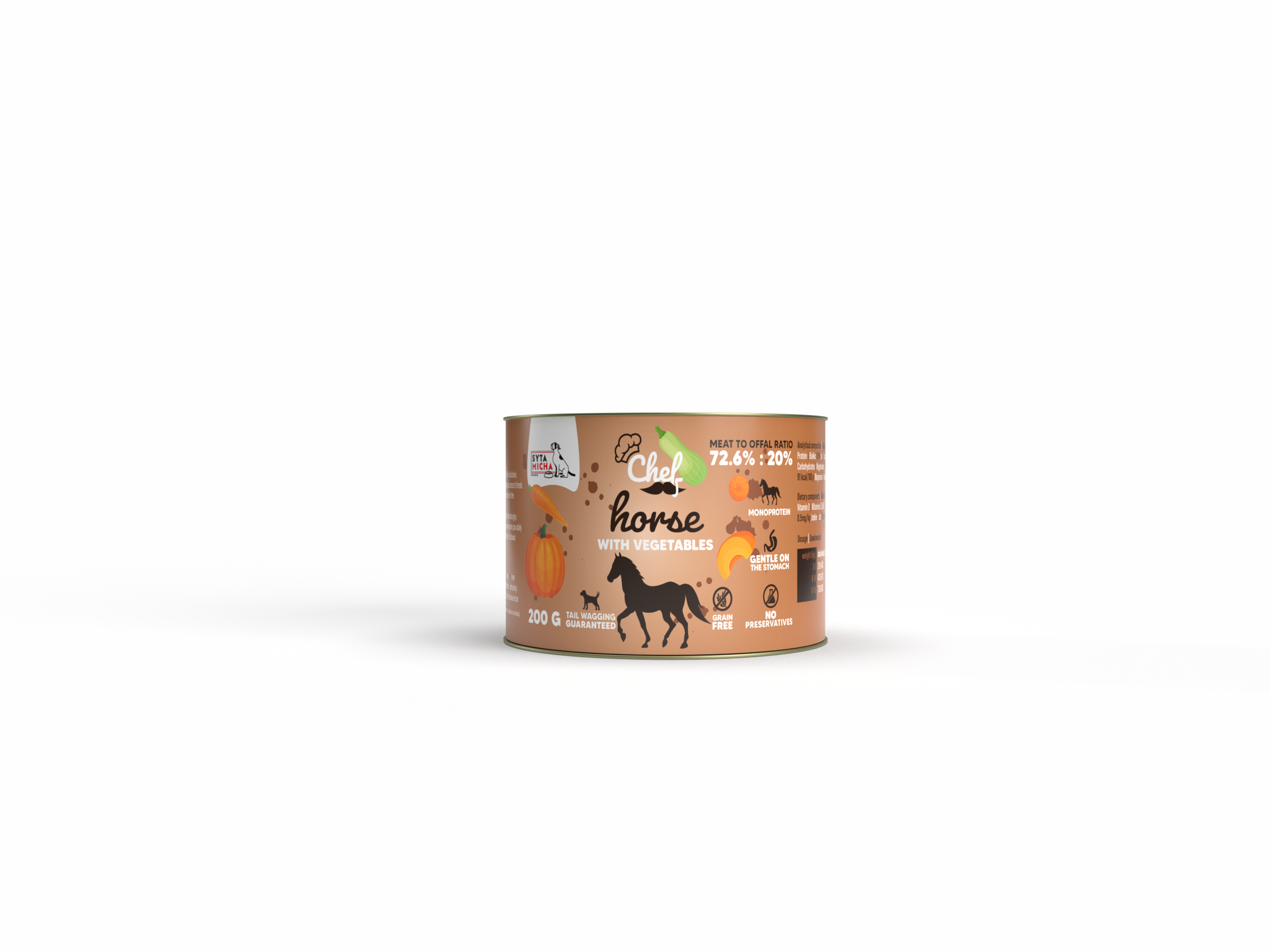
Diet comes into play once parasites and infection have been ruled out. That is when an elimination diet makes sense: for 8 to 12 weeks the dog gets a single protein source it has not eaten before.
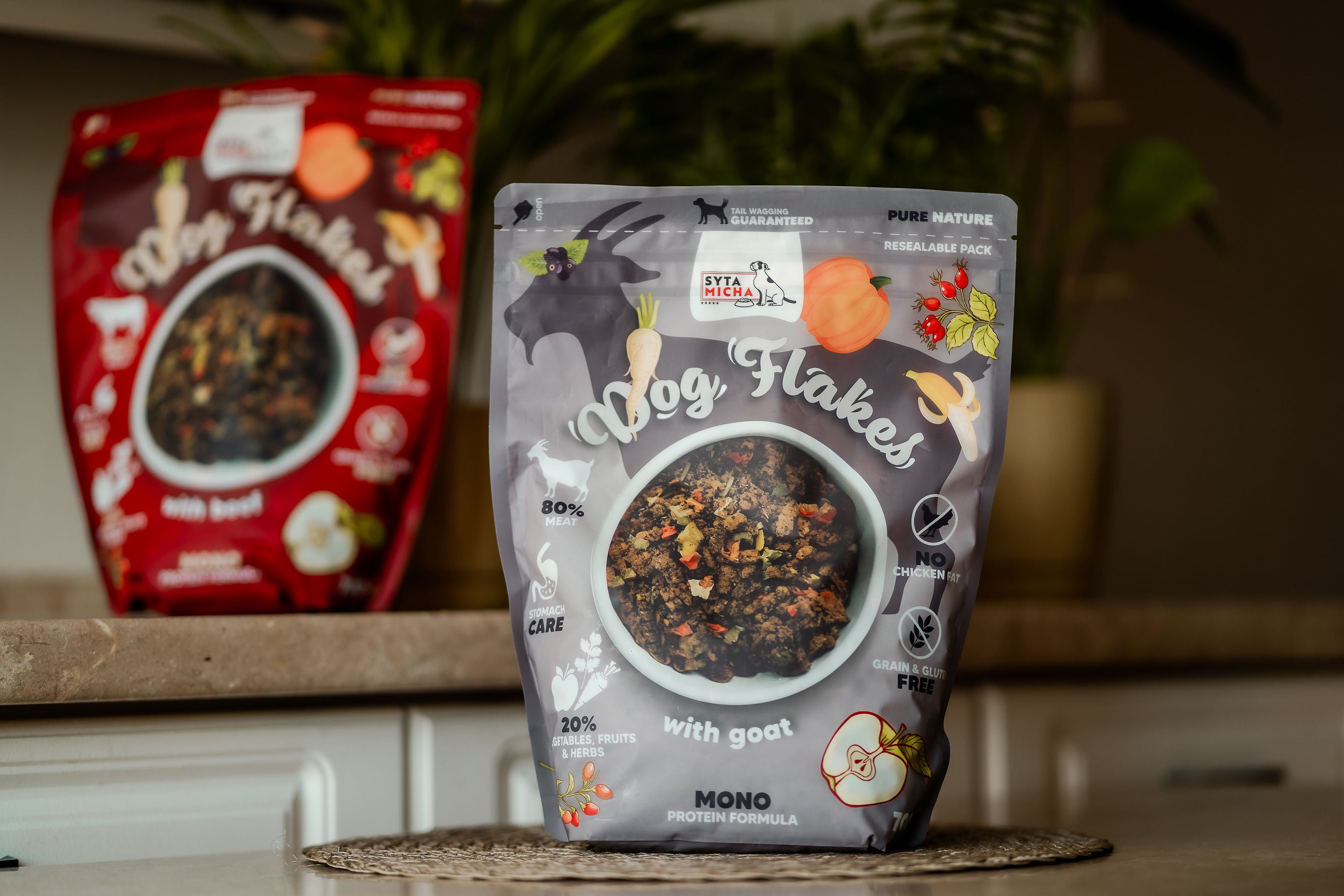
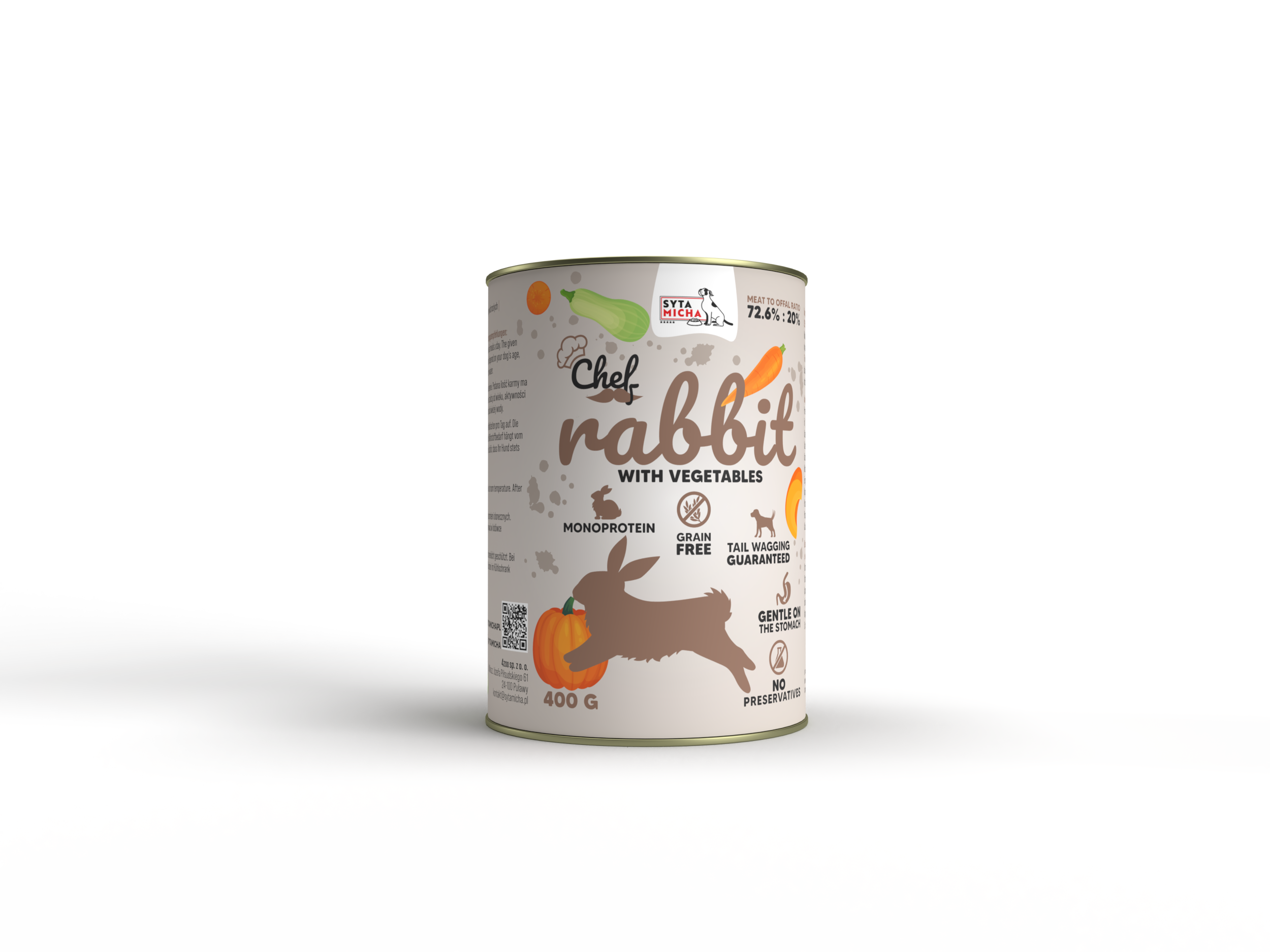
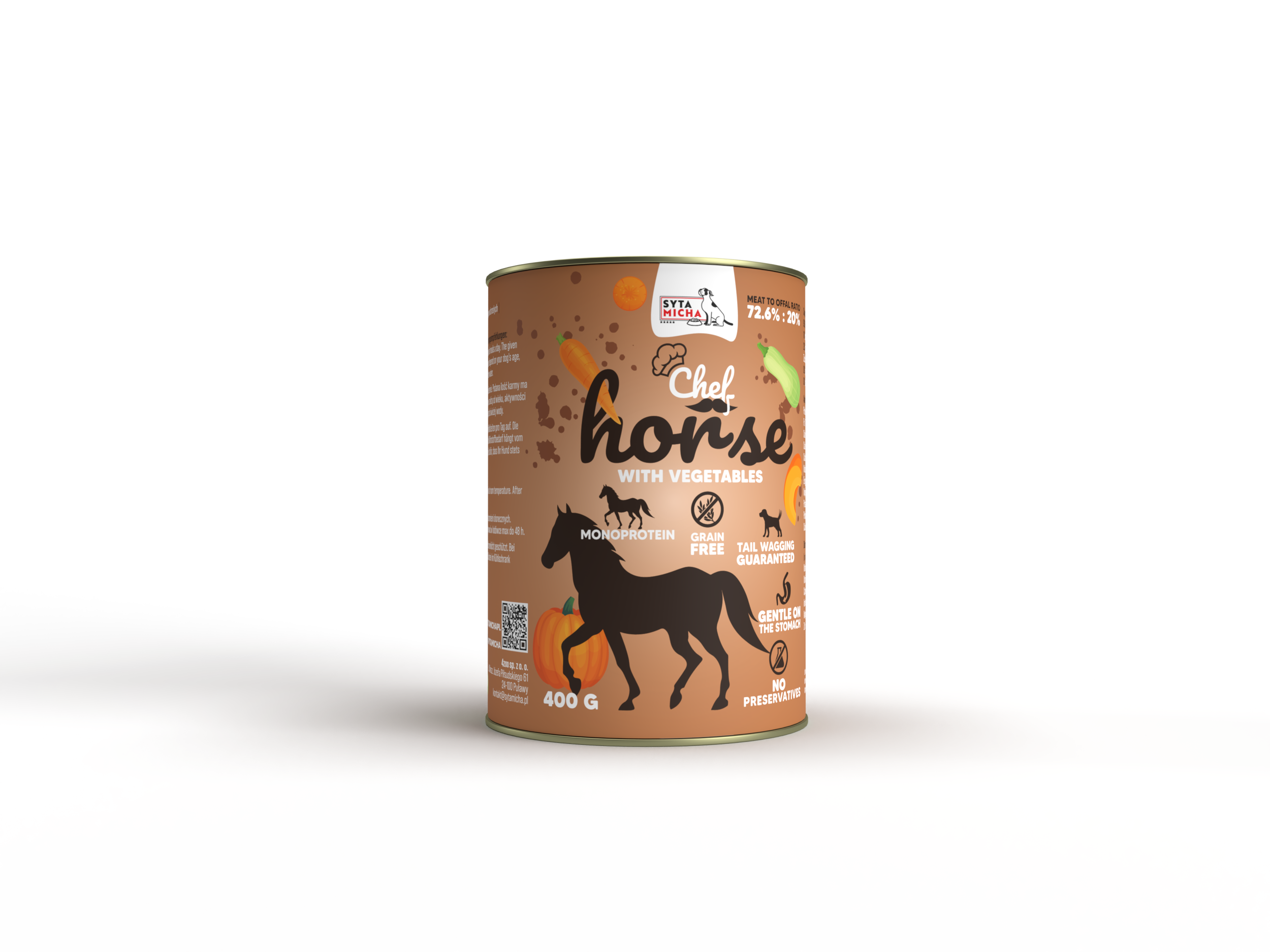
In practice this means single-protein food based on a novel protein - for example horse meat, pheasant or ostrich. You will find such recipes among the wet foods described as hypoallergenic.
One condition is absolute: throughout the trial, no treats, chews or titbits from the table outside the diet. One slice of ham from grandma wipes out eight weeks of work.
Ingredients that support the skin
This is support, not treatment, but the difference can be visible:
- Omega-3 fatty acids - anti-inflammatory and strengthen the skin barrier. Best from fish.
- Zinc - essential for rebuilding the skin; a deficiency causes skin symptoms.
- Vitamin E - protects skin lipids from oxidation.
- Salmon oil - the simplest way to top up omega-3.
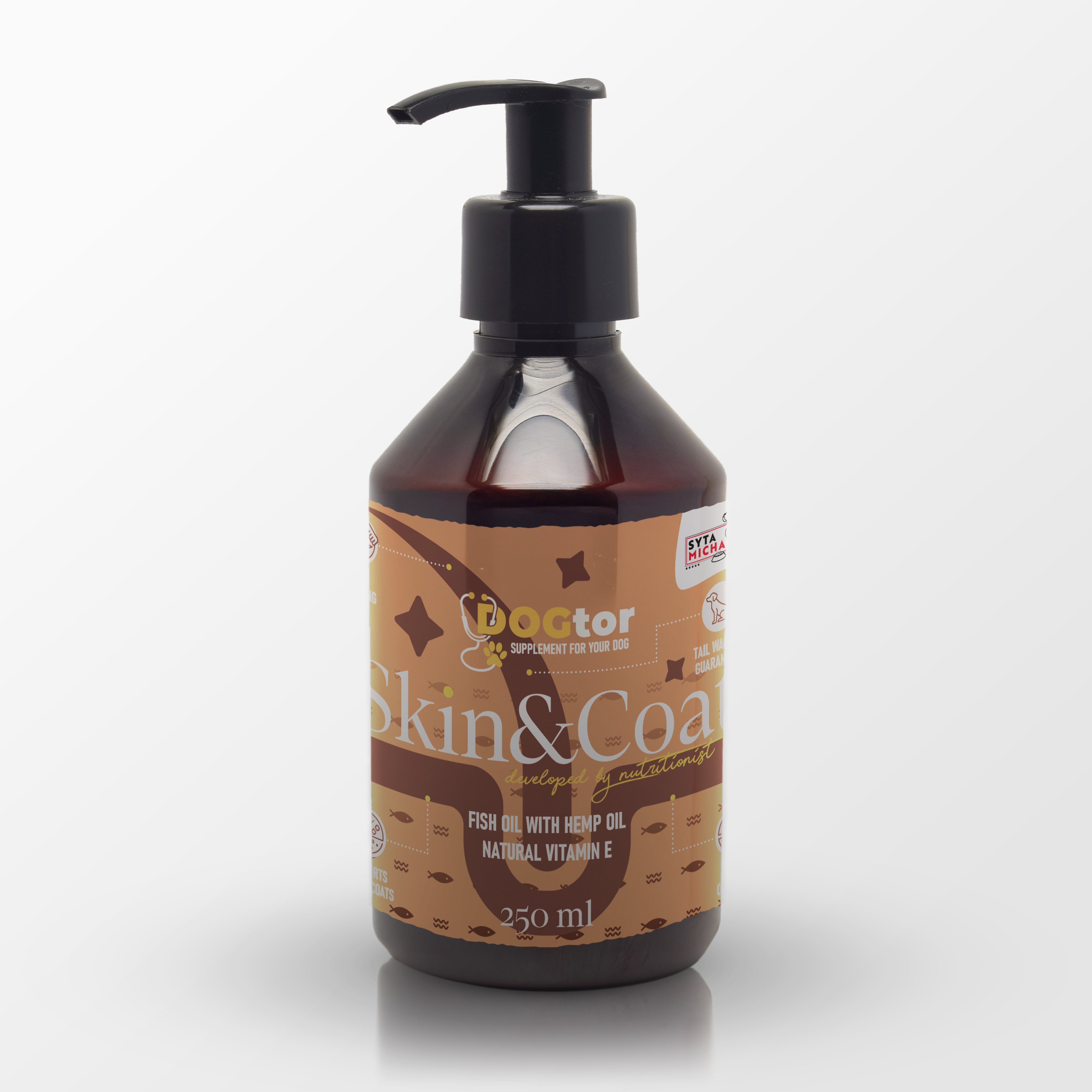 Syta Micha Skin & Coat oil for dogs 250ml · 49,90 zł
You will not see the effect within a week. A dog's skin renews itself in about three weeks, and the coat even more slowly, so you need roughly two months to judge.
What to write down
The vet will ask about things nobody remembers off the top of their head. Take notes for two weeks:
- what time of day the scratching is worst,
- which spots the dog goes for most often,
- what it eats, including treats and whatever it gets on walks,
- whether the symptoms change after a bath, a walk through grass or a stay at someone else's home.
That notebook is worth more than another change of food.
Products mentioned
 You collect HAU DOLCE points for your purchases

Frequently asked questions
My dog is scratching but has no fleas - what could it be?
Atopy, food allergy, a yeast or bacterial infection, mange mites invisible to the naked eye, and less often hormonal diseases. The vet decides the order of checks.
Will changing the food help with scratching?
Only if food is the cause, and that is a minority of cases. That is why parasites and infection are ruled out first.
How long before I see an effect after changing the food?
Six to eight weeks. The skin does not respond overnight.
Can a dog be allergic to chicken?
Yes, poultry is one of the more common allergens, precisely because dogs eat the most of it.