




In winter, a dog’s paws are harmed most by salt and de-icers, the sharp edges of ice and skin-drying frosts. Before the walk, it is worth choosing a salt-free route, using a balm or boots and trimming the fur between the pads, and after you get back, washing, drying and checking the paws.
For many dogs winter is a time of great fun in the snow, and for owners a time for extra vigilance. We often make sure the dog’s body does not get cold, and forget that it is the paws that make first contact with the winter ground.
Below we describe what lurks on the pavements and how to protect your dog’s paw pads from painful injuries step by step: before the walk, during it and after you get home.
Salt and de-icers on pavements
Although low temperature seems to be the main danger, in towns human activity poses a greater risk. Road salt and de-icers contain highly irritating substances, most often sodium chloride or calcium and magnesium chlorides. In contact with the skin they can cause:
- irritation and drying of the paw pads,
- chemical dermatitis,
- soreness and cracking of the skin.
A dog that feels discomfort often licks its paws, and then the irritating substances end up in the digestive tract. This can result in vomiting, diarrhoea and, in extreme cases, poisoning.
Antifreeze is especially dangerous because of the ethylene glycol it contains. It tastes sweet but is highly toxic: even a small amount can lead to acute kidney failure and the animal’s death.
Ice, frost and snowballs between the toes
Frozen snow and ice have sharp edges that cause micro-injuries to the skin. These micro-cracks encourage:
- salt and microbes to get in,
- inflammation and infections,
- painful cracks.
Frost and low air humidity also dry out the skin. In long-haired dogs, hard balls of snow form between the toes, digging in like stones and causing pain, lameness and excessive paw licking.
Before the walk: a protective barrier
Winter protection starts at home. Good preparation clearly reduces the risk of injuries and contact with irritating substances.
- Choose your route. If the pavements around your home are heavily salted, look for other paths, e.g. park paths or grass, where sand is spread instead of chemicals.
- Use paw protection. There are two options, described below.
- Trim the fur between the pads in long-haired dogs.
- Protective balms and waxes form a greasy layer on the paws that separates the skin from the ground. They work well with moderate salting and on shorter walks. Apply them just before going out and reapply regularly.
- Dog boots are the most effective protection against injuries and chemicals. Well-fitted, lightweight boots separate the skin of the paws from the ground completely.
Why trimming the fur matters
Shorter fur between the pads collects less snow and ice, so painful ice balls form less often. It also makes it harder for salt and sand to build up between the toes, where they can irritate the skin long after the walk.
After the walk: essential care
Many owners think wiping the paws with a towel is enough. It is not. Salt and chemicals get into the fur and skin, so they can irritate the skin at home too. After every walk:
- Wash the paws with lukewarm water, ideally under running water or with a damp cloth. With short-legged dogs, also rinse the belly and the inner thighs.
- Dry the paws thoroughly, especially between the toes. Moisture encourages chafing, fungal infections and faster chilling.
- Check the paw pads: look for cracks, redness, abrasions or embedded bits of ice or grit. Clean any wounds with an antiseptic and watch for signs of infection.
- Watch your dog. Limping, lifting a paw, suddenly stopping or licking the paws intensively after a walk can mean discomfort, pain or micro-injuries.
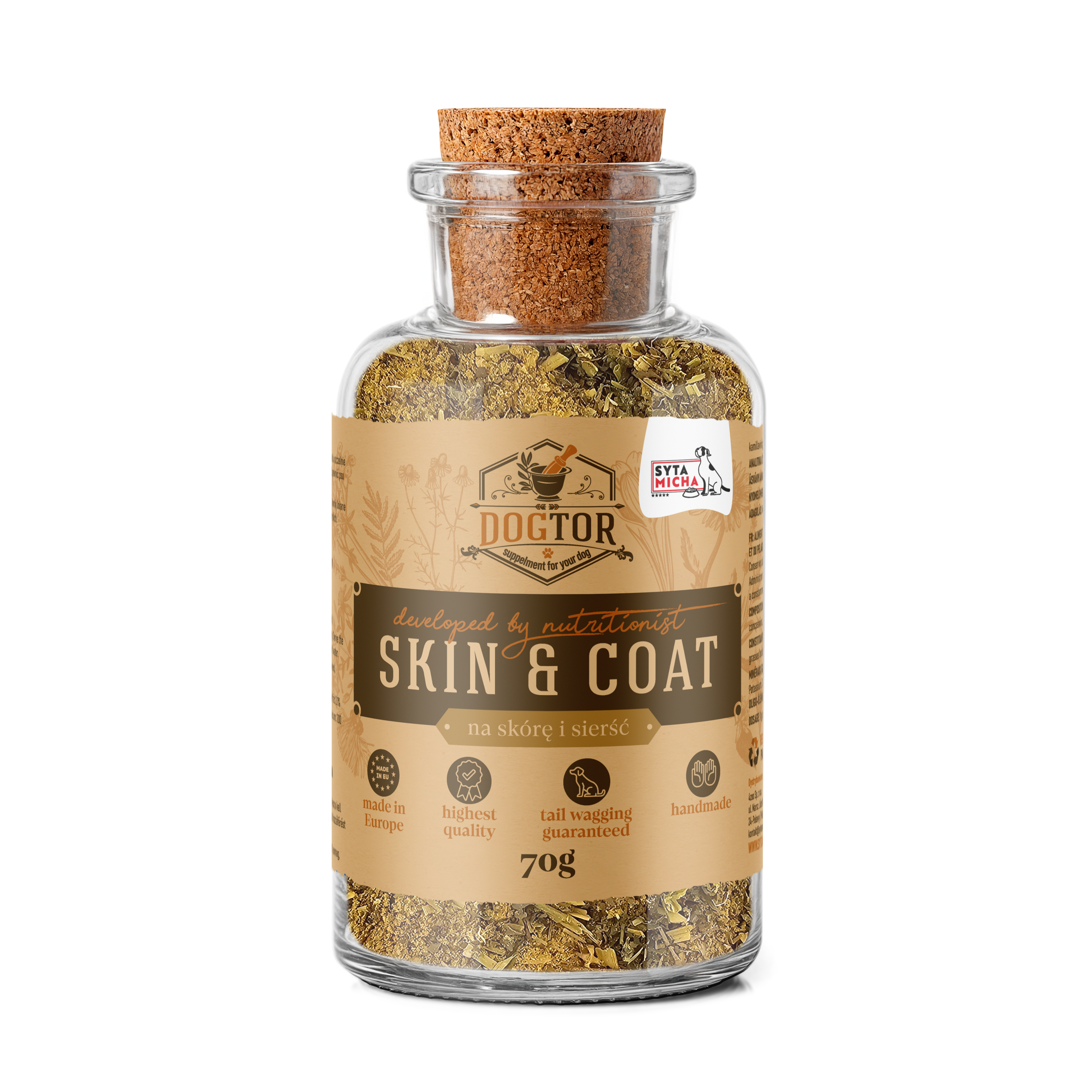
Care from the outside can be complemented by looking after the skin and coat from within.
A winter routine in five points
Regular paw care in winter is not a luxury but a necessity. Dogs’ paws are very sensitive, and their condition directly affects your dog’s comfort and mobility. Simple hygiene rules before and after the walk help you avoid many skin problems, chemical irritations and injuries:
- choose safe walking routes,
- use balms or protective boots,
- trim the fur between the toes,
- wash and dry the paws after the walk,
- react to any sign of pain or discomfort.
In winter, look after your dog’s paws with the same care as its coat or immunity. It will repay you with the joy of walks together all season long.
Products mentioned
 You collect HAU DOLCE points for your purchases
Frequently asked questions
Is wiping my dog’s paws with a towel enough after a winter walk?
No. Salt and chemicals get into the fur and skin, so it is worth washing the paws with lukewarm water, drying them thoroughly, especially between the toes, and checking the pads.
What protects a dog’s paws better: balm or boots?
Balms and waxes work well with moderate salting and on shorter walks. Well-fitted boots, which separate the paws from the ground completely, are the most effective.
Why trim the fur between the paw pads in winter?
Shorter fur collects less snow and ice, so painful ice balls do not form, and less salt and sand builds up between the toes.
Why is antifreeze dangerous for dogs?
It contains ethylene glycol, which tastes sweet but is highly toxic. Even a small amount can lead to acute kidney failure.